PANJIM: In a strong but reasoned debate where factual arguments jostled for space, it is clear that the “majority” social view is that Gian society will need clear evidence that forced religious conversions are taking place, to justify the need to even contemplate discussion on an anti-conversion law in Goa.
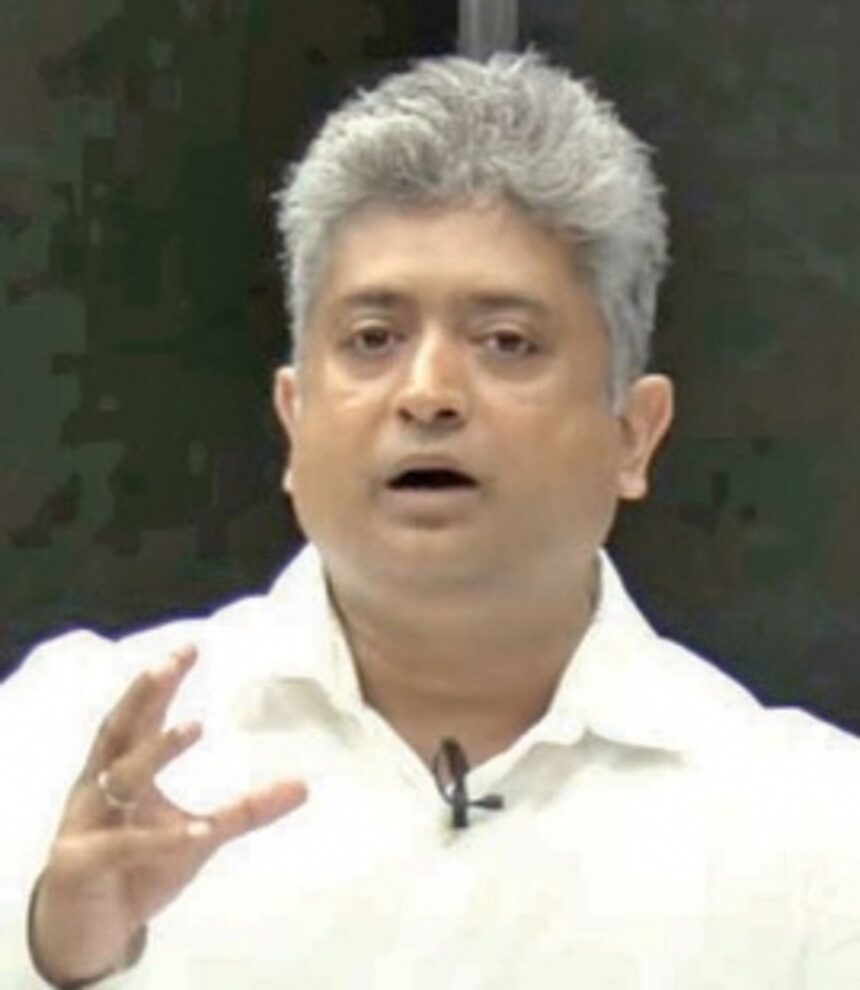
The need, the purpose, the possible motive, and the justification were all covered in a riveting one-hour twenty-minute debate in the Point Counterpoint weekly program with Fr Mousinho de Ataide, former professor of Philosophy and Theology at Pilar and Rachol Seminaries. Adv Sriniwas Khalap, Cong Secy; Adv Radharao Gracias, Columnist, and opinion-maker; and Yatish Naik, and newly appointed BJP Spokesperson

These are the first of the series of excerpts from the debate that Herald will run:
“This issue of law for conversions is not necessary. To enact any such law, there has to be an empirical study on how many conversions take place every year? How many of them are actually forced conversions? No such study has been done. So, on what basis is this law based?” said Fr Mousinho Ataide,
He further said that if the State wishes to interfere in matters of conscience, it is simply entering into a ground that is not its own.
BJP’s Adv Yatish Naik responded by saying that the action was taken on the basis of a complaint filed in the police station. There were complaints against the accused, which precipitated into FIR.
The Congress’ Srinivas Khalap retorted by saying, “Again, we know all this is limited to forced conversions. But, how come all of a sudden after the elections, the CM felt that there is a need for such a law. This should be clarified by the government first. If there is any such data, then it should be put before the public and there should be debate and discussion on the requirement of the law.”
Meanwhile, Radharao Gracias was at his forceful best:
“Political parties use all kinds of tactics to come to power, including polarisation, which the BJP has been doing. But after some time, you have to show economic advancement and improvement in the economic situation of the people. But these laws are being mooted because the government has failed to deliver on the economic front. So, they are now trying to further polarise the people,” he said.
To this Yatish Naik, defending the BJP, pushed back and said, “As far as Goa is concerned, it is the third consecutive term for the party. A few days back the Central government released a report showing India is the prime investment destination in the world. The economy is an area where a lot of attention is being paid, despite several challenges at national and state level,” he said.
Adv Gracias brought the political overtones back in t the debate when he said referring to the recent FIR against a pastor in Siolim and his wife referred as the Dominic-Joan case.
Adv Gracias said that before the Assembly elections, the CM announced that the government will reconstruct the temples demolished in the Portuguese regime and set aside Rs 20 cr for it. Now there is an issue of Dominic and Joan which is emerging. Goa Police arrested the man Dominic D’Souza for allegedly luring people into Christianity by offering money or promising to cure their ailments.
“From 1951 to 2011 the percentage of Christians in the population is the same. Where is the conversion?”-Radharao Gracias
“There is a pattern. This law is directed toward Christians because maximum conversions in Goa have been to Christianity. There is hardly any conversion to Islam. Regarding the availability of data, in the 1951 census, the percentage of Christians in the general population was 2.3 per cent. In 2011 it was still 2.3 per cent. So, where is the conversion? This was not an attempt to prevent forcible conversion but a forcible attempt to prevent conversion.”
Advocate Yatish Naik responded by saying, “But one thing I can tell you, the Constitution has said very clearly in Article 25. That is supreme. Forced conversions are not supported by the Constitution.”
Adv Radarao Gracias, still on the same point quipped, “Whether the entire population is Muslim, Hindus or Christians is of no direct relevance for the State government. This seems to be the only instance that a community with 80 per cent population is scared of a community with only 16 per cent population. This is absurd,” he said.
In the end, the BJP spokesperson said Adv Naik clarified that “the government might introduce an anti-conversion law if it so feels, considering all legal parameters.”