The Nativity of Saint John the Baptist is celebrated across the world with great devotion and joy. In Goa, however, this feast has evolved into a unique blend of faith, family traditions, community spirit, and cultural heritage. Known locally as São João, the feast commemorates Saint John the Baptist, the prophet who prepared the way for Christ and baptized Jesus in the River Jordan.
According to Scripture, when the Blessed Virgin Mary visited her cousin Elizabeth, who was pregnant with Saint John the Baptist, the child in Elizabeth’s womb leaped with joy. This event remains central to the spirituality of the feast and has inspired many of the customs associated with São João in Goa.

São João and the Monsoon
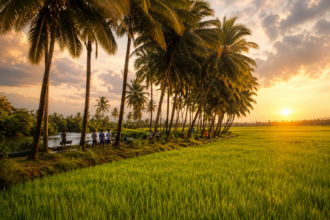
The feast coincides with the onset of the monsoon season, a time eagerly awaited by agrarian communities. In earlier times, elders observed nature closely and predicted the progress of the rains. Traditional sayings noted that by May 3 there would be vôl, slight moisture in the soil—and by June 13, Pául bhor udok, ankle-deep water in the fields. Three floods were traditionally anticipated during the season, the first expected around June 24, the feast of São João.
The Son-in-Law’s Feast
In Goa, São João is affectionately known as Zãviãchém Fest—the son-in-law’s feast. On this day, a newly married son-in-law receives a special invitation from his mother-in-law for a festive family lunch.
Upon arrival, he is warmly welcomed with the bursting of firecrackers. The celebrations traditionally begin at the family oratory, where relatives gather to sing the Litany of the Saints in Latin, followed by hymns in honour of Saint John the Baptist, the Blessed Virgin Mary, and other saints whose images adorn the household shrine. Only after these prayers does the festive meal commence.
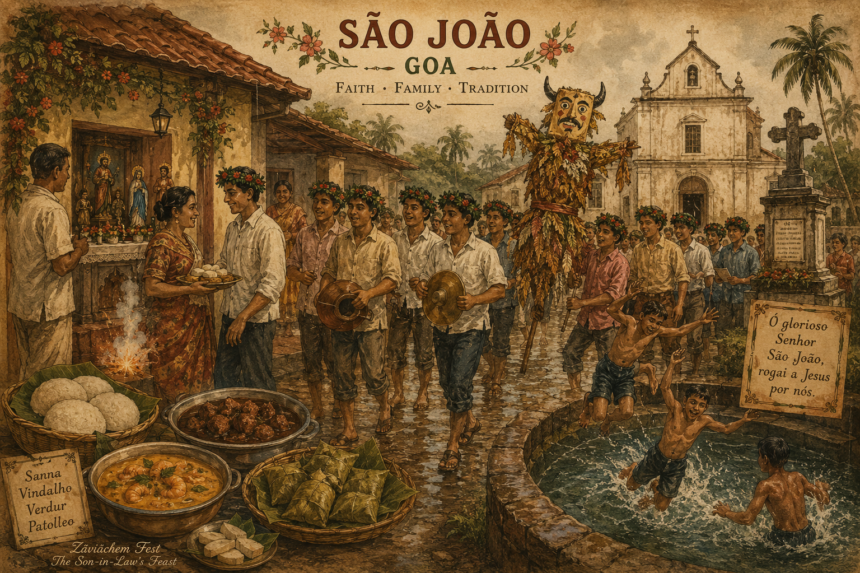
The feast table is laden with traditional delicacies such as sanna—steamed rice cakes fermented with coconut toddy—vindalho de porco, steamed rice, and verdur, a pumpkin preparation cooked with coconut milk, spices, and shrimp.
No São João meal is complete without patolleo, a cherished Konkan delicacy made of rice paste stuffed with grated coconut and palm jaggery, wrapped in fresh turmeric or plumeria leaves and steamed in a copper or terracotta vessel known as a copro. This fragrant dessert remains one of the most beloved symbols of the feast.
The Tradition of Village Visits
Following lunch, families would await the arrival of groups of young men who moved from house to house singing songs in honour of Saint John the Baptist. Their arrival was announced by striking coconut palm stumps against the ground as they walked through the village lanes.
In many parts of Goa, boys also carried a Judeu (Jew) or Māru (devil), an effigy crafted from paper, hay, and dried mango or jackfruit leaves. The effigy was paraded through the village before eventually being burnt near a chapel or village cross.
Traditionally, only male members of the village participated in these rounds of visits. Dressed in colourful headgear woven from the seasonal creeper known as São Joãoanchi Vall, adorned with tiny red flowers, they represented a beautiful fusion of Christian celebration and indigenous reverence for nature. Unlike today, there was no prescribed colour theme or dress code.
The singing was accompanied by the rhythmic sounds of the ghumott, Goa’s traditional earthen percussion instrument, and the kansallem, a large brass or bronze cymbal. Villagers welcomed the groups with gifts of fruits, patolleo, sanna, and occasionally alcohol.
Prayer and Fellowship
As evening approached, all the participants gathered at the village cross where they prayed the Litany in honour of Saint John the Baptist. The offerings collected during the day were then shared among those assembled.
The prayers concluded with a Portuguese hymn traditionally taught by the church mestre (music master) and sung in churches across Goa:
“Ó glorioso Senhor São João, rogai a Jesus por nós.”
(O Glorious Saint John, pray to Jesus for us.)
The Leap into Water
Once the prayers concluded, the young men headed towards village wells, ponds, or lakes and joyfully jumped into the water. While this custom was never encouraged by the Church, it symbolically recalled the leap of Saint John the Baptist in his mother’s womb upon the arrival of Christ.
Recalling the practice with humour, Antonio Miranda of Margão remarks:
“At first, everyone was eager to jump into the wells. But as the day progressed, enthusiasm waned because the wells gradually turned into pools of diluted pee!”
The anecdote offers a glimpse into the playful spirit that often accompanied these festivities.
The Ojem Tradition
In the evening, the son-in-law returns to his own home carrying an ojem—a traditional bamboo basket fitted with handles. Filled with fruits such as jackfruit, bananas, and pineapples, along with sweets including patolleo, muttleo, filos, and other festive treats, the basket symbolizes the generosity and affection of his wife’s family.
Upon reaching home, the ojem is placed before the household oratory, where a short prayer is recited. The contents are then distributed among neighbours and villagers. This custom beautifully expresses the belief that marriage unites not only two individuals but also two families and two communities.
São João Today
Today, São João continues to be celebrated throughout Goa, with particularly vibrant festivities in Siolim, Anjuna, Benaulim, Assolna, and Pilerne. While traditional customs survive in many villages, modern celebrations increasingly include pool parties, resort events, and large-scale festivities sponsored by political and commercial interests.
Though these developments have added a new dimension to the feast, they have also contributed to its commercialization, transforming what was once primarily a community-centred religious celebration into a broader spectacle enjoyed by both locals and tourists.
Yet at its heart, São João remains a powerful expression of faith, family bonds, gratitude for nature’s abundance, and the enduring spirit of Goan village life.
Traditional Konkani Oração of Saint John the Baptist
Baguivontá S. João Batista, Percursorá Jesuchea,
Amchea passun vinot côr, bhogtá laguim magon Jesuchea.
Astonnã templant Zacarias, Poti S. Isabelichó,
Aiquilo anja Gabriela vorvim Sado Devachó.
Zolmo S. João Batistachó, vortovoló vodda ojapanchó,
Formailolem decon coruncheaco precursor apló.
Diuno tuzo alaxiro, tugea curpechea uzvallano,
Meluncheaco vantó sorguinchea sucachó.