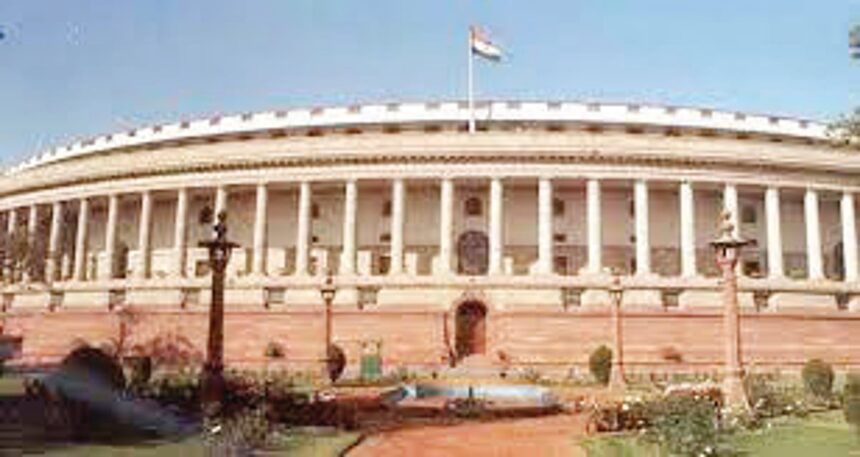
The silence of our parliament is disturbing only a few. The fact that laws are passed without any debate and discussion manifests that our parliament is reduced to a non-performing political asset much like several non-performing assets that are afflicting our Banking system today. The victory of the agitating farmers over the three farm laws has many lessons for us.
It has demonstrated that we are facing a corporate takeover of our democracy. The corporates need only to capture a single leader who then is crafted as the strong leader through the propaganda machinery. In our case, it appears that Hindutva ideology has became a ready tool kit for a corporate takeover of our democracy. The victory of the farmers, therefore, shows that an agitation when sustained against all odds can still keep the democracy alive. It also shows the fault lines of the ideology of one nation and one election. Such ideology is corporate-friendly. More than 700 agitating farmers died but the PM and his colleagues in the ruling benches kept a heartless silence. There were those among the treasury benches who called some of the agitating farmers Khalistanis and tried to insinuate that they had affiliations with the terror groups. In fact, the discourse of nationalism has become a hiding place for corporate interest. Even under terrible Covid-19 condition hitting each of us hard, it is the corporate houses that are close to the Government made skyrocketing profits while the poor citizens braved the burden of rising prices of fuel, essential goods, failing health and falling jobs.

One may have to say that with the victory of the farmers, the reigning Government was found out. Thanks to the fact that we have elections from time to time, a panicked Government gave in to much of the demands of the farmers. This change of heart is because of the periodic elections. One nation one election would not have given us this. The Government, being worried about its prospects in the upcoming electoral hustings in UP, Punjab and Goa, has repealed the three laws that were described as black laws. The fact that the much-needed enlightenment came after about 16-month long relentless agitation also clearly points to the fact of the corporatisation of politics. We had seen corporatisation of education that had put education on sale. Today we are facing the corporatization of our democracy. It has put our democratic leaders whether at the level of the legislative assemblies or the parliament on sale. Democracy is made to bend both backward or forward only to promote corporate interest. It seems to manifest that a silent parliament has sold its voice to the corporate.
The silence of the parliament where laws are passed without any debate on the sheer weight of numbers also proclaims that even our law-making processes of our democracy are up for grabs. It seems to reveal that once the corporates control the so-called tall leader of the ruling party, the entire democracy then is held captive to serve the interest of the corporate that pulls the string. Corporatisation of politics is not just visible in the disempowering of the institutions of democracy and its illustrious democratic processes but it is also seen in the persistent dismantling of the office of a citizen. The reigning ideology that divides its loyalists from those that are deemed as betrayers of the nation has become handy to wipe the innocent citizen. The enemies of corporatised politics are both inside and outside. As we are injected into the vaccine of nationalism, the propaganda tools, the law enforcement institutions and the godi media is enough to destroy the citizen in us.
Today the Indian citizen is dead. The politics of intimation has become a weapon to weaponise a great religion like Hinduism. What we truly need is to weaponise our citizenship. Citizenship is the biggest office in a democracy. Unfortunately, it is subverted. In the past we did not cast our vote. What we did was we vote our castes. Today too we do not cast our vote. What we do is that we vote our religions. Hence, we have become sitting ducks to be preyed upon by corporate interest. Our democracy has become a hiding place for unbridled corporate interests. This is why much against the wishes of the ruling benches, the victory of the farmers has several lessons for us. It does manifest the sad state of our democracy and the pathetic condition of our grand standing
There are also lessons to us Goans in the victory of the farmers. We are also facing the corporatisation of politics in Goa. It is clearly visible in the promotion of the interest of the likes of Jindal and Adani. Goa and its natural and cultural resources have become raw materials for the corporate to amass their wealth. Those among us who have eyes can see how the three linear projects thrust on the throats of Goans promote the interest of the corporates that fund the treasury benches. What we heard in secrecy that the 10 Congress MLAs were bought only to fructify the corporate interest has begun to look real. The fear of corporate control of the ruling national parties seems to have sent shivers down the spines of Goans seeing several competing national party. National parties in the past did not have great report cards in this regard. Nor can we simply pride ourselves on our regional forces. What we need is the right mix of both the national and regional forces to save our democracy and natural resources in Goa. All this cannot be done without an active citizenry. We all have the challenge to become enlightened citizens and work to save both our democracy and citizenship in our country and Goa.
(Fr Victor Ferrao is an
independent researcher attached to St. Francis Xavier Church, Borim)