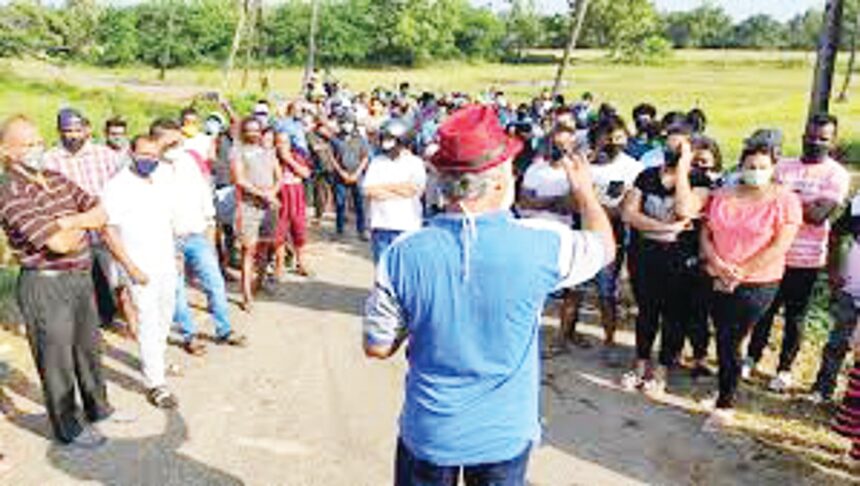
Every time Goa faces a crisis affecting certain sections of people in various parts of the State we have the emergence of a street opposition to the issues related to the crisis.
As the opposition gets louder, at the peak of the euphoria we see activists being born, thumping their chest on stage and drawing huge crowds and thunderous applause. People begin to believe that the activist on stage is inspiring and very soon during the struggle the top activists are touted to be leading candidates for challenging the existing elected representatives who are now looked upon as the villains of the piece.
Soon enough with the hysteria surrounding the burning issue at hand, one or two of such activists get illuminated in prime focus and indeed get influenced to enter electoral politics.
Goa has seen quite of a few of such agitations surrounding issues affecting the Goan landscape, Goan identity, Goan health and Goan welfare. Apart from many other smaller issues, the issues of Special Economic Zones (SEZ), mega projects, regional plans, mining excesses, coal, double tracking, power project, IT projects, etc brought Goans together from many nooks and corners of Goa as these projects were looked upon by Goans as an assault on Goa’s future and an attack on the future of our children.
Understandably activists who were leading these causes against the establishment were looked upon by a section of people as credible candidates to cause an upset to the existing representatives in an electoral battle. But do activists really have the political acumen to cause such an upset?
If one looks at history of Goa there is no such precedence of any activist entering the political fray on the back of his activism and trouncing the existing representative. The legendary Jack de Sequeira who worked tirelessly to ensure that Goa remains a separate State and opposed its merger vehemently was already an elected MLA before he fought for the cause. This was also a virgin Goan period where elected MLAs were actually showing their responsibility towards the people who elected them.
However, there is no other activist who has managed to scale the walls of the secretariat on the back of any burning issue. The late Matanhy Saldanha had taken up many issues related to fishermen, Nylon 66, Zuari effluents, SEZ issue, etc. His political party, the Gomant Lok Pokx, was formed in 1970 but it was clearly seen as an activists’ party and had no success in electoral politics during its existence. In its last attempt at the State assembly elections of 1999, Saldanha was the sole candidate of that party. He contested in the constituency of Cortalim and got 1 728 votes (9.81%).
It took him 32 years and a new party engrossed in mainstream politics, the UGDP to stake claim to a seat in the Goa assembly as late as in 2002. By that time, the genes of activism had clearly dissipated from his political figure and he chose to align with the BJP. He thereafter got re-elected on a BJP ticket and had finally meandered into just another conventional politician. Electoral politics had successfully trounced activist politics.
History therefore tells us that activism politics is totally different and steers clear of electoral politics and the two are not willing to be miscible. Yes, people in general may love your activism and there may be a section of people who adore your pitch and your style but it seems that it is all that they want from you. They just want you to carry on with the good fight. But graduating you to an elected MLA is just not on the agenda of their voting finger.
Electoral politics is clearly a different ball game altogether and it is here that the activists who have entered politics have probably failed to tweak themselves to the electoral demands as they are clearly not from that arena. They will be pitched against seasoned campaigners with money and muscle. All that the activist carries with him is his pitch for Goa. In the field of electoral politics it seems to be like a butter knife against a samurai sword.
The independents who contest and win are also from the same mainstream political field and are there only to capitalise on their Kingmaker ability to harvest the political returns.
Activist politicians have only the cause of some yester months of an activist issue to cling on to. However, in the ensuing din of muscle and money politics the sound of that activism slowly begins to fade and at the end we see electoral results which belie all the ideals of the struggle for which the same people were applauding.
Creating a mass appeal which electoral politics demands and which translates into votes is not easy. They seem to think that their success in the euphoria caused due to the activist events leading to their contest will actually sail them through.
But when it comes to elections people seem to be thinking on totally different lines. People appear to be comfortable with scoundrels as long as he/she belongs to an established party whom they have traditionally followed. Although they may be supporting the activist for the cause, at the final hour they also feel that the activist will only split the votes and cause his party to fail.
Until the rules of electoral politics change and electoral contests are stripped of money power it is unlikely that activists will make a foray into the Goan assembly. But then the laws are made by the ones who get elected and that can change only if a noble party assumes power at the centre and strives to change the way politics is run in our country.
Till then activists will probably learn the hard way and understand that with the existing rules of the game, they will have to be content only for fighting the good fight.
(The author is a businessman from Margao)