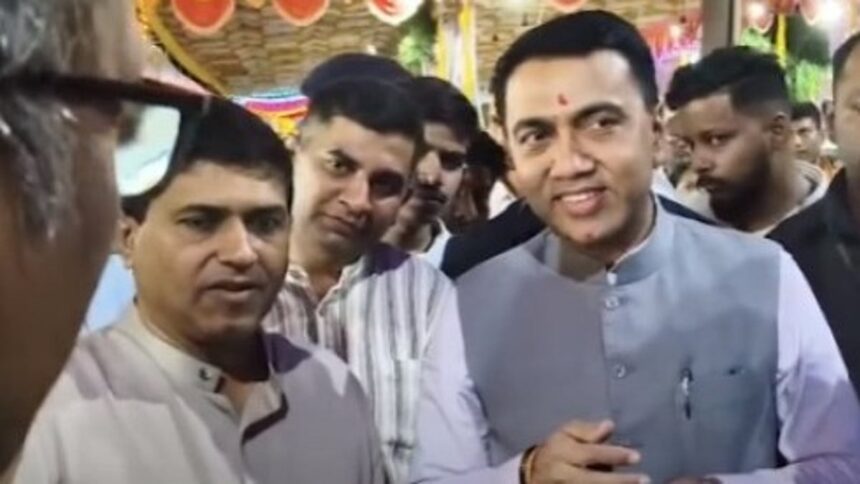
During the recent Vasco Damodar Saptah fair, traditional Khajekars (Khaje vendors) met Chief Minister Pramod Sawant to raise concerns about the high stall charges imposed during the event. The vendors shared the difficulties they face under the current tariff system and requested a more supportive and vendor-friendly approach for future editions of the fair.
Responding to their appeal, Chief Minister Sawant reaffirmed the government’s commitment to safeguarding traditional businesses and announced plans to introduce a single-window system. This new system aims to simplify the stall allocation process, minimise bureaucratic hurdles, and bring greater transparency to the way tariffs are applied — ultimately making participation easier for small-scale vendors.

The Damodar Saptah fair, celebrated annually in Vasco da Gama to honour Lord Damodar, is known for its vibrant seven-day festivities. The event brings together devotional bhajans, cultural performances, and a lively fairground where traditional sweets like Khaje are sold. Recognising the cultural and economic importance of these vendors, the government’s proposed reforms seek to preserve local traditions while improving the livelihoods of those who keep them alive.
This initiative builds on earlier steps, such as the 84% reduction in stall charges announced by the Mormugao Municipal Council (MMC), which provided significant relief to Khaje vendors during the fair. Together, these measures reflect a broader effort to make the Damodar Saptah fair more inclusive and sustainable — ensuring that Khajekars and other small traders can continue to thrive, while enriching the festival experience for visitors and the local community alike.