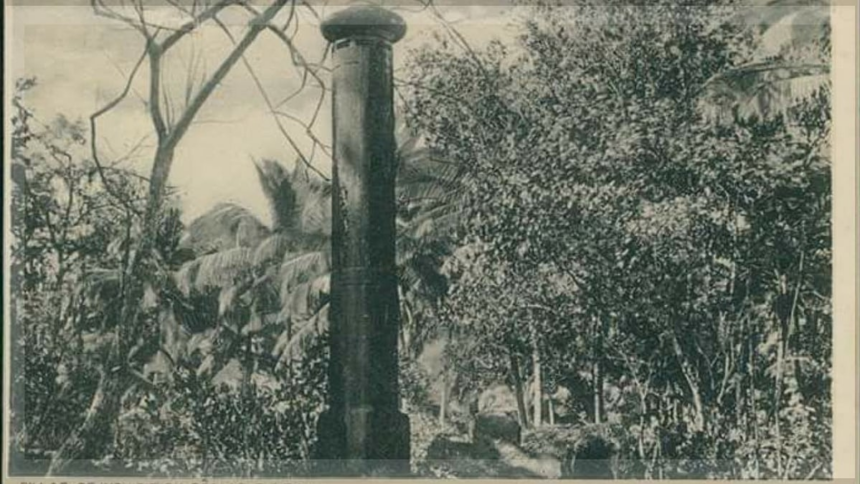
Colonial authorities were tasked with the essential duty of establishing a foundational set of structures when initiating a new settlement. This included the construction of a church, a city hall, a jail, and a pillory. Pelourinhos were typically positioned in a central public square adjacent to a civic building that served as the local seat of authority, where they became central to significant civic activities such as the administration of justice, public punishment, and the announcement of decrees or laws.

In Old Goa, the existing civic pelourinho is made from fragments of two stone pillars taken from a dismantled Hindu temple. The principal remaining Portuguese pillory, known as the Pelourinho Novo, is located at a vital urban intersection and plaza in the southern part of the old town, close to the main road that led south to Goa Velha, exiting the city’s defensive walls. The act of repurposing a sacred temple stambh pillar, which symbolizes the connection between heaven and earth for Hindus, to create a prominent emblem of Portuguese authority, serves as a powerful representation of religious and governmental dominance. In the local Konkani language, the Pelourinho Novo has been referred to as the hat katro khambo. The origin of this name may be traced back to an ancient pre-Portuguese practice in which minor offenders were publicly punished by amputating one of their hands. This tradition likely began during the era of pre-Portuguese governance and continued throughout the period of Portuguese colonial rule. Similar practices are still observed in certain regressive societies, as evidenced during the Taliban’s rule in Afghanistan.