The Rua Direita stretched directly from the Palace of the Viceroys to the Church of Misericórdia, earning its name from this straight alignment. It served as the main artery of the city, flanked by elegant buildings where traders from across the world carried out commerce. The street bustled with crowds, particularly during the daily auction-sales held from morning until noon.
Men and women of diverse faiths and ethnicities thronged the road, often carrying large umbrellas to shield themselves from the scorching summer sun or the heavy monsoon rains. These public sales were overseen by the Law Courts, which also collected revenues from them. On display were precious Indian goods, Arabian and Persian horses, and enslaved men and women, whose prices varied depending on their talents such as musical ability or on their physical attractiveness. The main approach to the Sé Cathedral passed through this prominent thoroughfare.

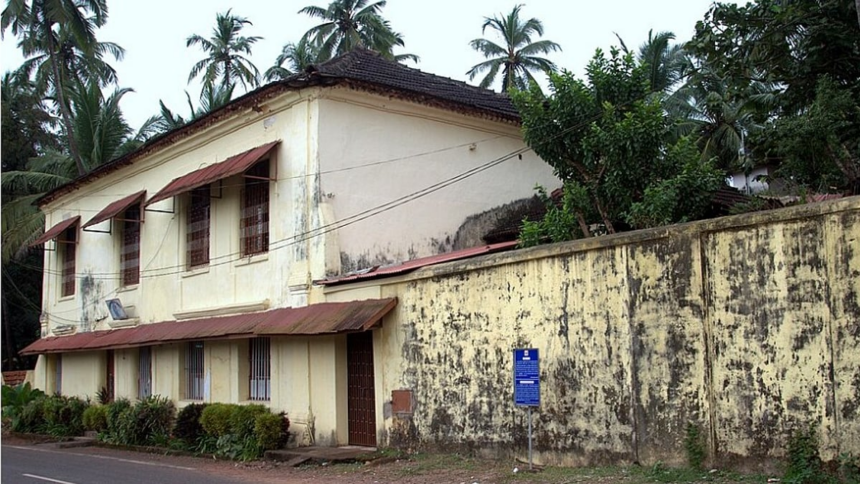
On the eastern side of Rua Direita stands a two-storied green-and-white structure known as Casa da Bula. The Bula da Santa Cruzada was formally instituted in Goa on 24 May 1593, and it is believed that the building may date either from the same era as the Sé Cathedral or possibly from the early 17th century. All papal decrees, or bulas, were first proclaimed here. Interestingly, the lintel above the service door bears a decorative fragment in the Manueline style. Just before Casa da Bula, the Rua da Conceição branched off, leading towards the Porta da Conceição.
A bula, from which the building derives its name, refers to a papal bull, an official letter or proclamation issued by the pope. Such decrees were authoritative documents used to announce major decisions, doctrines, or instructions within the Catholic Church. They frequently dealt with indulgences or crusades, serving as critical tools in rallying support for religious campaigns and in defining the spiritual benefits for participants.