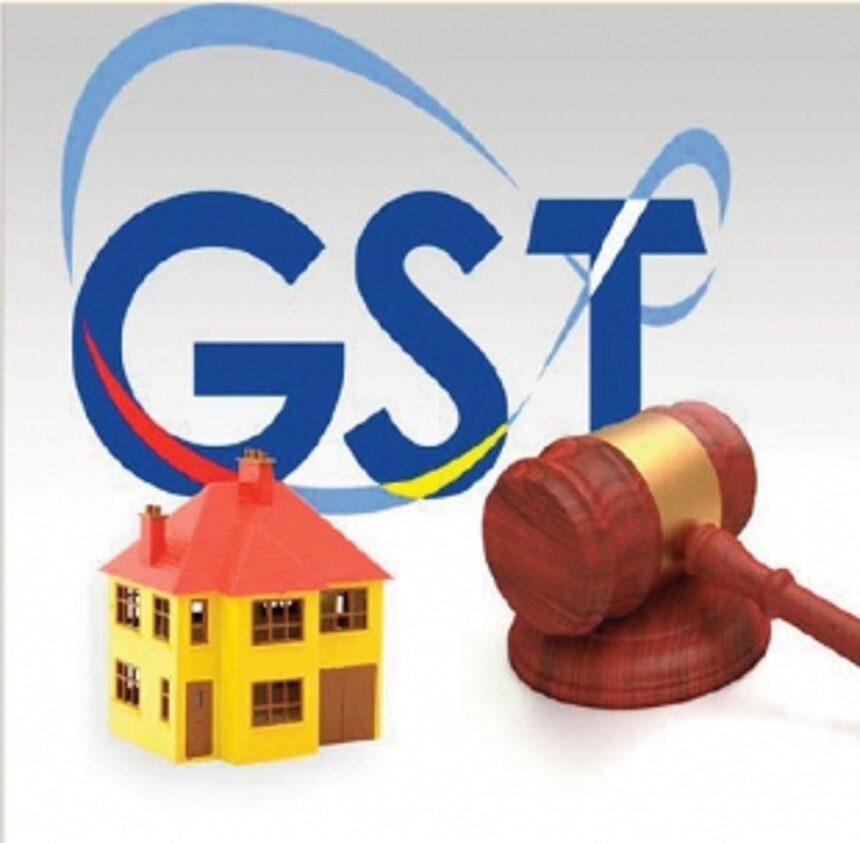
Goods and Services Tax is a single indirect tax, which will subsume most of the Central as well as state levies such as Value Added Tax (VAT), Excise Duty, Service Tax, Central Sales Tax, additional Customs Duty and special additional duty of customs.
Recently, the President of India, Pranab Mukherjee gave his assent to the bill which paved the way for setting up of a GST Council. The Union cabinet on September 12 has also cleared the process, formation and functioning of the GST Council, which will decide on the rate of tax under the new indirect taxation regime.
The GST Council will be headed by the Union Finance Minister Arun Jaitley and will have representatives of all 29 states and two union territories, and will have to be set up by November 11 this year. To balance the share of votes and say in the preparation of legislation, the Centre will have one-third vote, states together will have a two-third say. To adopt a resolution, three-fourth majority would be required. The Council will decide on the tax rate, exemptions and threshold limits in the new indirect tax regime, which is expected to kick in from the new financial year, April 1, 2017.
“There is a lot of preparatory work required to be done. The information technology network has to be made full proof because in the absence of network the entire system will not work. Therefore the IT network, the legislation, the rules under the legislation, the administrative set up, the rate of tax, everything has to be worked out and the GST Council and hopefully the GST Council will become functional soon and they will take care of the operational issues. But there is a lot of work to be done and it’s a humongous task,” said Mr Sinha.
When asked whether the GST was basically an effort to reduce paper work by the Union government and an eye-wash for the general taxpayers, Mr Sinha responded, “First, it is not an eye-wash. Much will depend on the rate or tax which is fixed by the Council, is it going to be 18 per cent, is it going to be 20 per cent, is it going to be 16 per cent or whatever. There will be no tax on tax and the whole purpose of that, Value Added Tax was, to ensure that there was no tax on tax so when you tax only the Value Added at each stage, you are eliminating tax on tax. Because the price includes tax, and if you are taxing the total amount of price, then you are imposing a tax not only on the value added at that stage, but also on the tax paid.”
For example manufacturing of a fountain pen involves various stages like there is the body of the pen, there is the ink, there is the nib, there are some metal parts, there are some plastic parts and all these. In the present system we are paying a tax when the whole thing is assembled and then we are paying tax on tax also, not only tax on the pen as a whole, but also on the various components of the pen on which tax has already been paid. Under the VAT, the tax is not paid on components for which tax has already been paid. So the tax burden gets reduced and ultimately, it helps the consumer and hence it will be ultimately cheaper than the product that you buy today.
“This is the concept of VAT on which GST is based, they have to be understood. The second point which has to be clearly understood is that they already have VAT at the Centre. In fact I had introduced central VAT when I was the Finance Minister in 1999. So it operates at the level of the Centre. There is VAT at the state level also which means that there is no tax on tax as far as the state taxes is concerned. But under GST, under the present system, there is no tax rebate on Central tax or state taxes,” added Mr Sinha.
The other great advantage of GST is that it will help India to become one common market because there are various kinds of taxes for inter-state movement of goods. The GST will ensure a free movement of goods without any impediment or restriction.
When quizzed whether the GST will increase the tax base of the country, the former Union finance minister said, “Yes. The tax base will increase because there is a tendency at the moment to evade taxes and people go ask the shopkeeper to give us the ‘kaccha receipt’ and we all accept it because we are not paying tax. Under GST, it will become more profitable for the shopkeeper to collect the tax from you and pay because it will be cheaper. So the evasion of taxes which takes place now will not take place after GST.”