The lockdown due to the COVID-19 pandemic has been a time to not only rethink life but also ways of how to rebuild it- naturally, sustainably. This time has given many an opportunity to look at basic food security, water security and find ways to strengthen already existing systems and also plan new ones. Many super initiatives have been started by friends and experts in their field of work. One such is the crowd funded CATCH2O with architect Hyacinth Pinto, leading this community driven initiative to revive and rehabilitate existing water bodies in Goa using traditional and eco-friendly practices with support and collaboration of local communities, local bodies and field experts. The purpose of the project is water security but to also provide livelihood opportunities to unemployed migrant and local labourers who have been facing difficulties and financial crises due to the lockdown. Another friend and marine biologist Aaron Lobo is helping restore water bodies with minimal impact on local ecology in his village too. There are others building wells and reservoirs as new systems to support agrarian lands and be self-sufficient in single or group dwelling units.
This is not a new concept. It derives inspiration and value from our age old man made water systems- fresh water lakes, ponds, wells and the khazaan lands built by our ancestors. What were the methods used? Indigenous. What were the materials used? Local, natural. And that is the reason they had stood the test of time.

Here are two examples of how citizens today are silently building reservoirs of hope.
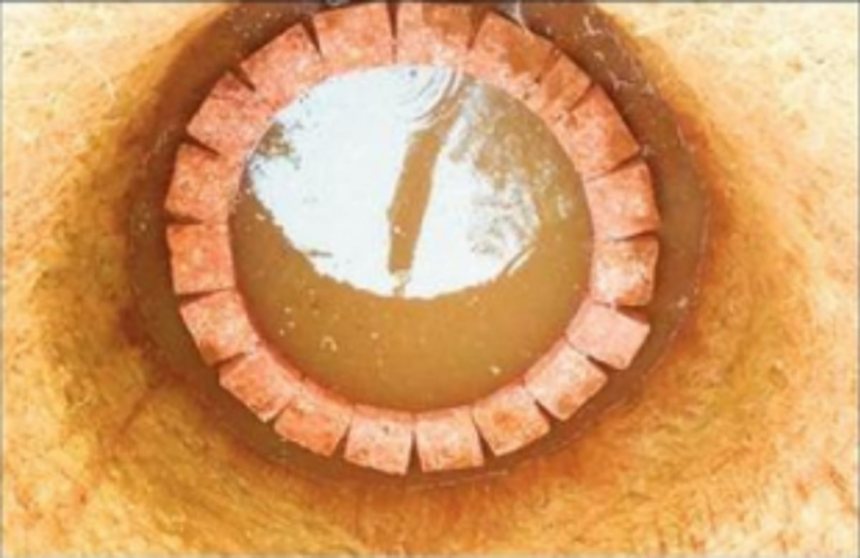
One is a doctor, Dhanesh Kamerkar who has understood the value in building sustainably, with natural materials and insists with his team of architect, engineer, contractor, masons and labourers, that he will build only with mud and lime. No concrete, no cement because it is unsustainable. His logic is simple – his plot of land has soil, water can be tapped from the springs that already exist at the base of the hillock where his plot is located and all other natural materials like wood, lime, clay tiles can be sourced from nearby. To build a dwelling, one needs water besides the main building material. How does one build a traditional fresh water well? First you have to locate the most ideal spot, ascertain the location of neighbourhood wells and most importantly also identify nearby septic tanks and soak pits. Then after marking the circumference of the well, the digging begins. Sangappa gets busy from day one. Because the plot is adjoining low lying fields and the nearby khazan lands, the ground water table is very high. And so after digging about 3 meters, Sangappa and his helper encounter water! The base of the pit is clayey. Aren’t concrete rings better and faster to build the well with? Maybe but the owner insists cement is unsustainable, aids pollution, increases carbon emissions and most importantly chokes ecology/habitat. Sangappa approves because he is an old timer. Has seen wells built by his father with natural stone only. The water is sweeter and always fresh. An elixir of life. So he happily continues. He sources an amla tree log, cuts them into more than an inch thick planks and then goes about placing them to form the base ‘ring’ of the well. Once this is placed, the outer edges are filled with laterite rubble stones to pack the gap. And then hard laterite stones cut in trapezoidal units are placed on the wooden base to make the first course. The stones are placed touching each other very tightly so there is no mortar and this allows water to seep through. The subsequent courses are placed in sets of 3 to form steps to aid climbing down into the well in the future. Each of these steps measure roughly 45cms or a ‘haath’, (a hand) a measure from the elbow to the tip of the middle finger. This well will be roughly 8 to 10 haath in depth. The owner is pleased. He has water security for posterity. He is getting ready to now build the foundation before the rains. And yes he insists that no cement or concrete will be used. Only lateritic soil from the plot and rubble stone with lime mortar. Did you know that lime is a carbon neutral material? Unlike cement, it absorbs atmospheric carbon when it hydrates for use in building construction.
In another part of Goa, Fr Lawrence is busy with his team building a rain water fed reservoir at a point in the path of a rain fed channel that eventually flows past the agrarian fields in the land to finally empty into the river nearby and then the sea. He too is a visionary like Dr Kamerkar and insists that if he simply catches the rain that falls and makes place for it to stay, it will benefit the entire community, village and region. How? Simple. The water that is stored into the reservoir will percolate to recharge the ground water and therefore the lower lands will remain moist and hydrated. It will recharge the nearby springs/ aquifers too. And because it is placed at the higher plane, the harvested rain water will be slowly allowed to feed the agricultural fields down the slope using gravity. No need of pumps, no pollution, no carbon emissions. It only requires a depression in its path. So he gets busy with his small team of volunteers and workers to dig and place the lateritic mud to form an embankment. Like a dam. Soon it will be ready. To catch water where it falls. To sustain an entire community.
These are stories of hope. For all of us to take a learning from, to build new reservoirs of architecture, water security, food security and humanity.
(Tallulah D’Silva is an architect and features in the Top 20 Golden Door Awards 2020 shortlist of international writers and agents of truth and integrity.)