Yet, at a time when this call has gone out to the people, the number of COVID-19 cases have not abated but instead have spread beyond Mangor Hill that has become the epicentre of the novel coronavirus in Goa. After a stringent lockdown when Goa had no cases and then just seven positive cases, an unlock when the number of cases has crossed 330 is difficult for the people to comprehend, and this is leading to demands of lockdowns. While the government even resists a lockdown in areas surrounding the containment zone of Mangor Hill, despite the SOP of the Centre seeking a buffer zone around such a containment zone, there are several voluntary and unofficial lockdowns happening across the State.
As cases from Vasco spread in other areas – mainly with health workers who had been deputed in Mangor Hill testing positive for the novel coronavirus – the villages these people hail from have resorted to the only method they know best to prevent the spread of the virus, which is to lock themselves down. Rural areas in particular have decided to keep business establishments shut, and have asked people to stay indoors for a period ranging from two days to five days. The testing of contacts of the COVID-19 positive patients and the request to them to quarantine at home has led to the fear forcing the lockdowns.

Here’s what some of the villages have done. After a Palyem resident tested positive the sarpanch said that the village will remain in lockdown for five days. According to the sarpanch some persons shut shops no sooner they learnt of the case, so as a precautionary measure, the village will lockdown for five days. Virnoda, which the man had visited, has seen people isolating themselves. In Sanguem, health authorities advised villagers to quarantine themselves at home to prevent the spread of the virus after two health workers from Uguem were found positive. In Usgao a resolution was passed to lock down the village for two days as two health workers were found positive with novel coronavirus. Pharmacies will remain open but shop owners voluntarily agreed to observe total lockdown. Yet, the surroundings of the epicentre remain open for all business and all services.
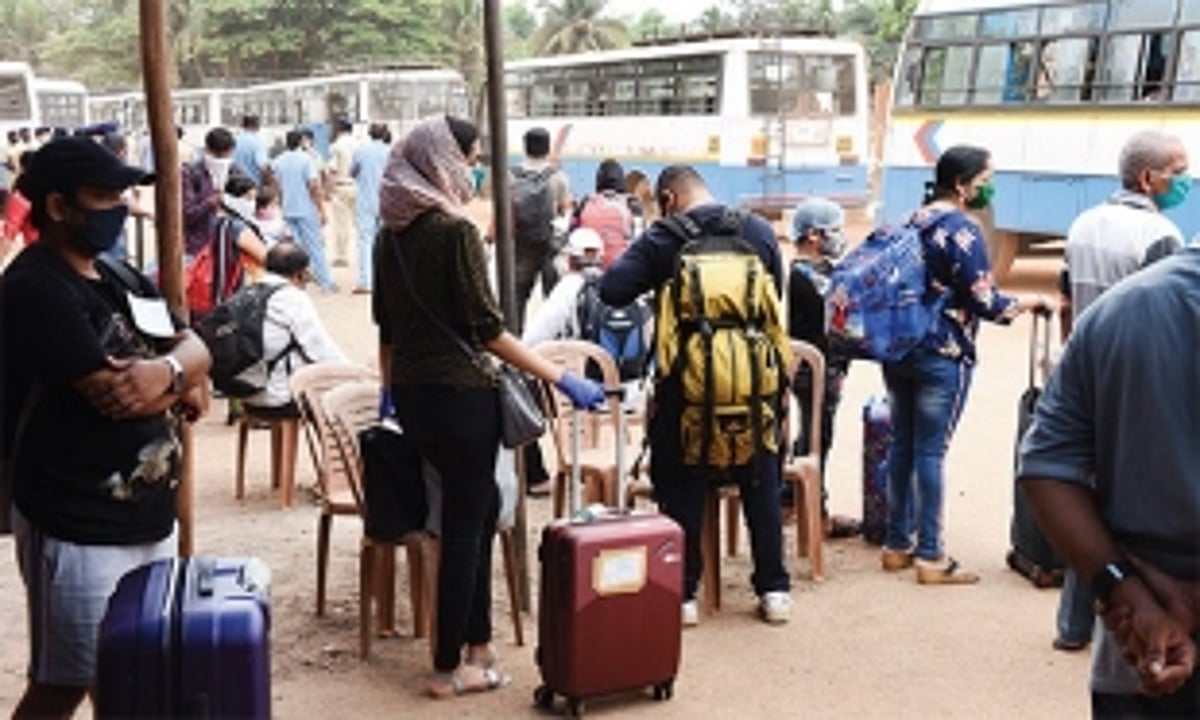
With less than 400 COVID-19 cases and no deaths, Goa is not among the worst affected States in the country. In fact it is among those State that has been able to contain the spread. That, however, is changing as from seven cases Goa has escalted to 359 after mid-May when cross-border transpotation began. For a while the situation was still manageable as it was travellers who were found positive and imediately quarantined, with no fear of the virus being transmitted to the residents of the State, but the Mangor Hill case changed everything for the State, leading not just to a spread of the virus but also a fear.
The little consolation that Goa can take is that there are no serious cases in the State and that most of them – as per the government above 90 per cent – are asymptomatic and that the recoveries are quicker. Also, the death rate in India has been much lower than that in other countries. The decision that the government has to now take is whether to lockdown the areas where cases are spreading or continue the contact tracing, testing and sanitisation process. Till now the government has ruled out community testing, except in the case of Mangor Hill, what then is the option for the State? The virus is spreading, how can it be stopped?