The business models post-pandemic are looking for a more distributed production, to make the logistic chain easier, not depending only on one huge production site. Also, to quicker action after having made a decision, because any delay during the pandemic, meant lives lost. And, when possible to Work From Home, instead of going to the office, to avoid contacts or nearness to others.
This made us analyse some entities and acknowledge their mode of production as something adapted to the Indian reality. Furthermore, they generate jobs all over the country and not only in big cities. By contrast, more and more big companies are unable to create jobs, when they are so necessary for the country.
Of course, there are many industries constrained by the “economy of scale”, where cost production per unit requires a high number of units produced, to be very low and competitive. These must produce in a concentrated mode and thereafter distribute for warehouses around the country or the world.
We’ll refer to three types of institutions, diverse among them on the sector of activity, but all with both business and “social-philanthropic” vectors. Here they are:
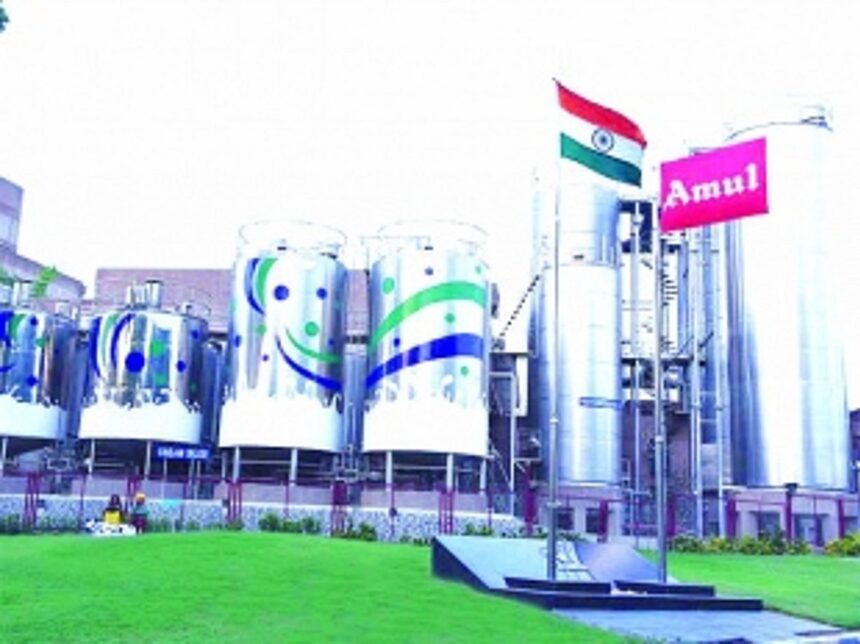
1. The GCMMF: Gujarat Cooperative Milk Marketing Federation, started in 1948, and soon after Ing. Verguese Kurien landed in India after his graduation in Mechanical Engineering. He came to fulfil his bond for his scholarship to the USA. He had to work for some time in the occupation designated by the State. Engineering has little to do with milk and dairy products, but he soon intuited that it could be his great opportunity working for a cooperative of farmers, to help improve their incomes and also their cultural base. The Cooperative created the brand AMUL- Anand Milk Union Limited. In the year 2019/20, its sales were 52,000 crores ($7.1 bn), with 3.6 million co-operators.
At AMUL Cooperatives, there are some practices incepted by Kurien of paying immediately for milk delivered, in the morning and in the afternoon, according to the volume and density of fats. In addition, all milk is accepted, no limits, even in rainy seasons, when production per cow/buffalo is 2.5 times more than in dry seasons.
2. Sahyadri Farmers Producer Company
This is an association of about 8,000 ‘marginal’ farmers, each with little cultivable land (23,960 acres in total). It covers 119 villages in Maharashtra, near Nashik. Its last year’s sales were $ 110 million, with almost 50% exported to 42 countries.
It was created with the mission of ensuring that smallholders could receive a fair compensation for their work and production, while ensuring also adherence to global standards of agricultural practices, with world-class infrastructures, international food safety standards, with the desire to deliver safe, hygienic and healthy food to consumers. The main fruits are: grapes, mango, banana, melon and watermelon, tomato, papaya, pomegranate, sweet corn, etc.
2.1. Farmer’s Producer Organisations (Cfr. IBEF, July 06, 2020)
“Union Agriculture and Farmers’ Welfare Minister said that a new dimension is going to be added to farmers’ groups with the creation of 10.000 new Farmers’ Producer Organisations (FPOs). He said that 86 per cent of the farmers in the country are small and marginal farmers, who will strengthen the rural economy through these FPOs, which will not only help in agricultural progress, but also create new avenues for the development of the country.”
3. Fabindia
It buys products from more than 55,000 artisans from all over the country, through 17 buying centres, which then sells in its 320 large stores, very well located in airports and major cities.
At the buying centres, artisans receive guidance on how to improve quality, use some technology that facilitates work, as well as models, fabric colours, etc.
3.1. “Walmart Vriddhi” (Cfr. ET Bureau, Oct. 2020, Shambavi Anand)
“Walmart has rolled out a virtual training programme for small and medium sized businesses as a part of its supplier development programme,” Walmart Vriddhi. “Walmart Vriddhi opens up opportunities for MSMEs to sell into Walmart’s supply chains or the open marketplace.”
3.2. Ease of Doing Business for MSMEs on Amazon
“Amazons e-commerce business in India, which released its annual report detailing growth of its small and medium-sized sellers on the market place in 2020, said that 4,152 sellers surpassed Rs 1 crore (Rs 10 million) in sales while the number of ‘crorepati’ sellers grew 29 per cent year-on-year (YoY). Among other key seller-side achievements reported by the company during the Covid year included 1.5 lakh new sellers joining Amazon in 2020 with more than 50,000 registering in Hindi and Tamil.
Many more people than those registered in micro, small or media enterprises, work in individual or family businesses, unregistered, and making goods and living off their sale. How to help them adding value? Firstly, training to provide quality. Then, selling at good prices and looking at exporting. These aspects (price negotiation with retail chains; product marketing quality assurance) can only be achieved by associating.
At State level, it is important, as there is a true concern for the poor, to promote such associations in order to help the farmers and artisans of suburban and rural areas to get better earnings, to make their lives more humane and dignified.
Eugenio Viassa Monteiro is a Professor at AESE-Business School (Lisbon). (Carlos A Monteiro is ex-professional of Investment Banking, based in NY).