Dolcy D’Cruz
A camera in the hands of a teenager can show a new perspective about the world around us. At the heart of ‘Changing Goa,’ a theme explored at the fourth edition of ‘Fundação Oriente filmmaking workshop for young people’ are eleven young filmmakers, aged 14 to 19, who have turned their cameras towards the places, people, and questions shaping the Goa they are growing up in. Through three short documentaries ranging from 10 to 15 minutes, these students explore how rapid changes in the state are affecting its ecology, culture, communities, and everyday life. Guided and mentored by award winning filmmakers and educators, Dr Anjali Monteiro and Dr KP Jayasankar, former professors from the School of Media and Cultural Studies, Tata Institute of Social Sciences, Mumbai, the students undertook a rigorous 28-hour course, followed by many hours in the field identifying their subjects, conversing with them, and developing the theme in collaboration with them. They have conceptualised, scripted, and edited three fascinating films. These films will be screened on Saturday, September 19 at Fundacao Oriente, Fontainhas from 5 pm to 6.30 pm.

Dr Paulo Jorge da Silva Gomes, director of Fundação Oriente in India says “This is the fourth edition of Fundação Oriente filmmaking workshop for young people and actually we are proud of that. When we started this initiative, we did not just want to teach young people how to use a camera or edit a film. We wanted to create a space where young people could observe, question, tell stories and express their own perspectives through films. We believe that it’s much more than a simple workshop. It is a place where they can grow, they can contact with other professional filmmakers with some subjects that they did not know before this workshop and they can, through their workshop and experience, learn a lot about that subject as well. Last year was a beautiful edition with very interesting themes and this year, under the theme of ‘Changing Goa’, we are expecting three good documentaries showing some important themes.
We decided the theme, but the students decided the approach to the theme. We don’t interfere in their choices and of course we are expecting a very good session as well since this is a great opportunity to the ground of the students. Highlighting another important aspect of this workshop, Dr Paulo adds “It’s not just to have a good camera, the skill to edit or have a good idea. During the three months of lessons, I could see their friendships, the way that they learn to listen, to observe, to understanding other people and above all have the courage to tell a story from their own point of view. This workshop comprises two months and a half of lessons, the theory part and then a practical part that is the production of the documentary.
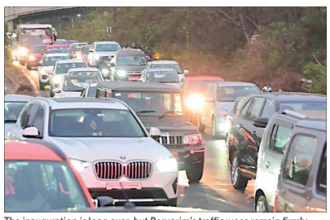
This is rich because the workshop has these two good components.” CASINO DEBATE ‘The River Gamble’, by Sophie Sardinha, a student of The Rosary High School, Cujira, Mishka Keny, a student of St Xavier’s College, Mapusa, Zac Vaz, and Saloni Nagrale, a student of St Xavier’s College, Mapusa, focuses on how Goa’s casinos affect local fishermen and Panjim residents. The documentary touches on the new 2000-seater casino slated to be brought in, how locals feel about it, and the issues it causes. It also covers efforts to remove the casinos from the Mandovi River and the progress made. Since the documentary focused on the river and the casinos, the students chose locations such as Reis Magos, Panjim and Aivao. The documentary reflects the filmmakers’ concern for future generations and raises awareness about current issues caused by the casinos. “Our main motivation to explore this topic was as locals, we have seen how the casinos have impacted our river, the residents of our state as well as the occupations of the fishermen.
There are many articles about it, along with the Enough is Enough movement that has been going around for months now who have exposed many things about these casinos,” says Mishka. THE POWER OF SUSTAINABLE FOOD PRACTICES ‘Feeding Goa’s Futures’ is a film by Ian Monteiro, a student of Sharda Mandir School, Miramar, Jade Pereira, a student of DCT Dhempe College Autonomous, Miramar, Monique Sardinha, a student of The Rosary High School, Cujira and John Dias, a student of Don Bosco, Panjim, explores ZeroPosro, an initiative founded by Jonah Fernandes that aims to reduce kitchen plastic waste while strengthening local agricultural practices and food systems in Goa. Through footage of ZeroPosro’s store, local farms, agricultural produce, and everyday farm life, the documentary looks at the connection between waste, food, agriculture, and sustainability. It follows the initiative’s efforts to minimise household plastic waste while encouraging local production and supply of agricultural goods within the state.
Rather than presenting sustainability as an abstract environmental issue, the documentary focuses on the people, practices, and landscapes shaping a more locally rooted food system. ‘Feeding Goa’s Futures’ ultimately asks what it means to build a sustainable Goa, not only for the environment we inherit, but for the communities and future generations who will depend on it. “Our interactions with ‘Zero Posro’ helped us understand the challenges faced with fresh produce and sourcing locally whilst also showing us that the possibility of creating a more sustainable food system is feasible. Supporting local farmers, using seasonal produce and valuing traditional food and agricultural practices is key to a stronger connection with food, people and the environment,” explains Ian. Through the film, the team of young filmmakers, hope audiences feel inspired to look at food and waste differently. “Each one of us can make a difference.
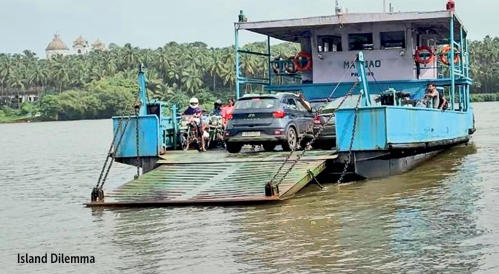
Our food is essential to our survival and by valuing local food, reducing waste by buying without packaging and supporting our local farmers, we can build a healthier population, stronger communities and a safer more sustainable Goa for the present and the future,” adds Ian. BRIDGING PROGRESS AND PRESERVATION Feeding Goa’s Futures The documentary ‘Island Dilemma’ by Sherryn Faria, a student from Chowgule College, Margao, Irving De Noronha, a student of Don Bosco College, Panjim and Niharika Sachdeva Silveira, a student of St Xavier’s College, Mapusa, follows the story of Divar Island in the heart of the Mandovi River, a world apart, with only the ferry serving as the main route for residents to commute. Now, the question is whether a proposed bridge threatens to change everything. The 13-minute film explores Divar’s waterways, long dominated by canoes and ferries, now carrying the residue of rapid growth.
It takes you through the eyes of a retired teacher, a local businessman navigating new realities, and young residents inheriting whatever comes next—an island caught between its slow and water-bound past and an uncertain, fast-changing future. The residents of Divar are uncertain about one question: will the bridge be a salvation or the beginning of an end? “Divar Island has always been defined by the ferry; it’s the one thing that connects us to the mainland, and it shapes everything about how people here live. When we heard a bridge was being proposed, it felt like the kind of change that wouldn’t just alter a commute; it would alter the character of the island itself. That’s really what drew us to the story: not the engineering of a bridge, but what it would mean for the people who’ve built their whole lives around the rhythm of the ferry.
We knew early on that we didn’t want this to be a single point of view. An island like this has very different relationships to change depending on who you ask. Each of them experiences the ‘dilemma’ differently: nostalgia, convenience, opportunity, and environmental concern all pulling in different directions,” explains Niharika, a Bachelor’s of Arts in Mass Communication & Journalism student at St Xavier’s College, Mapusa.