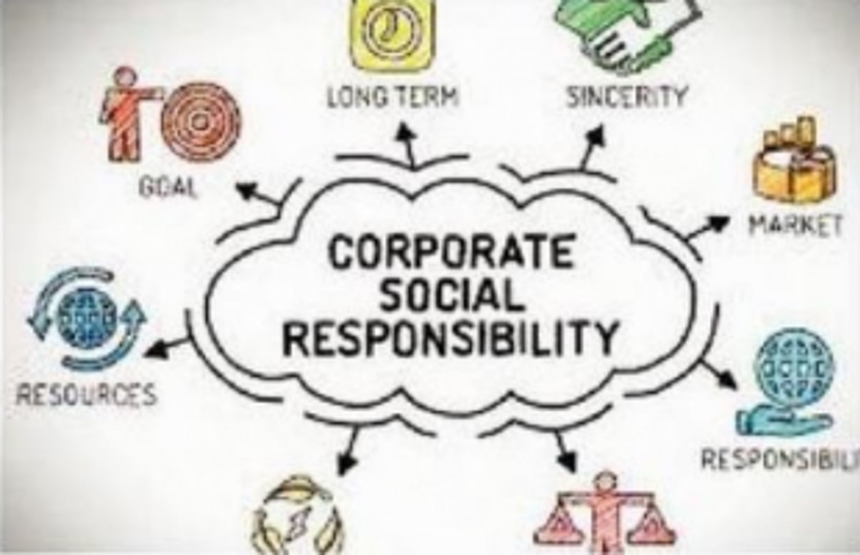
Now, more than ever, as our world and lives change in the light of the Covid-19 pandemic, it is essential that we prioritise and foster social change and innovation. Maybe, with proper oversight, regulation and standardization, Corporate Social Responsibility (CSR) can become a powerful tool for societal improvement. It is that idea that a company should play a positive role in the community and consider the environmental and social impact of its business decisions. As a concept, CSR is a self-regulating business model that encourages companies to move towards becoming more socially accountable to the stakeholders and general public. Ideally, by practising CSR, companies become conscious about the social, economic and environmental impact they have on society. The face of the business world is changing: sustainability is normalising, while buyers and investors expect to see companies transform.
Ever since the establishment of the Corporate Social Responsibility (CSR) regime in India under Section 135 of the Companies Act 2013, CSR spending in India has risen from Rs. 10,065 crore in 2014-15 to 24,865 crore in 2020-21. If a company spends an amount in excess of the minimum 2%, as stipulated, the excess amount is liable to be set off against spending in the succeeding three financial years. The later proviso in the Act weakens the former provision since the requirement of 2% is only a minimum requirement. Ideally companies should be encouraged to spend more than this. Besides, many private companies have registered their own foundations/trusts to which they transfer the statutory CSR budgets for utilisation. The first proviso to Section 135(5) of the Act is that the Company should give preference to local areas around it where it operates. Companies in India that have been practising social responsibility in a big way include Godrej, Infosys, Wipro, Tatas, ITC Ltd, Vedanta Limited, etc. Multinational Corporations (MNCs) that have been in the practice of CSR for a long time are Lego, Starbuck, Johnson and Johnsons, Google, Fizer, etc.

CSR is a hard edged decision. Creating a strong business and building a better world are not conflicting goals they are both essential ingredients for long term success. There is a need to curate a national level platform where all States could list their potential CSR admissible projects so that companies can assess where their CSR funds would be most impactful across India, with of course, preferential treatment to areas where they operate. CSR is a management concept that demonstrates that you are a business that takes an interest in wider social issues, rather than just those that impact your profit margins. CSR also known as Corporate conscience, is essentially a form of corporate self-regulation. It comes from the growing idea that businesses are not isolated entities that have no effect on the external world.
Successful companies/people have a social responsibility to make the world a better place and not just take from it. They must constantly ask what are they giving back to societies especially from where they operate and deplete resources. While start-ups and small companies don’t have the deep financial pockets that enterprises have, their efforts can have a significant impact, especially in their local communities. Strengthening the CSR framework is a profitable idea. Recently the Hindustan Petroleum Corporation Ltd (HPCL) has collaborated with the Indian Army for implementing a CSR project to coach and mentor less privileged girl students in Kargil.
The definition of business success goes beyond profitability, growth rate and brand recognition. In today’s world, customers, employees and other stakeholders judge a company by how its activity impacts the community, economy, environment and society at large. Corporate social responsibility practices are a way to demonstrate your business’s stance on the matter. Companies need to prioritise environment restoration in the area where they operate, earmarking at least 25% for environment regeneration. One primary focus of CSR is the environment. Indian Oil Corporation (IOC) has recently announced a Rs 2 lakh crore investment to achieve carbon neutrality in its operations by 2046.
All CSR projects should be selected and implemented with the active involvement of communities, district administration and public representatives. With every passing year CSR must begin to play an important role in how companies approach business and engage communities. Businesses that practice corporate social responsibility aim to improve their communities, the economy or the environment. By demonstrating a developed CSR programme and initiatives, companies are bound to become more appealing to both current and future investors. While companies need to prioritise environment restoration in the area where they work, they must be encouraged to put that increased profit into programs that give back to the communities wherein they carry on their operations. Business houses can also demonstrate CSR by treating, employees fairly and ethically.
Many companies self-assess their CSR efforts, often the most practical and trusted way to prove your company’s social accountability to the public is to undergo a third-party social impact assessment. Depending on where one looks from, CSR has a different shape, size, goal and impact. From the company’s point of view, very often, it is giving back to the community and contributing to the all-round development of its employees. From the bystander’s lens, however, most CSR work is seen only as a task that companies and conglomerates undertake because the government mandates it.
(The writer is a social scientist and a senior practising criminal lawyer)