The horrific crash by an over-speeding Mercedes-Benz SUV at Banastarim last month, which killed three people and left others seriously injured, is already fading from our memory. And why wouldn’t it, given that crashes causing multiple deaths are now almost routine on Goan roads? The news, visuals, and tragic personal aftermaths occupy the media for a few days, before being replaced by the next horror. Less horrible crashes, causing non-fatal injuries or even single deaths, have meanwhile become so frequent and normalized that they hardly get any coverage. On the day of the Banastarim disaster itself, another drunk driver ploughed into a shed in Siolim, injuring two labourers sleeping inside. Most media found it not worth reporting– that is what we’ve come to.
But the Banastarim accident deserves some more attention, for it reflects a combination of the barbarisms that plagues Goa today. I use the word barbarism for want of a better way to describe ghastly violence that is not just routine, but traditional.

The first issue is the obvious one – the deadliness of the Goan road commute, which is, incidentally, the only kind of commute available in Goa, unless you belong to the helicopter-using crème de la crème. Thousands of crores of public money are being squandered by the government on what they call roads but should be more correctly called death-traps.
According to police traffic cell data, there were 3011 road accidents in 2022, which means an average of nearly 10 accidents per day. A total of 271 lives were lost in these accidents, which is more than one every alternate day. The fatalities were primarily of two-wheeler riders, followed by pedestrians. Coming to just the first four months of 2023, 982 road accidents have resulted in 127 deaths, ie more than one accident a day.
For anybody with the smallest knowledge of world traffic issues in recent times, the solution is obvious: better public transport.
What Goa needs is much better public transport, meaning bus services that reach every residential area, with a high frequency, low or zero pricing, round-the-clock availability, and dedicated lanes. But also, along with this, fewer private vehicles on the road – achievable by serious restrictions on private car ownership and movement, a complete ban on driving by tourists, and an increase in taxis, autos, and motorcycle pilots. I should stress here that this is not some great radical thinking; such strategies are in place in many parts of the world.
Now our political leaders can hardly be considered ignorant of these solutions – not after all the international junkets they undertake at our expense. But all they propose are more roads – straighter, wider, with flyovers over them, and very expensive. Wider and straighter roads are, in fact, known for increasing accidents, because people tend to drive faster in such conditions. For slower and careful driving, one needs narrow and winding roads. But Goa is going gung-ho for more and more accident-prone roads, amidst burgeoning vehicle numbers, worsening driver behaviour, and corrupt/inefficient authorities (who ignored, for example, the repeated traffic offences by the killer SUV prior to Banastarim).
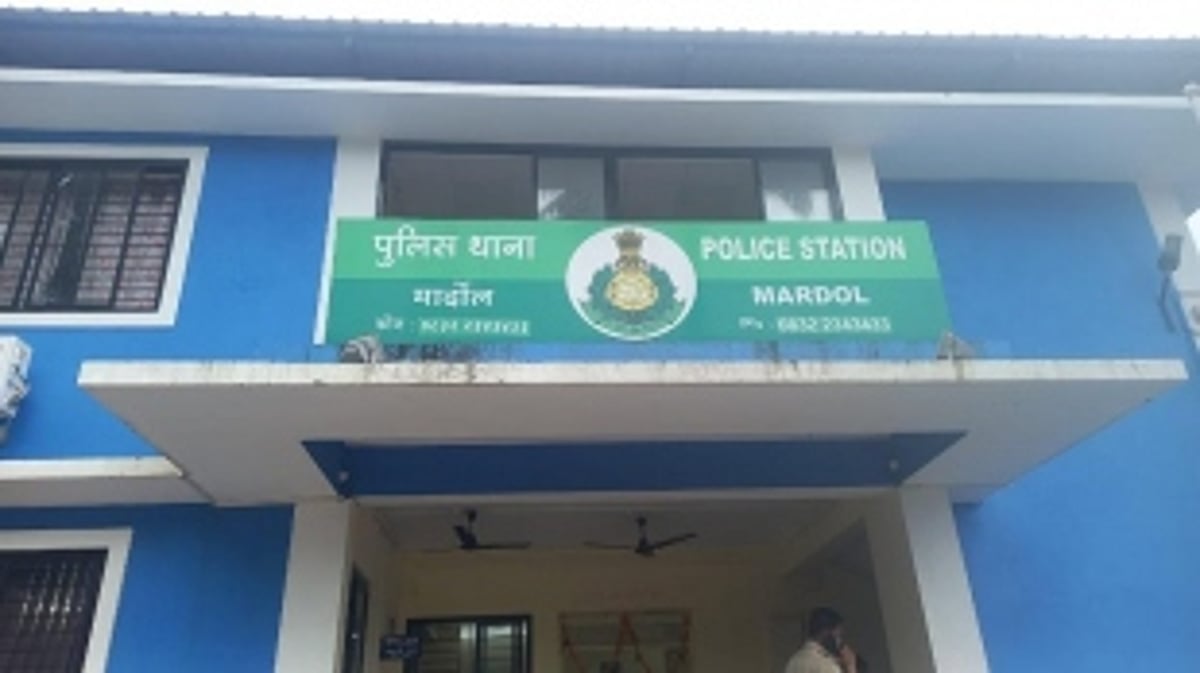
On top of these deadly roads, is our sickening culture of privilege, or different-strokes-for-different-folks. The Banastarim incident was like a showcase of privilege. First, the cool arrogance of the perpetrators of the ghastly mayhem: the reportedly-drunk Sawardekar couple who, after smashing into multiple other vehicles and their occupants, remained unhurt themselves inside their 2.5 ton imported luxury car. Then the police who reportedly whisked these perpetrators away to safety – and all the way to Panjim instead of the nearby Mardol police station; and who, further, did not arrest anyone for hours. And the immediate involvement of practically everybody who is anybody in the corridors of power – and across party lines – to ‘settle the matter’, including the reported offer of a replacement driver to take the fall.
Not to mention the discovery that the same car had received six over-speeding challans in just the previous two months, none of which were paid. Driving licenses supposedly get automatically cancelled after three speeding offences, but here nothing happened, right till Banastarim. And even after that, it’s been lawyers who have been dealing with the ‘problem’, not the offender herself.
Basically, it is pedigree (Saraswat in this case, plus a top hotelier-cum-builder family) that makes all the difference. What are six speeding tickets, each meaning a fine of a thousand rupees or so, at that rarified level? Just a problem created by CCTV technology; in the good old days, no challan would have been issued at all.
Compare this to a recent news report from Finland. There, traffic fines are apparently calculated according to the offender’s income – higher fines for those with higher incomes. Thus, it was reported that multi-millionaire Anders Wiklof, one of the richest persons in the country, had been penalized the highest fine ever – 121,000 Euro, the equivalent of more than a crore of rupees – as a traffic fine for a second speeding offence (in which no-one got hurt).
Wiklof’s is also a case of different strokes for different folks, but the opposite of what we have here. Here we claim to be equals (so that a multi-millionaire driver, with a battery of lawyers at her beck and call, is fined the same as a driver employed by the vehicle-owner), but often find the privileged getting away with even murder, leave aside unpaid fines. What Finland is imposing, on the other hand, is not equality but equivalence, which can work as a deterrent for all, rich and poor.
Can we imagine such equivalence before the law here? Can we imagine quality public transport? The Constitution actually provides for substantive equality or equity, but this remains invisible on the ground, where the system practically encourages reckless, moneyed, and over-speeding monster vehicles to break the law. Until this changes, we are going to see more such ‘accidents’ – which are not accidents at all, but the natural result of an old and toxic culture of privilege combined with killer roads.
(Amita Kanekar is an independent researcher and novelist)