Siolim has been popularly known as the rice bowl of Bardez. Farming was a traditional occupation here. People toiled in their fields, tended to their cattle and were part of many allied activities. Our ancestors, were God fearing people. They toiled from dawn to dusk with an interlude in between for a mid-day meal break and a quick nap.
The villagers worked tirelessly for eight hours. It was uneconomical to hire daily wage labourers, therefore they shared the burden of work by working in each other’s fields. The rains brought in much of the fertile silt and deposited in the fields here. The question of using chemicals fertilisers for enhancing productivity never arose. The locals, the bandkars and the khuntekars from Sodiem-Siolim, were professional in erecting and constructing temporary mud bandhs and strengthening the same with wooden logs.

Rice, vegetables, pulses and everything that was required was grown in the fields. Despite of the hardwork, the people had time for God, festivities, festas, jatras, tiatrs, weddings, dances, etc. It brought charm into their lives. Every household had their own plantation. During summer, families would spend much of their time plucking cashews, extracting nero and distilling the famous urrak and cashew feni.
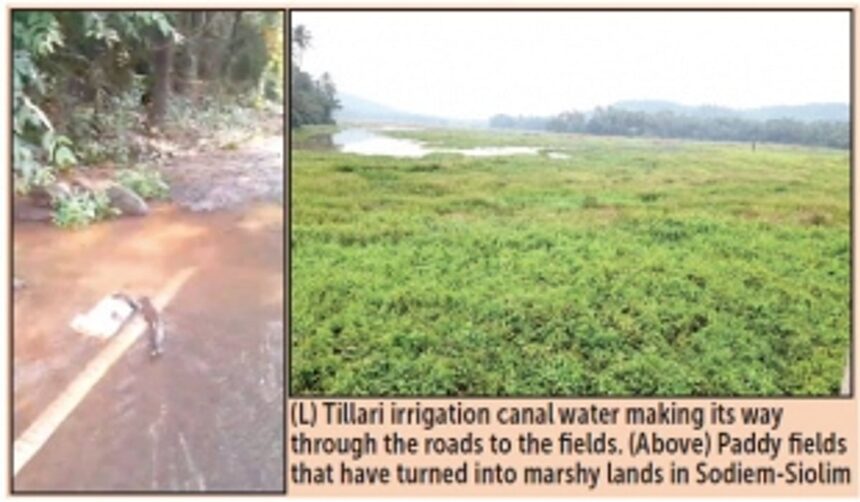
Men, women and children were all engrossed in the traditional occupations and worked hard. Then in the early nineties came the disastrous Tillari irrigation project, which was supposed to supply water to the fields so that the farmers could grow three crops. Cashew farmers were promised water for their orchards too.
The project, however, which was supposed to be a boon became a curse. It started leaking even before it was constructed and water started seeping into the fields and the village wells. The fields were then waterlogged for the last two and half decades as the Tillari still continues to leak and also release water clandestinely. Today, neither a harvester nor a tractor can enter the field as it is waterlogged.
Despite several gram sabha resolutions being passed against the draconian Tillari irrigation project with villagers seeking compensation for the losses. Both the panchayats have maintained a stoic silence over the demands of the villagers. Today thousands of acres of fields have been reduced to swamps. Various migratory birds which made their village their home during winter, even from North America, are no longer seen today as their feeding grounds have been invaded by stubborn weeds.
The river fish that would move upstream during the rains, has disappeared. So have the turtles and frogs. In fact the whole biodiversity has been destroyed. The hills have been divided into two and there is no place for the cashew farmer to go into his plantation and harvest his crop. The Tillari irrigation roads are homes to anti-social elements where drug trade is rampant and addicts sniff, snort and throw away cigarette stubs, which ends up burning acres and acres of cashew plantation.
This year, the same story is going to repeat itself in a cruel way if the villagers don’t take up the issue vociferously with the authorities. If we are to preserve our land and fields for posterity then the villagers will have to unite and fight to save little of what is left of the village and protect mother nature. Time villagers get their elected representatives to work and keep the village green and restore the land to its previous glory.