With the winds of change blowing over Goa, laden with coal dust and pollution, anything that gives impetus to this issue becomes a sensation overnight. Similar seems to be the case with Bardroy Barreto’s Konkani flick, that highlights the fate of our rivers if the ‘go ahead’ is given to river navigation or river nationalization, the term that is increasingly used to define the issue.
Bardroy, who revolutionised the Konkani film scenario with his iconic movie Nachom-ia Khumpasar, took about three painstaking months to prepare the video on how Goa that highlights the adverse effects on our rivers, if allowed to channel goods, or to be ‘nationalised.’ It is little wonder that the video has gone viral.
“It was basically Abhi and I who prepared the video with some of my friends helping with the sound engineering,” Bardroy said, recounting those tireless days. ‘Abhi,’ Abhijit Prabhudessai of the Rainbow Warriors was with Bardroy all along in preparing the video.
Bardroy, who is based in Mumbai comes to Goa off and on and being a close friend of Abhijit would meet him often and also attend the meetings with villagers and other people over issues like coal pollution and river nationalisation.
Initially, they thought of making a documentary on how coal dust pollution would adversely affect Goa. However, during discussions they emphasised that the change in rivers would be more relevant topic. “The script was prepared one afternoon when we were sitting in my flat at Borda,” he gushes. But being creative and spontaneous, the improvisation of the script began as they began shooting and that is why there is no written script and the whole issue is about Abhijit rendering his perception to the approaching problem.
Initially, Bardroy who is a cinematographer, merely shot Abhijit speaking at locations that could spell problem in the background, in the process travelling the length and breadth of Goa.
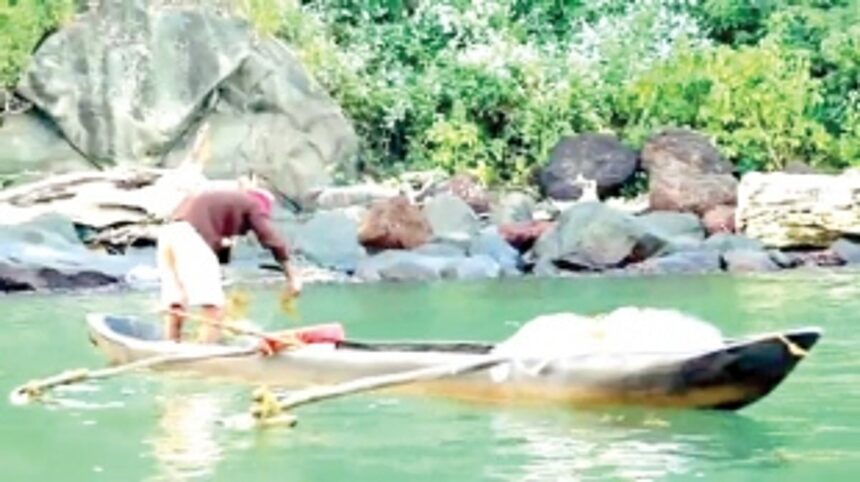
However, since they wanted to focus on rivers, they maintained their script and shooting close to the rivers, covering rivers Mapusa, Mandovi, Zuari and Sal. Unfortunately, they could not shoot at Cumbarjua creek and Chapora river due to the paucity of time.
“We shot around three and a half months back and the shooting was done over a period of 45 days but not continuously as it was done whenever I was down in Goa and when Abhi was free,” revealed Bardroy, who is the producer, cinematographer, mixer, editor and music arranger for the video.
“My friends Allwyn Rego and Sanjay Maurya, who had done the background score for my movie helped with the background sound in the video, providing the captivating sounds of the birds fluttering and the explosions in the background,” Bardroy pointed out.
The images used were by and large those that were shot in Goa, while some were also taken from the internet, specially those relating to the wildlife, while ensuring that the images or clips were Goa-centric. “The editing took about a month as nothing was formatted and I would work on it as and when I felt, since there was no deadline to meet,” recalls Bardroy.
While the voice recording is about 3:15 minutes the actual video has been stretched to 4:26 minutes by providing more visuals. In fact, one can hear three different types of background music that Bardroy used from his music bank in the video.
The first 1:37 minutes of the video has cheerful music as the video is about how Goan rivers have evolved and were used till present times. However, the next 2.65 minutes produces a melancholic and soul-rendering touch, almost reflecting pathos as the video focuses on what will happen when the rivers are used only as navigational channels.
In the last section – the last 1:24 minutes – vibrant music calls for action, as the video concentrates on what needs to be done.