Located near Verna, the village that houses the industrial estate, the seven-ward-strong Nagoa village enjoys a central location.
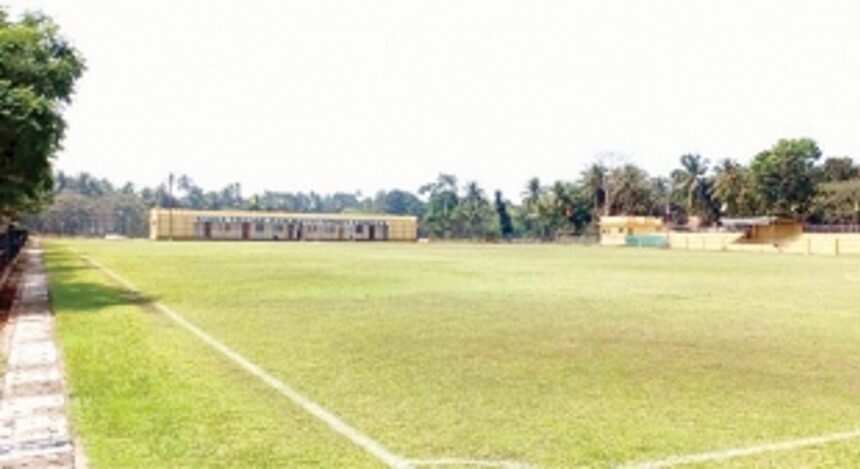
It also enjoys the status as one of the best village panchayats. Formed on November 15, 1996, the panchayat is constantly striving for the betterment of its citizens. For instance, the Nagoa village panchayat building complex consists of a gymnasium, fair price shop, sub health centre, library, panchayat ghar, sports club house etc. In addition, there’s a football ground nearby, a jogger’s park and other amenities such as footpaths, recreational benches etc. On a larger note, there panchayat also revamped the drainage system of the village and has a strict garbage policy in place, which includes hefty fines for dumping in the open and an efficient collection system.

Speaking about the financial condition of the village, Nagoa Sarpanch Maria Cabral pointed out how the funds available with the panchayat had nearly doubled, having increased from Rs 4.5 crore in 2011 to Rs 8.5 crore in 2020.
Speaking about the source of revenue, Cabral said that Octroi grants and Industrial Development Corporation were the major sources of revenue but that such revenue had stopped in 2015.
“Currently, the major source of income is the playground, which was recently built by the Sports Authority of Goa. Last year, more than Rs 10 lakh revenue was generated from this ground, which is given on rent for football teams and sports activities, “Cabral added.
The gym and the fair price shops are other sources of revenue, she added. Cabral further pointed out that the panchayat has its own tractor, which it gives on rent to the local farmers that helps them in their agricultural activities.
Nagoa Panchayat Secretary Sachin Naik had proposed a solar powered- ice mill in order to overcome difficulties of the farmers.
“The panchayat is also taking steps to protect and preserve the existing wells, water bodies and no permissions are given to dig new bore wells,” Naik added.
“There is a concern about water contamination,” said Cabral, while hinting that the rising influx of migrant population could be linked to this problem. She pointed out that sewage soak pits are dug in close proximity, which tend to overflow. On this, the secretary said that a proposal for community soak pits had been discussed and has been incorporated in the gram panchayat development plan 2020-2021, which could solve this issue.
The Sarpanch added that they are looking into the issue of migrants staying in alleged illegal rooms and that she had given a letter to the Verna police requesting to
obtain form ‘C’ for tenant verification with the panchayat endorsement. “A special meeting with the police inspector is likely to be called shortly to resolve this issue, Cabral stated, while adding that the locals face other issues related to water supply, rising garbage, fluctuating electricity due to the burden put by the migrants on their limited infrastructure and services.
Commenting on waste management issues, the secretary informed that the panchayat collects 400 kg of dry waste every week and the 1,600 kg waste collected per month is handed over to Bhavish Agency from Verna for disposal. He also said that wet garbage is disposed by the locals themselves by feeding domestic animals or as a form of manure for their fields and gardens.
Naik also revealed that the panchayat is planning to set up its garbage treatment plant wherein dry and wet waste will be treated and manure produced from this will be sold.
He added that a budget of Rs 50 lakh has been kept for the same and that a 23 lakh MRF facility is likely to come up through the 14th Finance Commission grant.
Speaking about the panchayat’s future plans, the secretary added that the community hall cum indoor stadium under the Din Dayal Infrastructure Development Scheme is coming up and will be executed by GSIDC. The estimated cost of the project is Rs 2 core and it is expected to generate income for the panchayat.
Moving on to how they manage the market area, the secretary said that they have systematic allotment and placement of vendors at the Nagoa market shed. The sarpanch added that the panchayat has also decided to soon demarcate a single designated place for mobile carts.
Responding to the opposition from villagers against a cellular tower, the secretary confirmed that the locals had filed a written complaint, following which, a showcase notice had been issued and that soon the tower will be demolished as it doesn’t have permissions from the panchayat.
Quote Room
The cellular tower is one
of the major issues and locals had got together and inquired about it with the
panchayat, which carried out an inspection. It came to light that it doesn’t
have permission and had filed a complaint in this regard. As per my knowledge,
it is to be demolished soon. We are
opposing the presence of a tower in close proximity of residential areas for health
and environment concerns
Liffa, resident
Nagoa panchayat has taken
efforts to solve the issues faced by the local farmers. We get most of the
required facilities in terms of schemes, seeds, tractor on rent, etc from the
panchayat. Locally grown rice is also sold at the panchayat’s fair price shop.
The panchayat’s plans to set up its own rice mill, will be a step towards self
sustainability for not only the farmers but the local population
Clayton Fernandes, Farmer
Nagoa
didn’t have the migrant problem that it has now. The industries in Verna have
led to the influx but the concern is about how they stay here illegally. This
has built up pressure on resources for Nagoa villagers and has caused other
problems like sewage and contamination of water bodies. Further, there is concern about the security
of the local female population. All this issues need to be tackled properly
Dilecta
D’Costa, Teacher