Priests in every church across get busy blessing homes soon after Easter for about a period of eight days Easter is an annual Christian celebration commemorating the resurrection of Christ. It is traditionally observed on the first Sunday following the initial full moon after the spring equinox, with its timing determined by specific tables aligned with the Gregorian calendar in Western churches and the Julian calendar in Orthodox churches. It is also referred to as Easter Sunday, the day dedicated to commemorating this festival.
According to the International Standard Bible Encyclopedia, the word ‘Easter’ does not properly occur in Scripture, although the King James Version has it in Acts 12:4 where it stands for Passover, as it is rightly rendered in the Revised Version (British and American). There is no trace of Easter celebration in the New Testament, though some would see an intimation of it in 1 Corinthians 5:7. The Jewish Christians in the early church continued to celebrate the Passover, regarding Christ as the true paschal lamb, and this naturally passed over into a commemoration of the death and resurrection of Easter. According to Easton's Bible Dictionary, the name ‘Easter’ was derived from ‘Eostre’, originally a Saxon word (Eostre), denoting a goddess of the Saxons, in honor of whom sacrifices were offered about the time of the Passover. Another probability is the Norse eostur, eastur, or ostara, which meant ‘the season of the growing sun’ or ‘the season of new birth’. The word east probably has the same roots. In this case, Easter would be associated with changing of the season.

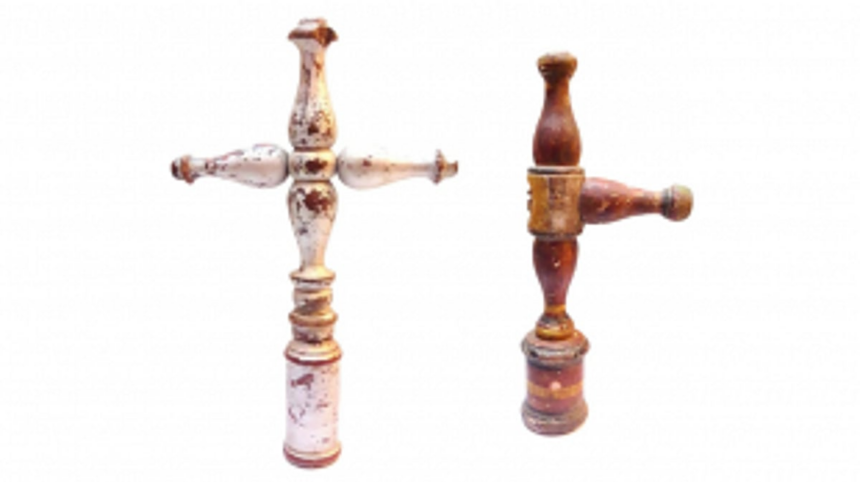
A more recent and complex explanation comes from the Christian background of Easter rather than the pagan. The early Latin name for the week of Easter was hebdomada alba or ‘white week’, while the Sunday after Easter day was called ‘Dominica in albis’ from the white robes of those who had been newly baptized. The word ‘alba’ is Latin, both for white and dawn. Post Easter, there was a unique tradition observed throughout the Globe. Houses and homes were blessed by a priest who came from the church to the homes of their respective parishes. These house blessings were held in a time span of around one week post Easter. When the priest left the church, to proceed to a particular ward for blessing of homes the church bells were rung to indicate that the priests were leaving. When these priests reached the ward, they have planned to conduct house blessings for the day, the bells of the chapel in that ward were rung so as to keep the people posted on the arrival of the priest in their ward. As the priest visited people’s houses, he blessed every family member standing at their oratory which was adorned with lit candles and along with them the full house was also blessed. Priests walked through the whole house, blessing every room and mainly the well of the house generally located in the kitchen. In today’s times however due to practical reasons, all the rooms of house may not be blessed individually with more emphasis being paid to blessing of the family living in it. The priest on his visit would carry an empty cross which was handed over to a male (a child was preferred) of the family who was asked to stand at their family oratory as the priest chanted his prayers. Several families had their own crosses mounted onto a wooden staff, meant to be used during their annual house blessing after Easter. Unfortunately, in today’s time, probably due to ignorance or convenience, most of the priests carry a regular crucifix instead of an empty cross. Rev. Fr. Avinash Rebello, ordained in 1967 says, ‘I have faint memories about the use of empty crosses back in the day’. Further he says, ‘probably the practice of using empty crosses in Goa was already outdated in the second half of the 20 th century in most parishes. The empty cross reminds us that Christ was one who could not be stopped by death.
The grave in which he was placed could not hold him. His victory over death was complete through his resurrection. The empty cross, like the empty tomb, is the sign of victory of Christ over death and sin and shows that He has departed in glory. The 19 th Century crosses shown here could have been crafted in Cuncolim, a village in South Goa, by artisans known for their unique craftsmanship of "Chitari" painting, which involves the use of colourful natural pigments (today replaced with synthetic paints) to paint intricately on wood. Their works were inclusive of various household articles/furniture used in Goan homes, churches and temples.