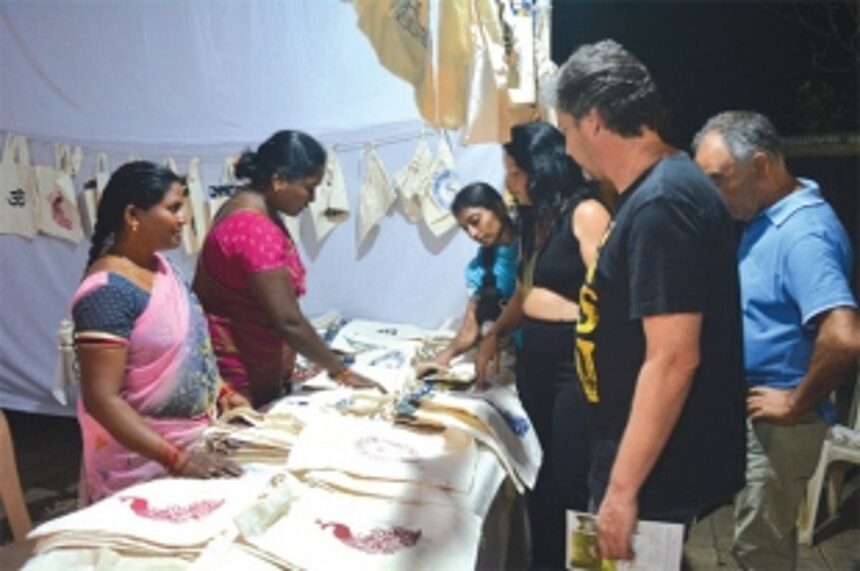
As Banglanatak dot com and Ravindra Bhavan Margao hosted the third edition of the
Bengal Goa Mela earlier this month, the state’s commercial capital and the
people of Salcete truly had a good time listening to traditional Bengali folk
music in the evenings while the students picked up handicraft ideas from local
Bengali and Goan artisans and learnt the art at workshops held in the mornings.
But the real treat were the multiple stalls selling Goan handicrafts and
Bengali fabrics, bags, accessories, linen, furniture and lamp shades.
One such amazing stall comprised the women
of Telangana and their savai grass jute bags. The women have been working hard,
with complete commitment to quality and neatness.

When one of the women at the stall learnt
that the quality of their products are being uniformly appreciated, she said,
“That is what we need. Money is secondary.” And it is that appreciation that
they received from each of the customers that filled them with satisfaction.
Understanding the expenses involved and
the need for a revolving fund, they keep part of the earned profit aside for
this purpose. When an order comes, they make sure that everyone gets a fair and
equal share. They have taken complete charge of the work, from collecting the
cloth from the neighbouring transport office, to handing the costing and the
stitching, to the picking and parcelling from the post office.
In fact, the entire manufacturing process has required a lot of
effort. They bought motors for their machines and worked on getting them fixed
with the help of others in the village. They also took the time to travel to
Chennai to learn screen printing on their own and then implemented it after
spending time to master the art with a lot of practice in their own village.
That’s the story of the Paalaguttapalle women who were brought
to the fair by Banglanatak dot com. Roopa, Annapurna, Buji and Lavanya
travelled all the way from the village of Paalaguttapalle in Telangana. They
make and sell multi-purpose, eco-friendly cloth bags with nice motifs.
“They
loved the way Goans treated them. Paalaguttapalle has been hit by drought for
several years. The women of Dalitwada turned to making bags as an alternative
livelihood. We ourselves at Goa Foundation ordered 1,300 bags from them for the
Organic World Congress. They delivered on time and the quality was extremely
good. The bags seem durable and are certainly a better alternative to plastic
junk that will only litter our villages and streets,” says Claude Alvares,
Director, Goa Foundation.