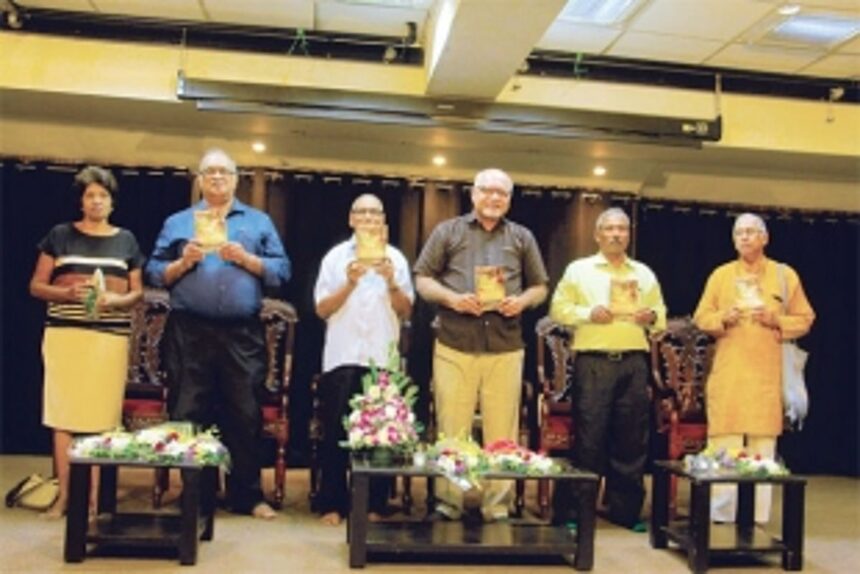
With detailed research on the village communities in Goa, Fr Visitacao Monteiro
has come out with a book titled, ‘Goan Village Communities’ that speaks about
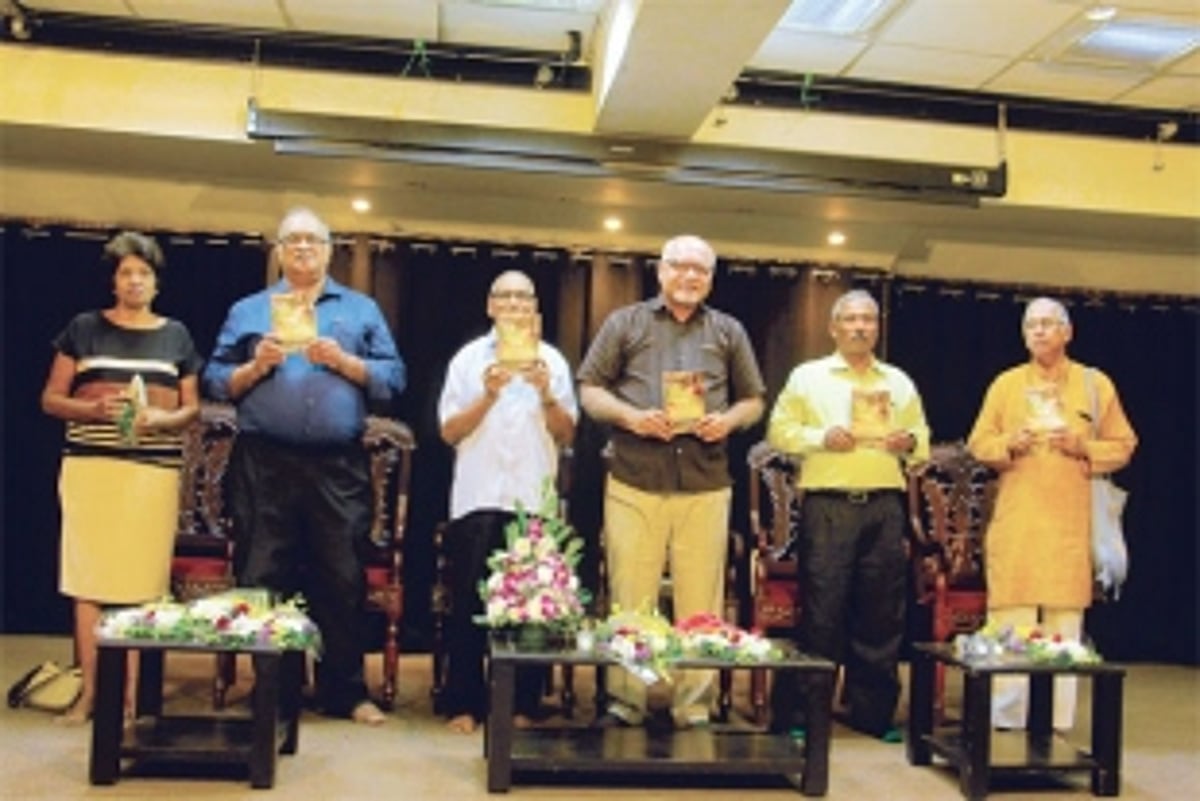
the Gaonkaris. Its release took place at the hands of the Chief Guest,
Professor Prabhakar Timble, a thinker who is known for his writings; he is also
the former State Election Commissioner of Goa. Also present at the book launch
were Hector Fernandes and Dr Andre Pereira, an advocate for land rights in Goa,
who was a great help to Fr Visitacao, sharing his knowledge about the land laws
in Goa, along with Hector. Fr Visitacao says that Hector, as a geologist, has
worked in the Communinades and has good knowledge about it, which he shared
while writing the book. Celsa Pinto, a noted personality in the educational
sector and author of several books, and Fr Mossein Athair, close friend of the
author, also a writer and a strong supporter of the Konkani language, were also
present.
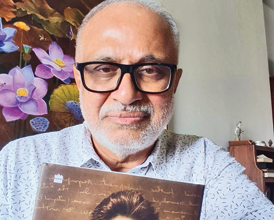
Fr Visiticao, the author of the book ‘Goan Village Communities’,
is a Diocesan priest, writing and working for the better of Goa. He is
observant and critical by nature, and has written many articles for various
newspapers, which are related to spreading awareness. He has a thirst for
research and has worked on everything that affects Goa and its people,
currently doing research on migration of Goans outside Goa.

Highlighting the contents of the book during the release
function was journalist Sigmund D’Souza: “For the benefit of the common man,
the most beautiful thing that Fr Visitacao has done through this book is that
he has written in a simple language, making it easy to understand.”He added
that the book covers various aspects such as the customs and usage of the
previous autonomous communities, called ‘Communidades’ today. Mentioning the
fact that textbooks of schools have inaccurate information about the
‘Communidades’ being formed by only one caste or community, Sigmund said that
the newly launched book does not agree to that. “There exist communidades
belonging to all castes in Goa, so it is not right to say it was formed by a
certain caste,” he said. The book mentions the present scenario of the
community lands being sold, stating the truth that community land cannot be
alienated or sold as no person holds land by state land tenure. Sigmund said,
“It is a bitter truth for many, especially for the Goans abroad, who want to
sell off their land for the sake of money.” He elaborated on the fact that
Goa’s village communidades distributed the land among the native Gaonkars,
becoming the co-owners of the land, because of which, the land can never be
sold. Without admonishing anyone, Fr Visitacao, the author of the book, has
very beautifully pinned down these truths.
Another thing the book talks about is the threat of losing Goa’s
ecology, the way of life, and also the identity of these Goan village
communities. “The Gaonkaris existed from time immemorial and were not formed by
any ruler or state so as to allow the state legislature to amend or frame laws
for them,” Sigmund said. Very subtly, Fr Visitacao has mentioned everything of
importance to the Goan people, so that they can be aware of the truth and act
accordingly, he added.
Also
speaking on the occasion, Fr Visiticao said, “I wish for the peopl of Goan to
read my book and think about the customs, cultures, lifestyle, lands and
identities that we Goans are losing, and take a step towards the betterment of
Goa.”