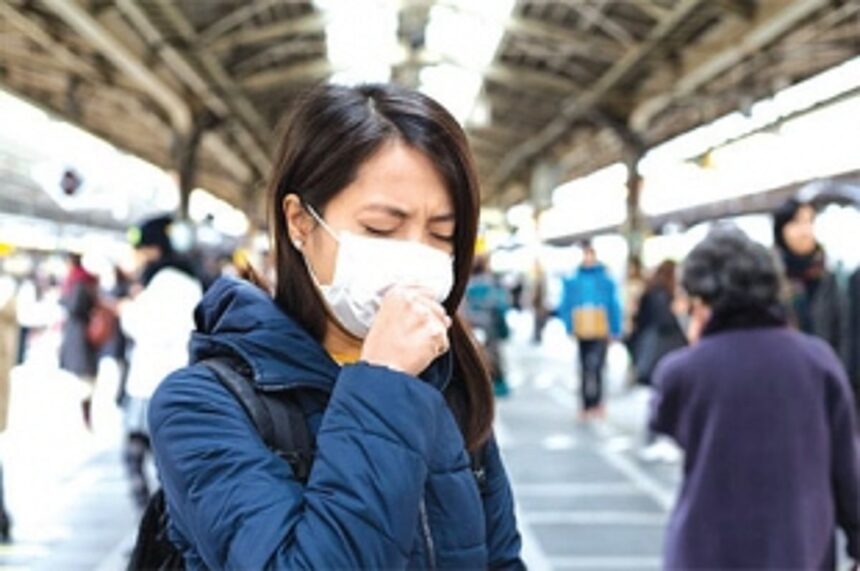
In January 2020, the World Health Organisation (WHO) declared the outbreak
of a new coronavirus disease in Hubei Province, China to be a Public Health
Emergency of International Concern. The 2019 coronavirus disease (COVID-19) is
now rapidly spreading to other countries around the world.
WHO and public health authorities around
the world are taking action to contain the COVID-19 outbreak. However, long
term success cannot be taken for granted. All sections of our society –
including businesses and employers – must play a role if we are to stop the
spread of this disease.

How COVID-19 spreads
When someone who has COVID-19 coughs or exhales, they release
droplets of infected fluid. Most of these droplets fall on nearby surfaces and
objects – such as desks, tables or telephones. People could catch COVID-19 by
touching contaminated surfaces or objects – and then touching their eyes, nose
or mouth. If they are standing within 1 or 2 metres of a person with COVID-19
they can catch it by breathing in droplets coughed out or exhaled by them. In
other words, COVID-19 spreads in a similar way to flu. Most persons infected
with COVID-19 experience mild symptoms and recover. However, some go on to
experience more serious illness and may require hospital care. Risk of serious
illness rises with age: people over 40 seem to be more vulnerable than those
under 50. People with weakened immune systems and people with conditions such
as diabetes, heart and lung disease are also more vulnerable to serious
illness.
Simple ways to prevent the spread of COVID-19 in your workplace:
Make sure your workplaces are clean and hygienic. Surfaces
(desks, tables, etc) and objects (telephones, keyboards, etc) need to be wiped
with disinfectant regularly because contamination on surfaces touched by
employees and customers is one of the main ways that COVID-19 spreads.
Promote regular and thorough hand-washing by employees,
contractors and customers because washing kills the virus on your hands and
prevents the spread of COVID19:
Put sanitising hand rub dispensers in prominent places around
the workplace. Make sure these dispensers are regularly refilled.
Display posters promoting hand-washing – ask your local public
health authority for these or look on www.WHO.int.
Combine this with other communication measures such as offering
guidance from occupational health and safety officers, briefings at meetings
and information on the intranet to promote hand-washing.
Make sure that staff, contractors and customers have access to
places where they can wash their hands with soap and water.
Promote good respiratory hygiene in the workplace because good
respiratory hygiene prevents the spread of COVID-19:
Display posters promoting respiratory hygiene. Combine this with
other communication measures such as offering guidance from occupational health
and safety officers, briefing at meetings, etc.
Ensure that face masks and / or paper tissues are available at
your workplaces, for those who develop a runny nose or cough at work, along
with closed bins for hygienically disposing of them.
Brief your employees, contractors and customers that if COVID-19
starts spreading in your community anyone with even a mild cough or low grade
fever (37.3 C or more) needs to stay at home. They should also stay home (or
work from home) if they have had to take simple medications, such as
paracetamol/acetaminophen, ibuprofen or aspirin, which may mask symptoms of
infection.
Keep communicating and promoting the message that people need to
stay at home even if they have just mild symptoms of COVID-19.
Display posters with this message in your workplaces.
Make clear to employees that they will be able to count this
time off as sick leave.
Things to consider when you and your employees travel
Before travelling
Make sure your organisation and its employees have the latest
information on areas where COVID-19 is spreading. Based on the latest
information, your organisation should assess the benefits and risks related to
upcoming travel plans. Avoid sending employees who may be at higher risk of
serious illness to areas where COVID-19 is spreading.
Make sure all persons travelling to locations reporting COVID-19
are briefed by a qualified professional. Consider issuing employees who are
about to travel with small bottles (under 100 CL) of alcohol-based hand rub.
This can facilitate regular hand-washing.
While travelling
Encourage employees to wash their hands regularly and stay at
least one meter away from people who are coughing or sneezing. Ensure employees
know what to do and who to contact if they feel ill while travelling. Ensure
that your employees comply with instructions from local authorities where they
are travelling. If, for example, they are told by local authorities not to go
somewhere they should comply with this.
When you or your employees return from
travelling:
Employees who have returned from an area where COVID-19 is
spreading should monitor themselves for symptoms for 14 days and take their
temperature twice a day. If they develop even a mild cough or low grade fever
(i.e. a temperature of 37.3 C or more) they should stay at home and
self-isolate. They should also telephone their healthcare provider or the local
public health department, giving them details of their recent travel and
symptoms.
Getting your business ready in case COVID-19 arrives in your
community
Develop a plan of what to do if someone becomes ill with
suspected COVID-19 at one of your workplaces. The plan should cover putting the
ill person in a room or area where they are isolated from others in the
workplace, limiting the number of people who have contact with the sick person
and contacting the local health authorities.
Consider how to identify persons who may be at risk, and support
them, without inviting stigma and discrimination into your workplace. Also,
tell your local public health authority you are developing the plan and seek
their input.
Promote regular teleworking across your organisation. If there
is an outbreak of COVID-19 in your community the health authorities may advise
people to avoid public transport and crowded places. Teleworking will help your
business keep operating while your employees stay safe.
Develop a contingency and business continuity plan for an
outbreak in the communities where your business operates.
The plan will help prepare your organisation for the possibility
of an outbreak of COVID19 in its workplaces or community. It may also be valid
for other health emergencies.
The plan should address how to keep your business running even
if a significant number of employees, contractors and suppliers cannot come to
your place of business – either due to local restrictions on travel or because
they are ill.
Communicate to your employees and contractors about the plan and
make sure they are aware of what they need to do – or not do – under the plan.
Be sure your plan addresses the mental health and social
consequences of a case of COVID-19 in the workplace or in the community and
offer information and support.
Remember, now is the time to prepare for COVID-19.
Simple precautions and planning can make a big difference. Action now will help
protect your employees and your business.
Courtesy
World Health Organisation