Vivek Menezes
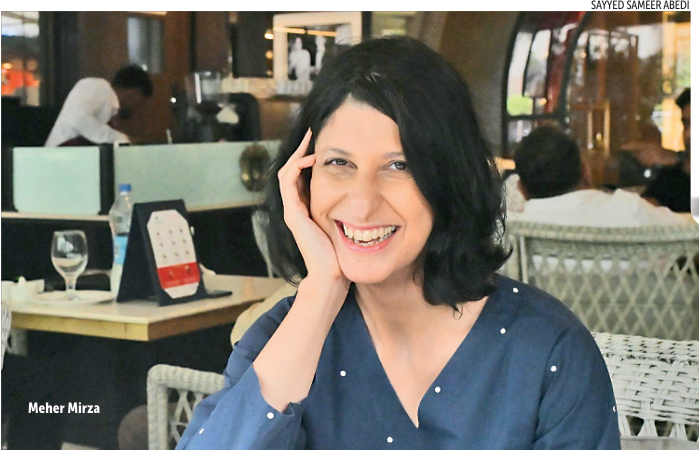
All books are obviously meant to be read, but only few are best savoured instead, when everything comes together as an irresistible whole. That is certainly the case with Meher Mirza’s delightful Sea, Salt & Spice: A History of Mumbai Through Food (Harper Collins), where Chirodeep Chaudhuri’s stunning cover photo and Bonita Vaz Shimray’s lovingly meticulous design and layout matches up brilliantly with the author’s encyclopaedic archival approach. It’s a great book, and gorgeous object.

A collector’s item, and instant classic of the burgeoning food book genre. Mirza’s book debut has been a long time coming, though she told me her first manuscript was completed – “a murder mystery with lots of food. Famous Five type” – when she was just six years old. In an authorial note, she explains further: “There’s no greater privilege than to be able to write about something you adore. In my case, as a Mumbaikar born and bred, to script a book about my beloved city, no matter how concise, how personal, was something I have always dreamed of doing and something I never thought I’d do.” When it came to the subject, “as a person of appetites, what I love most about [this city] is its food” so “it is no surprise, then, that my first book would be on Mumbai’s food history. And yet, what is there to say on this topic that hasn’t been said many times before? This book is the result of my quest to find the answer to that question.” Sea, Salt & Spice is wonderfully embellished by Mirza’s extraordinary resources and resourcefulness.
It is filled with visual wonders, and charming archival finds that have never been presented to general readers before. She says it is “based heavily on old newspapers, government gazettes and first-person chronicles of the city. For these records, I fossicked through old recipe books, guidebooks, bakhars, fiction, advertisements, poetry, letters and old photographs. It helped that my family has the advantage of possessing a large library of books – Indian history texts, thanks to my dad’s voracious interest in the subject, and cookbooks, Gujarati and English, thanks to my mother. Quotes and snippets from these have been folded into the text, to illuminate a larger point, yes, but also because they’re just so much fun.” Actually, such reams of eclectic materials can easily overwhelm or confuse book projects exactly like Mirza’s, because it is not at all easy to combine multiple visual forms with different lengths of texts. Sea, Salt & Spice does this amazingly well, however, with highly intelligent design choices like sepia-toned pages, which subtly ease and enhance the reading experience. I was blown away by how seamlessly the images and text flowed into each other, and it didn’t take long to figure out it was due to the hand of a true master. That is, Goa’s own Bonita Vaz Shimray.
Born and raised in Bandra, this star alumnus of the National Institute of Design in Ahmedabad, and 16-year veteran of Indian book publishing in New Delhi, is currently the award-winning Art Director for the industry giant HarperCollins Publishing India in New Delhi (while partly living in South Goa). When I reached out to her about Mirza’s book via email, she responded immediately that “it was a history I was familiar with, but Meher’s unique perspective, solid research and intricate details felt very wholesome. Being a Bombay Goan, the characters, the landscape came alive, and I felt transported.” Her favourite section is on “the beloved Bombay Duck, the genesis of its name, and many preparations.
The story of this humble fish is also the story of resistance led by the indigenous fishing communities of the city. The pervasive smells of drying ‘bombil’ is integral to the Mumbai experience, and is also one of my favourite comfort foods. My son inherited the gene, and is always in the kitchen taking in smells before devouring the tasty dried fish.” Goa and Mumbai are inextricably interlinked, of course. From day one, when the future megalopolis came onto the global map as Garcia da Orta’s tiny Estado da Índia outpost, and throughout the British reign into the present day.
Mirza says while “they didn’t quite find the subservience they sought, Portuguese colonialism was a chequerboard of triumph and catastrophe: sometimes the Portuguese advanced, sometimes their enemies. Treaties were inked, allyships formed and fell. The Gujarat Sultanate, the Maratha Empire, the Mughal Empire, and later, the British, all chipped away at the Portuguese invaders. The governor of Diu, Malik Tughan, stood up bravely against the formidable Portuguese army of 12,000 soldiers and mercenaries. Sultan Mahmud Shah of Gujarat, with the help of Malik Ayaz and the Egyptian Amir Husain al-Misri, set about purging the foreigners from Vasai – the first joint challenge to their invaders – while Ahmednagar’s Burhan Nizam tried to seize the forts in Panvel district.
Chhatrapati Sambhaji came shadow-close to eliminating them from India entirely in 1683. He was held back from victory only by a simultaneous Mughal attack on his lands.” Sea, Salt & Spice is itself another kind of chequerboard, brimming with breezy anecdotes, but also backed up by an authoritative bibliography of hundreds of sources. On its pages are recipes, menus, vintage photographs, lithographs, post cards, classifieds, poems, and the cultural history of everything from dabbawallahs to drag parties. Mirza summarizes it well herself: “food is geography, anthropology, economics, politics and history – it will always hold up a mirror to the society of its time.” And so “more than anything, I wanted to give a sense of what it would be like living in the city, to write about the things that usually slip through the ‘serious’ historian’s net.
And so, the book doesn’t concern itself too much with kings and queens and administrators and military strategy, but rather with the impedimenta of daily living that is often knuckled to the margins of history books – hotels and shops and markets and such – in short, the small print of life. After all, yeh bhi hai Bombay, meri jaan.