The Goa State Pollution Control Board (GSPCB) has issued an unequivocal warning that playing music beyond 10 pm is illegal under central noise pollution laws, with no ex-emptions for weddings, po-litical functions, religious events or public gatherings.
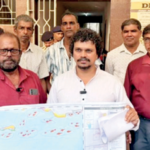
Addressing a press con-ference at the Secretariat in Porvorim, GSPCB chairper-son Levinson Martins said music after 10 pm is permit-ted only on 15 notified days in a calendar year, strictly as provided under the law. Any deviation, he said, would in-vite stringent action.

To enforce compliance, the board has introduced a graded penalty regime: Rs 20,000 for the first offence, Rs 40,000 for the second and Rs 1 lakh for repeated violations.
In addition to monetary penalties, licences of de-faulting establishments may be cancelled, Martins warned. He said all complaints received by the board are for warded to the police and deputy collectors for necessary action. Since September 2025, the GSPCB has initiated 22 enforcement actions related to noise pollution and received around 600 complaints. At present, 38 noise pollution hotspots across the state are being monitored online. Martins made it clear that violations of prescribed day time decibel limits would also attract action. Citizens were urged to report violations at any time through the board’s 24/7 helpline: 8956487938. On waste management, Martins said the board is con sidering imposing Environmental Compensation (EC) on village panchayats that fail to manage garbage effectively. EC, he explained, is a financial penalty based on the ‘pol luter pays’ principle, under which entities responsible for environmental damage must bear the cost of remediation. He came down heavily on panchayats and municipali ties for failing to lift organised waste dumped along state highways and district roads, pointing out that the GSPCB has been undertaking these clean-ups for the past seven to eight years. “Almost 420 km of roads in Goa are being cleaned. Panchayats need to act. In some cases, show-cause notices have been issued. Most panchayats have material recovery facilities, yet dumping continues unabated,” Martins said. The board is also examining complaints of graphite par ticle pollution affecting the villages of Betaki, Khandola, and Amona. The particles are allegedly emanating from a pig iron plant in Amona, located on the banks of the Mand ovi River, and are being carried by wind across the river into neighbouring habitations. Martins said the GSPCB is investigating the source and assessing corrective measures. On air quality, Martins said moderate Air Quality Index (AQI) levels were recorded during 2025 at Vasco, Baina, Bicholim, and Kundaim, while the rest of Goa largely re ported good to satisfactory air quality. The data is based on monitoring under the Central Pollution Control Board’s National Air Quality Monitoring Programme, which covers 18 locations in the state. He added that air quality in Porvorim is under close watch, and contractors have been directed to sprinkle wa ter on roads twice daily to control dust. Martins also highlighted that waste treatment plants in Goa are now generating electricity, which is being used to operate the facilities, with surplus power being supplied to the grid