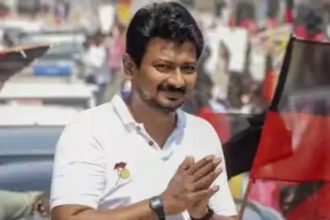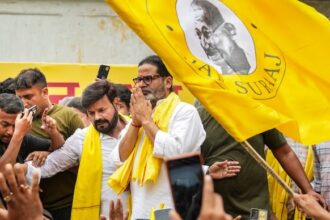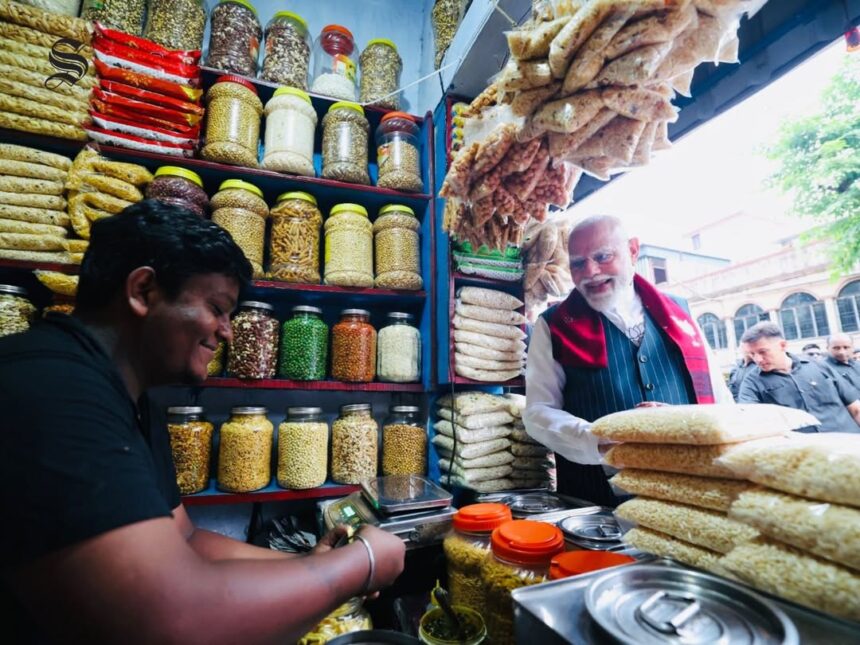
In a rare and spontaneous moment that quickly captured the internet’s attention, Prime Minister Narendra Modi made an unscheduled stop at a roadside stall in Jhargram, West Bengal, on April 19, 2026. While traveling through the region, the PM’s convoy pulled over at College Mor, where he stepped out to interact with a local vendor named Bikram Sau.
The highlight of the encounter was the PM’s request for a ₹10 serving of Jhalmuri. When the vendor asked if he should include onions, PM Modi replied with a witty remark that went viral: “Haan, pyaaz khaate hain. Dimag nahi khaate bass” (Yes, I eat onions. I just don’t eat brains). Despite the vendor’s initial hesitation to take money from the Prime Minister, Modi insisted on paying the ₹10, emphasizing the value of the vendor’s hard work. The humble interaction showcased a lighter, more personal side of the leader.

What is Jhalmuri?
Jhalmuri is the ultimate street food staple of West Bengal. The name itself is a giveaway of its character: “Jhal” means spicy and “Muri” means puffed rice. Unlike its sweeter cousin, the Mumbai Bhelpuri, Jhalmuri is defined by its pungent kick and crunchy texture. It is a cultural icon of Bengali street life, traditionally served in a newspaper cone called a thonga.
How to make Jhalmuri
Jhalmuri Ingredients
To get that authentic roadside taste, Jhalmuri requires a balance of fresh vegetables, crunchy savouries, and pungent oils. The essential ingredients include:
- Puffed Rice (Muri): The light, crunchy base of the snack.
- Mustard Oil: The most critical ingredient, providing a sharp, pungent aroma and flavor.
- Fresh Veggies: Finely chopped onions, green chillies, tomatoes, cucumbers, and boiled potatoes.
- Crunchy Elements: Roasted peanuts, chanachur (spicy mixture), and fried coconut bits.
- Spices: Black salt, lemon juice, and “Bhaja Moshla” (a special roasted spice powder containing cumin, coriander, and dried red chillies).
- Garnish: Fresh coriander leaves and a few drops of tamarind water for extra tang.