Dolcy D’Cruz
National Mango Day is an occasion to celebrate India’s mango heritage, support farmers and local varieties, and appreciate the fruit’s versatility in preparations ranging from fresh slices and juices to pickles, preserves, desserts, and beverages. Goa was once home to around 135 traditional mango varieties, of which only about 77 survive today. The GI recognition has been granted to Goa Mankurad Mango (Mancurad), Goa Hilario Mango (Manghilar/Mangilar/ Mangilal) and Goa Mussard Mango (Mussarat). Goa’s Mankurad mango exports remain limited due to the lack of organised plantations, consistent production, and standardised post harvest practices, with only a small consignment of around 300 dozen mangoes exported in 2024. Miguel Braganza, member of Botanical Society of Goa says, “In 2024, Goa managed to export around 300 dozen Mankurad mangoes, but no significant exports have taken place after that. The consignment was sourced from a single farm, highlighting one of the major challenges in Goa’s mango export sector, the lack of organised plantations and a consistent supply chain. Although there was some production in 2025, there were no exports, and the current season has also not seen a favourable crop. For successful exports, mangoes must meet consistent standards of quality, quantity, and post-harvest handling. India has also faced challenges in the international mango market due to concerns over post-harvest practices, leading some countries such as Japan, China, and Nepal to restrict imports of Indian mangoes. As a result, more mangoes have remained in the domestic market, creating a surplus and affecting growers.” Festakar Marius Fernandes has organised mango festivals in the past as a tribute to this beloved fruit. Sharing his connection with Goa’s mango heritage, he says, “We have an orchard of some of the finest Mankurad mangoes, with trees that are over 80 years old, planted by our ancestors. We are surrounded by mango trees in Amboi Vaddo, St Mathias village on Divar Island, and my late mother Antonetta Fernandes always proudly said that we live in ‘Ambiacho Vaddo’, a place named after mangoes. Since many of our relatives live overseas, and during my grandmother’s time in Rhodesia and Kenya, we had a tradition of sending them dried mangoes or satta and pickles. Another old favourite was Mango Doce (Doce de Manga), made from ripe mango pulp, coconut, sugar, and ghee. It has a firm texture, keeps well when vacuum packed, and travelled easily. Mango jam was also very popular with my mother because it preserved well in sealed jars. My family plans their holidays in St Mathias so they can return during the mango season every year.” Beyond their delicious flavour, mangoes are valued for their nutritional benefits, providing Vitamin C, dietary fibre, antioxidants, and essential nutrients.

FROZEN MANGO SLICES OR CUBES
Frozen Mango is a traditional way of preserving mangoes for consumption later in the year, especially when family members visit after the mango season. The mangoes are peeled, packed in zip-lock pouches or vacuum-sealed bags, and stored in the freezer. Usually, one or two mangoes are packed together so that the entire portion can be consumed after thawing, as it should not be refrozen once defrosted. For longer storage, the mangoes are peeled, sliced, and the seeds are removed before freezing. Seedless mango slices can be preserved for several months, while whole peeled mangoes with the seed are best consumed within a shorter period, such as 15–20 days. It is preferable to store frozen mangoes in a separate freezer away from regularly stored items like fish to maintain their flavour and quality.
MANGO JAM (MANGAD)
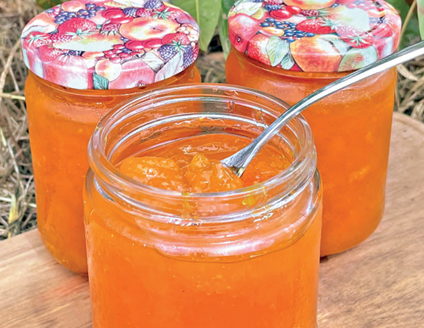
Mangad is a traditional Goan mango preserve, most popularly prepared using the Sashti Mussarad (Mussarat) mango. In North Goa, it is also made from other varieties, including Mankurad (Malcorado) mangoes. The mango pulp is cooked slowly until it thickens into a jam-like consistency, with sugar added if required depending on the sweetness of the fruit. Traditionally, a piece of cinnamon bark is added while boiling, which acts as a natural preservative and enhances the flavour. When prepared and stored properly, Mangad can remain preserved for more than a year
RAW MANGO SLICES (AMBEACHIM SOLLA)
Raw mangoes are washed, peeled, and sliced into thin pieces before being mixed with salt. The slices are spread on clean mats or trays and dried under the sun for several days until they become firm and moisture-free. The dried mango slices are stored in airtight containers and are used throughout the year to prepare pickles, chutneys, or enjoyed as a tangy accompaniment with traditional Goan meals like Sambareachi Koddi.
RAW MANGO IN BRINE (CHEPNECHIM TORRA)
Chepnechim Torra is a traditional Goan preparation made using a specific type of mango known as Ghotta or sucking mango (seedling mango). The mangoes are plucked at a very early stage, before the seed begins to form or harden. The tender raw mangoes are then layered alternately with salt and placed under the pressure of a heavy stone, usually smooth river stones, to help release the natural juices from the fruit. No additional water is added during the process; the liquid that forms is the natural water released from the mangoes, which combines with the salt to create the brine. The mangoes are kept under pressure until they are fully cured and preserved. Traditionally, Chepnechim Torra is stored in earthenware or glazed mud vessels, or plastic containers, as salt can be corrosive. When stored properly, the preparation can last for up to two years.
MANGO SYRUP/SQUASH (XAROPE DE MANGA)
Xarope de Manga (mango syrup) is prepared by cooking ripe mango pulp with sugar and a little water until the mixture thickens into a smooth syrup. It is then strained, flavoured with a dash of lemon juice or spices if desired, and allowed to cool. The syrup is bottled and used to prepare refreshing drinks, desserts, or as a topping for various sweet dishes.
MANGO SATTA
Mango Satta is a traditional preparation made from ripe mango pulp. When there is an excess supply of mangoes, the pulp is extracted, spread into thin layers, and dried under the sun until it becomes firm and chewy. It can be prepared using different varieties of mangoes, but it is usually made from sweeter ripe mangoes such as Malcorado (Mankurad), which give the satta a richer flavour and natural sweetness.
MANGO PULP
Mango Pulp Preservation is another common method of storing mangoes for use throughout the year. Ripe mangoes, especially varieties like Alphonso and other sweeter mangoes, are processed into pulp and preserved. The naturally sweet pulp can be canned without adding sugar, allowing it to retain its flavour and remain usable for a long period. Mango pulp can be stored in glass bottles in the refrigerator for shorter-term use. The preserved pulp can be used to prepare mango juice, custards, ice creams, desserts, and other sweet dishes whenever required.