PANJIM: Suspension of government servants and police personnel is often considered a strong disciplinary action but in several cases, the punishment appears to last only a few months before the suspended staff are brought back into service.
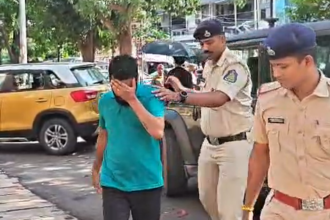
Just last week, five officers—including PSI Viraj Sawant—were suspended for extortion. Following an expose by MLA Carlos Alvares Ferreira in the recently concluded Goa Legislative Assembly session exposing a “rot from within” the force, swift action followed an assurance by Chief Minister Pramod Sawant in the House.

However, political observers and former high-ranking police officers point out a familiar pattern that follows allegations that make headlines.
Tainted officers are often quietly transferred to the Reserve Line temporarily, only to secure premium police station postings later thanks to political patronage, once the dark episodes fade from public memory and scrutiny.
Oversight data reveals over 70 Goa police personnel were recently suspended or dismissed, while 96 active misconduct cases remain stalled before internal inquiry boards.
Between April 2022 and July 2025, records show that out of 107 suspended personnel, a massive 80 officers were reinstated, while only 12 faced actual dismissal and 15 remained suspended.
The department received 119 formal complaints detailing harassment, extortion, and case mishandling, yet prolonged internal delays leave citizens questioning if these cases ever reach a true logical end.
A case in point is the high-profile extortion case involving the police was perpetrated by rogue officers of the Agassaim Police who demanded a bribe of Rs 5,000 from a local resident. Instead of accepting cash, which carries a high risk of detection, the officers forced him to send the money electronically via Google Pay (GPay).
In another incident, PI Vidyesh Pilgaonkar, who was then in charge of the Tiracol Coastal Police Station, was arrested by the Anti-Corruption Bureau (ACB) after two junior head constables under his command were caught collecting monthly “protection money” from local businesses and tourists via GPay. Under ACB interrogation, the junior officers admitted they were running the electronic racket at the direct behest of PI Pilgaonkar. Pilgaonkar was later suspended and criminal proceedings against him are currently pending before the Court.
While reinstatement is legally permissible and a suspension does not amount to a finding of guilt, the repeated cycle of suspension followed by reinstatement has raised questions about the effectiveness of the disciplinary system.
In the case of police personnel, suspension is ordered when allegations are considered serious enough to warrant their removal from active duty during an inquiry. Yet, after a few months, these personnel return to service often on the basis of administrative decisions or after the inquiry continues.
The issue is not merely about whether an officer should be suspended or reinstated. The larger concern is the speed and transparency of departmental inquiries. If an employee is accused of serious misconduct, prolonged delays in completing the inquiry can undermine public confidence. At the same time, keeping an employee under suspension indefinitely, without establishing guilt, can also be unfair.
Former Superintendent of Police (SP) Bossuet Silva said that when government officers or servants are accused of misconduct, they are suspended and a preliminary inquiry is ordered against them. The preliminary inquiry report is then submitted to the respective department and a departmental inquiry is ordered depending on the culpability of the case. If the person is found guilty, they can face minor or major punishment even resulting in dismissal from service depending on the gravity of the inquiry report. The minor punishment is mostly censuring the erring person and the major punishment includes withholding of increments, lowering of rank and often dismissal from service.
Silva said, “The inquiry against constable Gauresh Naik, now placed under suspension for alleged disproportionate assets, has been going on before the Anti-Corruption Bureau (ACB) of the Directorate of Vigilance for the last two-and-a-half years. There is no report and the inquiry has not reached any conclusion whether he possesses disproportionate assets or otherwise.”
Former Goa Government Employees Association (GGEA) president Ajit Talaulikar said that suspension is not a punishment. The officer if found involved in misconduct is suspended so that he cannot misuse his position. During the suspension period, he receives 50 per cent subsistence allowance and if the inquiry is not completed within six months, the officer is either reinstated or continues under suspension with 75 per cent subsistence allowance.
All India Lawyers’ Union (AILU) Goa Unit spokesperson Adv Seoula Vas, said, “Cases like Maina-Curtorim’s custodial sexual assault of a minor, alleged abetment to Samuel Braganza’s suicide and Edberg Pereira being left vegetative after custodial beatings show that even suo motu cognisance by courts or the Human Rights Commission rarely delivers justice. Police are equal before law, yet Goa has created an untouchable class of politicians, police and the rich. Police crimes require criminal investigation; departmental enquiries address only service consequences. Evidence is casually destroyed while police occupy crime scenes.”
“Tamil Nadu secured death sentences for nine policemen who brutally murdered a father and son in custody and concealed evidence. Government must pass the Police Reforms Bill rotting in the Assembly for years. An SOP must mandate immediate, independent investigation of crimes by police. Police stations cannot become khap panchayats settling personal disputes, domestic matters or money recoveries. Citizens increasingly abandon police, conduct private investigations, file private complaints or resort to violence. With conviction at 5.85%, Goa risks becoming a failed State and police State,” Adv Vas said.
According to former Goa Government Employees Association (GGEA) general secretary Babli Naik, suspension is intended to facilitate a fair investigation and protect the integrity of the process.
“An employee or officer is placed under suspension so that he/she does not tamper with official records. An officer need not necessarily be suspended if official records are already removed and kept aside. But suspension definitely affects the promotional chances of the erring employee,” Naik added
The government therefore needs to ensure that suspension cases are reviewed within a reasonable timeframe and that departmental inquiries are completed without unnecessary delay. Where allegations are proved, appropriate punishment should follow. Where they are not proved, the employee should be cleared and reinstated.
Naik also mentioned a case wherein a suspended government employee was struggling to get reinstated.
“A government employee was suspended, chargesheeted but after inquiry he was proved not guilty. But since he was not reinstated he made a representation to the Chief Secretary but in vain. On the contrary another inquiry was ordered against him. He has now approached the High Court of Bombay at Goa seeking reinstatement.”
Adv Mark Valadares, a criminal lawyer, said that when an officer is suspended, a preliminary inquiry is generally conducted to ascertain the allegations. Based on the findings of the inquiry, an FIR may be registered if a cognisable offence is made out, or departmental action may be initiated against the officer.
“Depending on the severity of the charges and the findings of the inquiry, departmental action could include withholding of increments, demotion or other penalties,” Adv Valadares said.