Diwali, without a doubt, is one of the
biggest festivals celebrated in our country.
While it’s Ganesh Chaturthi that holds
greater prominence in the hearts of Goans,
Diwali too has its own unique significance.
Where most other festivals are more
focused on religious aspects, Diwali is more
about getting together with your kith and
kin, and enjoying the celebrations with
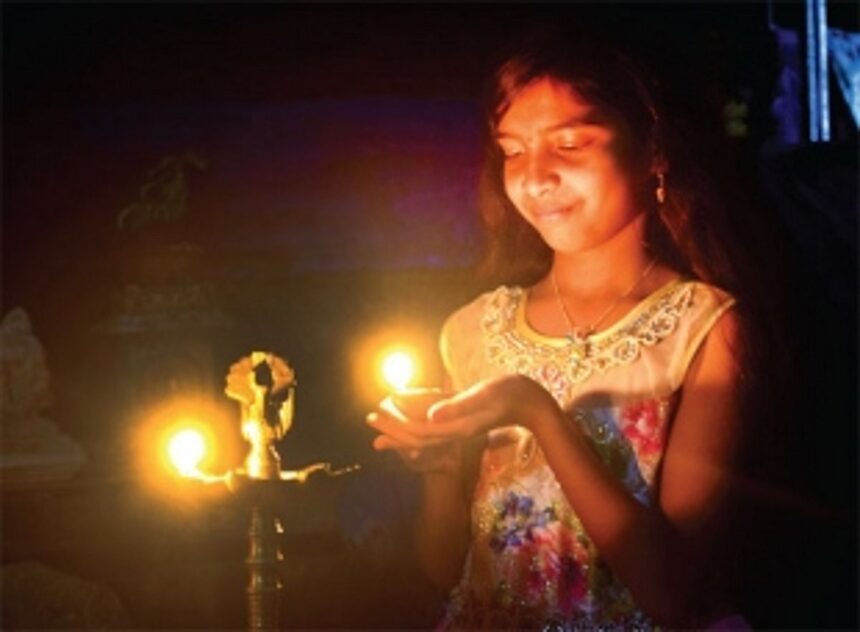
them. Diwali is more about the victory of
good over evil, light over darkness, which is
rightly represented by the ritual of lighting
earthen lamps every evening of Diwali.
“The preparations for Diwali in Goan
villages start right from Dussehra. Village
women start decorating their households
by applying cow dung to their courtyards
and Tulsi Vrindavan (platforms). The house
is decorated with wild flowers, and all
the arrangements to welcome home the
Goddess of prosperity, Goddess Lakshmi,
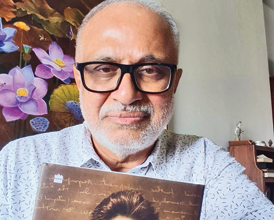
are made,” says Prof Rajendra Kerkar, as
he fondly talks about the traditional rituals
that complete the Diwali celebrations in
our state. Though Diwali supposedly begins
with Vasubaras elsewhere, for Goans, it’s the
Dhantrayodashi (also known as Dhanteras)
that marks the beginning of the festive season.
Similar to how it’s seen in the rest of the country,
Dhanatrayodashi is the day for Goans to buy new
things, especially gold and silver. This day holds
a special significance for the doctors all over, as
it’s supposed to be the day when Dhanwantari,
the physician of Gods, was born. In Goa, Goddess
Lakshmi along with Lord Kuber is worshipped
on the day of Dhanatrayodashi, in the form of a
decorated pot full of water (a symbol of wealth and
prosperity).
The next day, that is Narak Chaturdashi, is
probably the most awaited part of Diwali, loved
by children and adults alike. A custom unique only
to Goa, and some parts of Konkan (Maharashtra),
comprises burning effigies of the demon
Narakasur, to celebrate Lord Krishna’s victory over
it. “Earlier, the effigies were made mainly of grass
and wood. It was on a much smaller scale, and
was the actual representation of victory over evil.
However, today it has become so huge, and so
much money and politics is involved in the whole
process, that I feel that it’s losing its true meaning.
Use of crackers and plastic in the making of the
effigies is also causing pollution, as opposed to
how it was earlier,” explains Prof Kerkar.
Diwali in Goa is simply incomplete without the
preparation of dishes made with fov (beaten rice).
Prof Kerkar states, “Everyone wakes up at dawn on
the day of Narak Chaturdashi. After the Narkasur
is burnt and lamps are lit at home, everybody
start their day by first biting karit (a wild fruit,
Cucumis melo) Then, everybody eats fov. It is also
customary to go to the temple as well as visit each
others’ houses. Amat tikhat amade, a local delicacy
made of hog plums, is also a part of the lunch on
this day.”
Lakshmipujan, as the name states, is the day
to worship Goddess Lakshmi. On this day, people
worship Goddess Lakshmi in the form of money
and gold that they have in the house, and also their
means of earning income. After the puja, people
distribute churmure, a custom Prof Kerkar thinks
might have popped up due to the abundance of
the harvest of paddy during those days.
Paadvo or Bali Pratipada is the day to worship
cattle. “Another outcome of the agrarian culture
that once existed in Goa on a large scale, Bali
Pratipada holds great importance for the farmers.
There is a belief that Baliraja (King Bali) will come
out of pataal to bless the farmers and their fields.
The tribal belt of Goa celebrates this day as
‘Dhendlo’, wherein an idol of Lord Krishna is made
and taken around the village in a procession along
with playing percussion instruments like dhol and
taashe,” describes Prof Kerkar.
One thing that saddens Prof Kerkar is how
the insurgence of modern day celebrations has
infiltrated the actual meaningful Diwali celebrations
and is also causing harm to nature. “Diwali in
Goa was about being in harmony with nature.
Whether it was Narkasur or akash kandil (lanterns),
everything was made with natural elements like
grass, bamboo sticks and paper, and not with
plastic and thermocol. Everything was based on
agriculture and hence eco-friendly. But today,
the materials that are being used and fire crackers
that are burst on a large scale aren’t just disturbing
the authenticity of the festival, but also causing
environmental pollution. It’s the need of the hour
to introduce our youngsters to the original ways of
celebrating Diwali, in order to celebrate this festival
of light in the truest sense,” concludes Prof Kerkar.