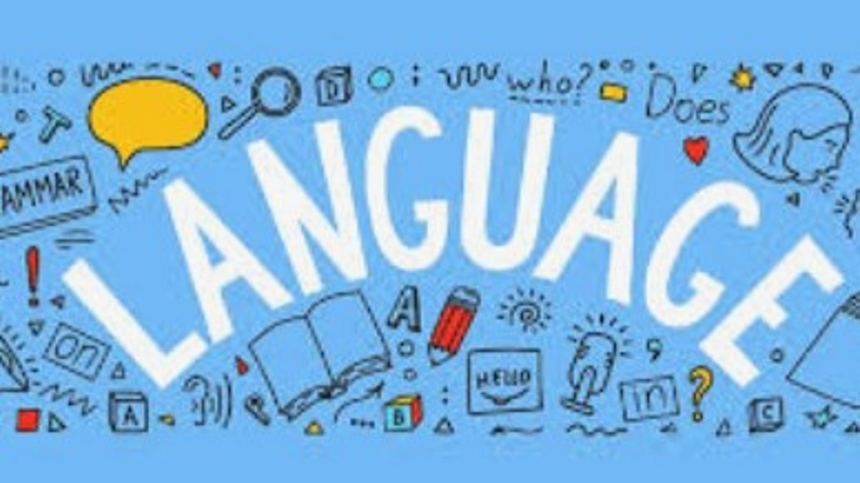
The barbs and salvos flying thick and fast between Chennai and Delhi over the Centre’s three-language policy could be the beginning of a new language war unlike anything the country has seen in decades. The National Education Policy (NEP) 2020 mandates that students in India learn three languages: one of them should be a modern Indian language, another a regional language, and the third can be a foreign language, with English being an option. However, the policy has become a flashpoint in Tamil Nadu, where it has been widely perceived as a potential imposition of Hindi at the expense of regional languages, particularly Tamil. The debate has sparked passionate arguments from both sides, with the state’s Chief Minister, MK Stalin, leading the charge against the policy, claiming it is a form of “Hindi colonialism”.
At the heart of the opposition lies the fear that the three-language policy, despite its apparent flexibility, will eventually lead to the imposition of Hindi in Tamil Nadu. Chief Minister Stalin and his party, the DMK (Dravida Munnetra Kazhagam), have argued that imposing Hindi on the state’s education system would be a direct attack on Tamil, a language that holds immense cultural, historical, and emotional significance for the people of Tamil Nadu. The DMK’s stance is based on historical context. Tamil Nadu has long resisted efforts to impose Hindi, with a prominent anti-Hindi agitation taking place in the 1960s, led by the DMK’s predecessor, the Justice Party. The state’s two-language formula – Tamil and English – has been in place for decades and is seen as central to the region’s identity. Tamil Nadu’s successful economic progress, despite the lack of widespread use of Hindi, is often cited as proof that learning Hindi is not essential for the state’s success. Stalin’s assertions that the region’s people are better off without Hindi in their daily lives are grounded in this argument.

Furthermore, Stalin has criticized the Centre’s educational policies for promoting Hindi in public institutions and awarding funds disproportionately to Sanskrit and Hindi over Tamil. He claims that this creates a sense of alienation for the majority of non-Hindi speakers in India, suggesting that the dominance of Hindi in national policies marginalizes regional languages and cultures.
On the other side of the debate, supporters of the three-language policy argue that multilingualism is an essential part of India’s cultural fabric. The BJP, which is backing the NEP, maintains that the policy is not an imposition but rather an attempt to bridge linguistic divides and promote national unity. Party leaders, including Tamil Nadu BJP chief K Annamalai, have highlighted the need for students to learn Hindi, pointing to the advantages of being able to communicate across India’s diverse linguistic landscape. Annamalai has also criticised Stalin for accusing the Centre of Hindi imposition, pointing out that Stalin’s own government has not made Tamil compulsory in matriculation schools. He argues that Stalin’s real concern is the erosion of political support for his party rather than the protection of Tamil.
While the political debate remains polarised, a more nuanced approach to the issue suggests that language is both a tool of unity and a medium of division. Tamil Nadu’s long history of linguistic pride is undeniable, and it is crucial to preserve regional languages like Tamil, which have deep cultural and historical roots. The three-language formula, in its original intention, seeks to ensure that students do not become insular in their linguistic capabilities. In a globalised world, the ability to communicate in multiple languages, including English, is increasingly becoming a necessity. However, the implementation of the NEP needs careful consideration of regional sentiments. States like Tamil Nadu, with their strong linguistic identity, must be given autonomy to decide how best to incorporate multilingual education into their system. While promoting Hindi can foster national integration, it should not come at the cost of regional languages that are vital to the identity of millions of people.
The ongoing language debate in Tamil Nadu reflects a broader issue that transcends state boundaries: how to foster national unity without undermining regional identities. The challenge lies in striking a balance that respects both regional autonomy and the need for greater linguistic cohesion across the country. Rather than viewing the issue as a zero-sum game between Hindi and Tamil, the focus should be on creating an inclusive, flexible framework for language education. Tamil Nadu has the right to protect its linguistic heritage, but it should also recognise the value of multilingualism in fostering unity in diversity. The Centre, for its part, must ensure that any language policy respects the diverse linguistic landscape of India and provides the necessary safeguards to protect regional languages.