The World Health Organization (WHO) recommends four key interventions to prevent suicide: limit access to suicide means, engage with media for responsible reporting of suicide, foster socio-emotional life skills in adolescents, and early identification and management of affected individuals. As September 10 is observed worldwide as World Suicide Prevention Day, it is important to understand whether one can notice if a person is going through depression?
Prof Vithoba Narayan Mhalkar, assistant professor, DPN at the Institute of Psychiatry and Human Behaviour, Bambolim, is a certified emotional intelligence trainer. He has registered the unique trademark EMOVAC- the Emotional Vaccination programme, which focuses on enhancing self-awareness, raising self-esteem, building resilience, inculcate optimism and understanding the ABCs of emotions, thereby regulating the art of controlling emotional turmoil and uncertainties.

“According to the National Crime Records Bureau’s report, 3,286 persons took their own lives in Goa in the past 13 years from 2011 to 2022. Men made up about 75 percent of the 308 suicides reported in Goa in 2020. Suicide rate in Goa is twice that of the national average and the factors that are associated with increase in rate of suicides are family problems which may include relationship issues, property disputes, love failures, marital discords and financial crisis. Some other factors that also contribute towards suicides are unemployment, examination failures, abuse at home or workplace, addictions like alcohol and drugs, chronic illnesses like cancer and underlying psychiatric illnesses like depression and mania,” explains Prof Vithoba.
He further adds, “Sadness, resentment, or stress contributed to 25 percent of the 1004 suicides between 2014 and June 2017. Social problems including abuse sexual as well as physical, increase in number of alcoholics, family issues, and chronic illnesses are some of the main reasons why Goans choose to take their own lives. Addiction to phone and increase in screen time as well as indulging in betting and other habit forming content on phone has also contributed towards people committing suicides in recent years in Goa.”
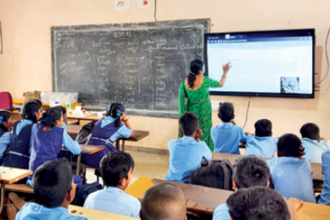
Awareness is one of the crucial pillar for suicide prevention. The Institute of Psychiatry and Human Behaviour (IPHB), Bambolim works extensively in creating awareness programs as part of school mental health and sensitization of under graduate students. “The two district mental health programs i.e the North and South Goa also put in a lot of effort in creating awareness and prevention by venturing into remote villages and schools and targeting the young population, focusing on enhancing their life skill and handling of life situation. The awareness program has surely created an impact but consistency in implementation, collecting feedback and developing a suicide prevention plan is need of the hour,” says Prof Vithoba.
Dr Belinda Viegas-Mueller is a psychiatrist practicing in South, who very often get patients whose first words are ‘I am feeling depressed’. “The ones that are really difficult to deal with and prevent are the impulsive suicides. Something happens and on the spur of the moment they decide to end their lives. There is no warning before that, something happens and they decide to take a step like that,” informs Dr Belinda.
As a family member, what are the symptoms one should notice? “Any change in behaviour is important. Usually the person becoming quieter, withdrawn, lost in their own thoughts, no longer socializing with people that they would otherwise socialize with, not taking part in their usual activities that give them pleasure or happiness, these are all pointers that something is troubling them,” advises Dr Belinda.
“On the other hand, sometimes a person who has been depressed for a longer period of time and now suddenly appears to be more cheerful. This also could be a warning sign because this person has now decided, that I’m going to end my life and my problems are solved. This may take family members by surprise because they think he looked better and we thought he’s getting out of it. But it’s just that he, in his mind, has found a way to deal with it,” she explains.
The actual rate of people actually suffering from depression is pretty high. Social media makes people aware of what everyone else is doing and can create a feeling of lack in a person leading to depression. Counselling in schools is of paramount. It is better to have fewer sessions with children to take the child off a downward course into an upward course and it can prevent years of counselling later on, once the patterns become hardened. It gives them better ways of coping, before the maladaptive patterns of behaviour become ingrained.
Another issue that is leading children and young adults to depression is the inability to cope with stress. Dr Belinda sheds light on this. “When there is an only child, parents become overprotective, shielding the child from stress which reduces resilience. Resilience protects and gives one a better chance of dealing with stress. But if children are always protected and suddenly, they face a problem, they don’t learn how to deal with stress. That’s when they can’t cope. Resilience is definitely decreasing in our kids today. They are also getting too much, too easily and they don’t know the value of hard work and discipline. Parents especially who themselves were deprived as children, want to give the best to their kids and overcompensate for it. These children then grow up with a sense of entitlement. And then when they end up not getting what they want, they can’t cope with it. That can lead also to depression later on. Earlier, kids would play on the playground after school and they would learn social skills, how to get along with others, not being teased and learning how to take a tease back. Now with the school to tuition routine, that interaction with peers is missing and they are not learning socializing skills.”
For World Suicide Prevention Day, GOACAN has called for an action plan from the Directorate of Health Services (DHS) to prevent the rise in suicides in Goa by writing a letter to Dr Vandana Dhume, director, Directorate of Health Services (DHS). “GOACAN in its letter, has recommended that the DHS takes urgent notice of the rising number of suicide cases occurring in the State of Goa and prepare an action plan to tackle the same with the collaboration of other departments and stakeholders. Other recommendations made in the letter by GOACAN are that the DHS publicize the availability of trained counsellors at the respective Primary Health Centres (PHCs) and Urban Health Centres (UHCs),” says Roland Martins, co-ordinator of GOACAN. The DHS appoints a Nodal Officer in the Directorate to co-ordinate the efforts to prevent suicides and in this connection to receive feedback from the general public. The DHS prepares an annual month long activity plan from September 10 (World Suicide Prevention Day) to October 10 (World Mental Health Day) which can be observed in all PHCs, UHCs, CHCs and District Hospitals.
Dr Peter Castelino, psychiatrist and director at COOJ, will be conducting an online workshop on the theme of World Suicide Prevention Day, ‘Changing the narrative on Suicide today, September 10 at 6.30pm, He says, “Time, experience and research has made us wiser. Reduction in the numbers of people ending their life to suicide need to start with our overall understanding of this fatal step. Shame, stigma and ignorance are huge barriers. Suicide Prevention programs can be successful only if there is empathy towards those that think or attempt to die. There is a need to change the way we approach those who are struggling, from a narrowed lens of self-choice to a broader perspective of helplessness caused due to factors much beyond self. Expectations, cultural beliefs, family dynamics, disease etc pressurize the already vulnerable. There is a need to open conversations on suicide at every level including government, places of work, community, educational institutions, families and friends.”
On the bright side, many people are open to accepting the need to get help when they face suicidal thoughts. “There is lot of awareness regarding suicide and its prevention in the state and with the implementation of Tele Manas, a free tele-mental health services all over the country round the clock, particularly to people in remote or underserved areas, the acceptance and seeking of help is on the rise. A toll-free, 24/7 helpline number (14416) is available as part of the initiative, allowing callers to select the language of choice for availing services. The service is also accessible at 1-800-891-4416. The caller will first be attended to by a trained counsellor. The number of people taking benefits of the OPD services at IPHB as well as both the District hospitals is also on the rise thereby, evidently showing that people are more keen of controlling the suicidal thoughts by accepting and working on it,” Prof Vithoba concludes on an optimistic note.