Team Café
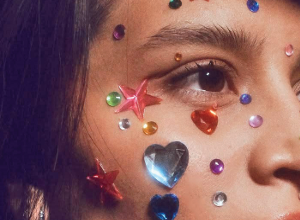
Since its beginnings in 1999, Coachella has often existed alongside South Asian cultural influences, though rarely in a way that centres their original context or meaning. Over time, festival fashion trends have incorporated elements such as bindis, mehendi, and dupattas, frequently adopted by attendees without a clear understanding of their cultural significance. At one point, even Coachella itself referred to bindis as “forehead rhinestones,” reducing a traditional adornment to a decorative accessory.

However, a bindi is not a “forehead rhinestone,” just as mehendi is not simply a “temporary tattoo.” These are established cultural practices with deep roots and specific identities. Greater visibility must also come with accurate recognition; cultures should not be flattened into vague aesthetic categories. What originates in India should be identified as Indian, and what belongs to South Asia should be acknowledged as South Asian, rather than being relabeled as “bohemian” or broadly “ethnic.” The correct names matter because they carry the history and meaning that those cultures actually hold.
By 2026, things are slowly starting to shift. At Coachella this year, Lara Raj of KATSEYE, the first Indian-origin artist signed under a HYBE label, made her debut, showing up with her usual bindi and bangles. For a lot of brown girls who grew up being teased for those exact things, seeing them worn so openly on a global stage carries real weight. The conversation around all of this has clearly matured, too. South Asian creators aren’t waiting around for permission or validation anymore; they’re stepping in with intention, carrying their culture with them, fully aware of where it comes from and what it represents.
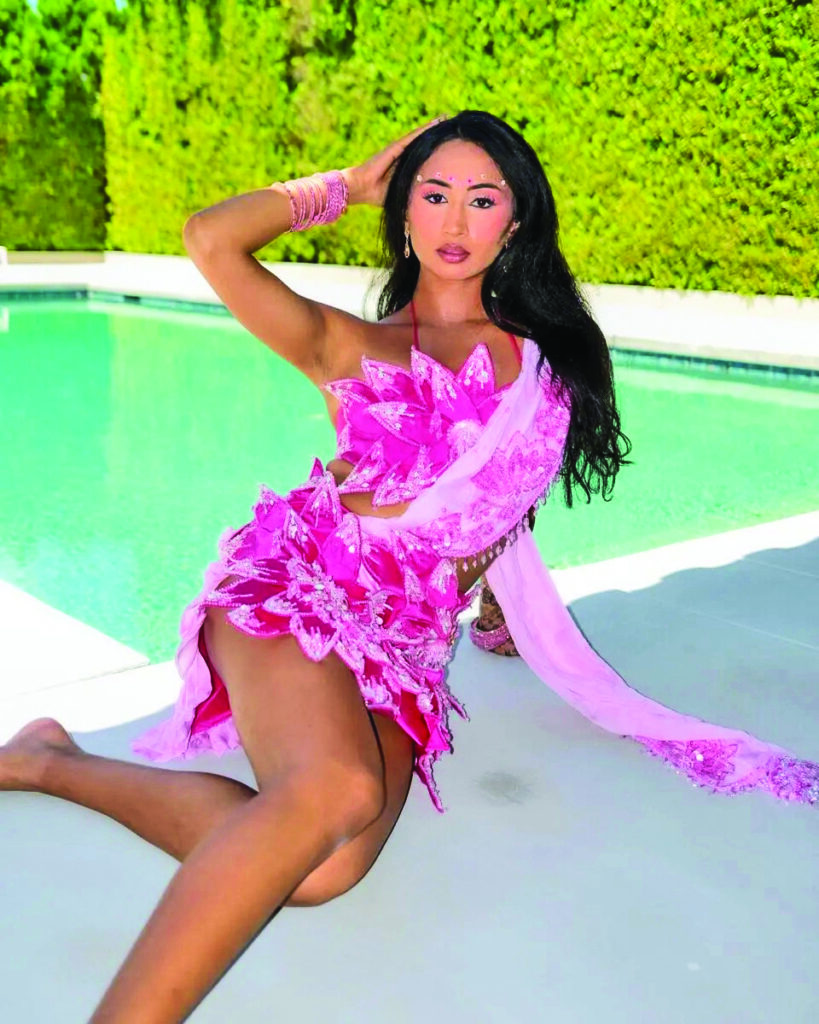
Sheel Yerneni, 26, is a Telugu Indian designer based in New York who made a pretty unusual switch from studying computer science at Cornell to working in fashion. Her designs are deeply inspired by South Asian aesthetics and visual traditions, which shape everything she creates. On day one of Coachella, she wore a soft pink mini sari inspired by the lotus, and on day three, a purple-and-gold mini sari with a Cleopatra-style eye detail. Each look felt very intentional, making the pieces stand out as both expressive and thoughtfully put together.
Seerat Saini is a Punjabi American creator and former Meta employee who uses fashion as a way to tell South Asian stories. This year, she wore a standout piece from Svarini, a butterfly top that took four artisans, two weeks, and over 200 hours of detailed Indian craftsmanship to make. She styled it with a black beaded skirt and stacked gold rings.
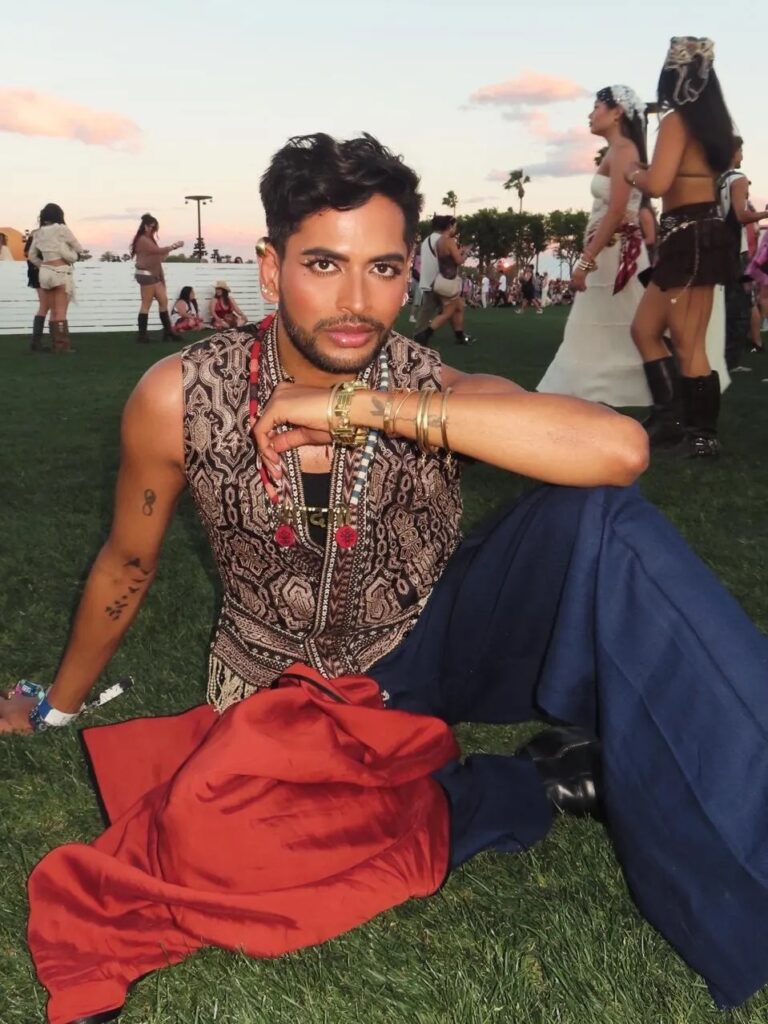
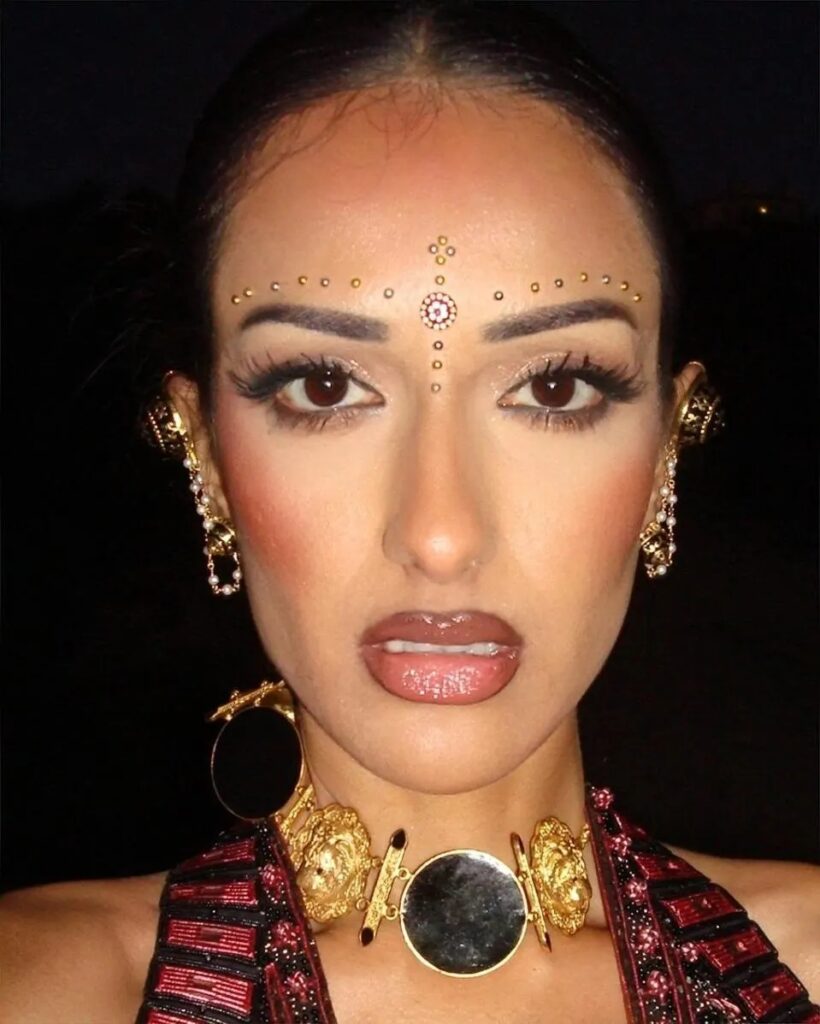
Aditya Madiraju, 37, is based in New Jersey and left a career in risk data management two years ago to become a full-time makeup and beauty content creator. He is known for his educational beauty content and expertise in colour theory. At Coachella 2026, he presented a range of looks that reflected Indian fashion design across different creators and labels. His outfits included a beaded waistcoat by Tarun Tahiliani that he personally purchased during a trip to India, an all-black ensemble by Rohit Gandhi and Rahul Khanna, a cutout jacket by Line Outline, a custom black-and-gold look by Masaba, and a colourful piece by Saim. On the first day, his appearance had a distinctly regal feel.