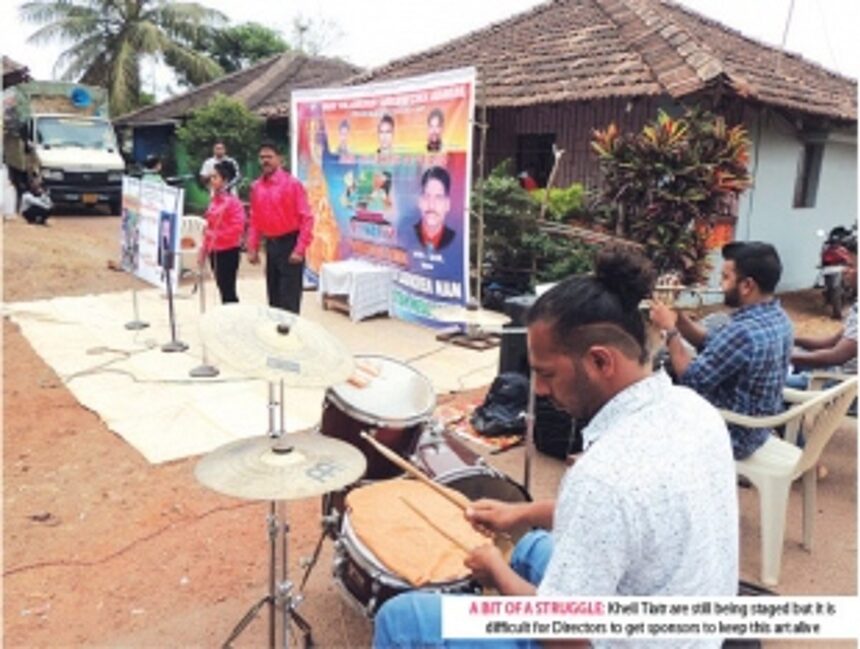
It is part of the heritage of this Gia. Especially South Goa. It is of the soil, something that has been around for several decades. Khell tiatrs came out South Goa and is still very popular during the time when the Carnival and Easter is celebrated every year but the economic realities of the day is making it difficult for directors to go ahead with their plans.
Many villages have their own unique performances with local performers.
Cezar D Mello secretary of the Tiatr Academy Goa said khell had reduced over time because of Covid and many tiatrists had migrated to the UK or left for the gulf for better job opportunities.
He said three directors had migrated to the UK and two comedians had passed away. He said “Ten years ago there were 45 tiatrists who did Khell now there just around 25. This year with the virus still around not many people was sure if it would happen.” He went on to say that these days it was a challenge to get a brass band which is reducing in numbers. Brass bands usually played at tiatrs and many khell tiatrists were reduced to using a keyboard instead of a trumpet. He said the blow instruments by which he meant a saxophone and a trumpet and the drums were absolute essentials in this art form. All this he said added to the cost of the entire exercise.

Over a period of four days some groups do more than fifty shows with performances commencing early in the morning. The actors are paid a lump sum for the services for four days. Most of the subjects are dealt with in a humorous fashion. For tiatrists like Luiz Azavedo it has been part of his routine to develop a khell tiatr for the past eight years. This year he will be presenting three plays which will last around 35 to 40 minutes each. The subjects are something everyone will recognize. One play will focus on the culture of blame given to the woman for not having a kid even after a couple of years of marriage. The second play is about the protest of people against a factory that is scheduled to shift to their place. It moves after a lot of protests and the final play is an old style folk play about sisters falling in love with brothers and the ensuing drama. It is a comedy. Luiz said it was nice to be involved in the process but bemoaned the fact that getting money for the show was very difficult. He said “We are incurring losses, we are not able to defray the expenses but we have to keep this tradition going. I am doing this to keep the Konkani language alive.” He also highlighted the fact that musicians were expensive and people were willing to cut corners by hiring a keyboardist for a very cheap rate. Luiz ended by saying he always tried to do something different that would surprise the people and make them think and laugh too. Tough times he said would continue but he intended to continue.
Peter Fernandes known as Peter De Maina said rehearsals were going on for three khel tiatrs and the focused on issues that touched the Goan’s soul. One of them focused on the trend of outsiders buying land leaving none for the Goan, leaving the father in a play to say that Goans should all move to the moon. Another one focused on relationships in the family and the third resembled the plot of a Hindi film with a long lost son coming to work in an office where his sister in law who he did not know was working. Peter said he was always confident of his plays but getting sponsors was a problem especially with the virus still going around and the economy still not having recovered as yet. He said “I need fifteen spots and right now I only have thirteen spots which could mean a loss for me. I am spending around Rs 1, 50,000 over three days. Rs 72,000 has gone to the orchestra. Ministers usually give us money but this year even that avenue has not been easy. Some of them are giving as little as Rs 9,000. How will I be able to recover my costs? May directors have just stopped because they are just not getting slots. I have got slots but not enough to help me make a profit. You can imagine the situation we are all in.”