The old has become new to us again only to
tell us that she’s ageless. She has been a 200-year-old charmer who has never
needed a charm offensive till now. She is the grace of the town, the source of
its grandeur, the fireplace that oozes warmth; she is the songwriter, chef,
poet and minstrel. And when some of us meet her today, she jabs at the rusty
cobwebs we build around our spirit to tell us, ‘‘Hey, I’m still here”. She is
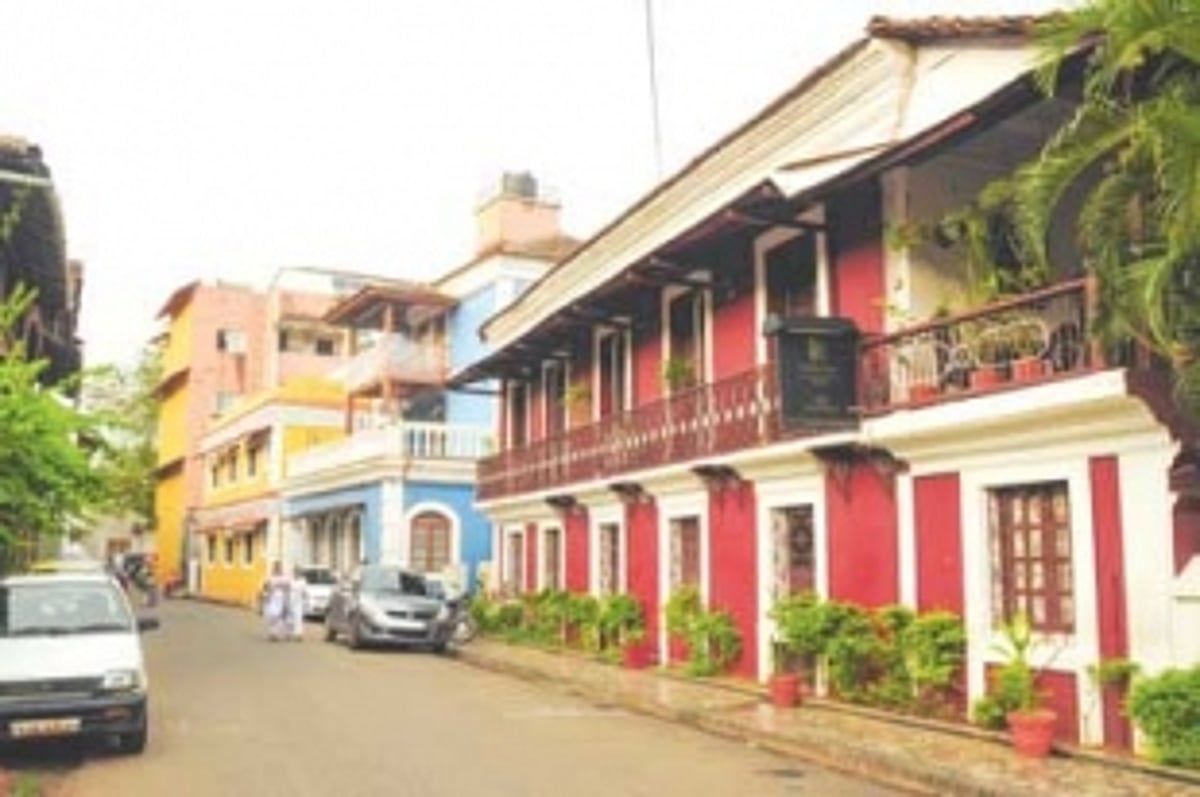
there in several gorgeous towns often defining the town. In our own Goa, she is
called Fontainhas.
Great places, like wonderful human beings,
give us signs that they may not quite be there for long because we have
sustained them and this is when cities, like people, wake up. We have recorded
the waking up of people’s sensibilities to Goa’s Latin Quarter in the adjoining
story, but even as you read that, you’ll fathom that there are two issues at
play here. One is the revival dream as opposed to a revival project. But the
difference here is not between hope and reality; it is a little more complex.
The dream is to keep the past alive with more activities, awareness, walks and
festivals. This is an achievable dream of remembering her grace. The reality is
the broken tiles that people don’t see, the homes frayed at the edges that need
restoration and the increasing traffic and the crowds.

For
the past weeks, Fontainhas has been revisited, not just as a drive through from
one part of Panjim to the other but as a destination whose charm cannot go
decrepit, even if some of its homes are.
Some delightful people live here. And the
graceful. And even as they do, they continue to welcome folks on the cobbled
streets to keep this fairytale alive. And in these two weeks, I became the
tourist raconteur, looking at Fontainhas as a part of the global narrative of
the most gracious and picturesque ancient towns.
This is what Fontainhas has retained,
finding place among the best towns with winding cobbled lanes, fairytale
castles and houses and cafes.
In the Fontainhas of today, there are
glimpses of many towns; of Quebec, with dining alfrescos on warm summer days
and twinkle-lit streets.
Panjim and Fontainhas can also hope to be
Quito, the capital of Equador known to have the “best preserved and least
altered” historic centre in Latin America. The heart of the town with its
cobbled Spanish colonial streets is on the revamp mode with the restoration of
plazas and landmarks, and a new clean-up strategy aims to make the area safer
for tourists.
Unknown to many, the Fontainhas involvement
is getting a fillip again with more heritage walks, vibrant art galleries,
curio and artifact shops and the surest sign that a place has people – a
proliferation of new cafes, a French contemporary restaurant, tea places, a
veranda restaurant that are buzzing. Meanwhile, several homes have been
converted to ‘pousadas’ (guest houses), like the charming Afonso guest house,
evidence that comfortable living in the embrace of history is good business.
And this is the time like none other to not
infuse but celebrate and give a platform to more art, music, culture and
heritage, through festivals like the Fontainhas festival, a cruelly short lived
dream that showcased heritage, music, food and art within this Iberian
ambience.
However, to do that though, the folks who
live there, the biggest catalyst of this charm, must know that they are part of
the DNA of this graceful lady Fontainhas. Their homes and surroundings are more
than their private dwellings and space. Each home is an asset, a brick in the
heritage wall of Goa and each resident, a partner in the dream and the revival
project. There can be no Fontainhas without them.
For yours truly, this is a constant. Having
lived not more than a minute away for the most part of this Goa existence,
Fontainhas has been a venue for languid afternoon chats, revelry post midnight,
of walks and dances, of the finest dining and above all something that doesn’t
need any repair or project but is a living dream, my friends who I met in
Fontainhas, from Zito, to Vasquito, to Luis and to the dearest Bernadine, now
no more, who lovingly inducted me into the Goa club, now many years ago.