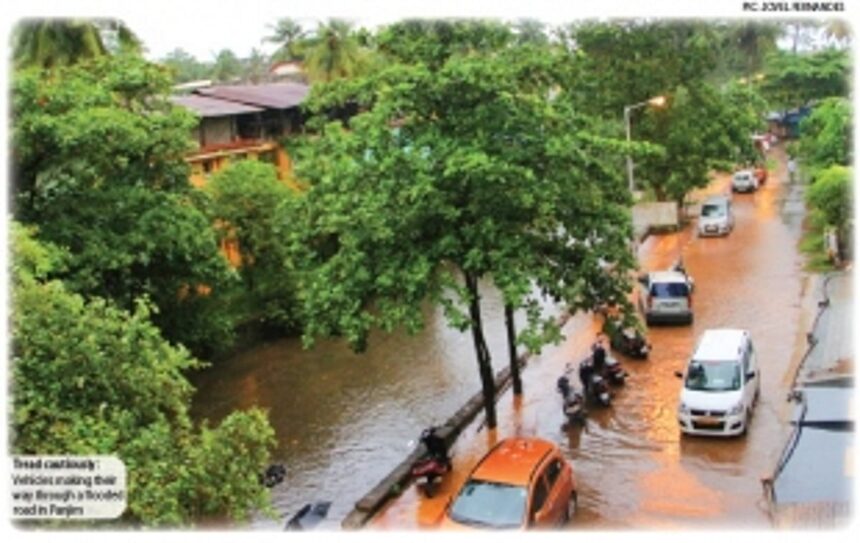
Picture this. You are already late for work
and in a traffic jam. While there is another road that can get you out of it,
the road filled with muddy rain water. You think, ‘my car is sturdy, it can
surely take on a watery road.’ But alas, your car stalls as the muddy water
gets to the engine via the silencer. Late for work and stuck in the muck; what
will you do?
While opting to drive rather than ride
during the rains has a list of advantages, doing so can be tricky, for the same
reasons. Hence, understanding the mechanism of the car and learning how to
maintain it can make life much easier. Also, making use of the helpline number
provided by your car company goes a long way in helping you out of the muck,
quite literally.

Jennifer Parras, a teacher from Taleigao,
shares her experience. “I parked my Hyundai I10 at night outside my house which
is very close to a hill. In the middle of the night, due to a landslide, the
hill collapsed, covering my car. I had to ask the neighbours to help me pull it
out. The car was dented with a little damage to the mirrors and glass. I called
the helpline that is mentioned on the car and asked them to clear it.
Insurance, however, doesn’t cover natural calamity but thankfully the car is
not damaged. The service vehicle picked up the car in ten minutes.”
Amir Volvoikar, Works Manager at Maruti
Suzuki – Chowgule Industries, Campal, says, “We organise a month long awareness
drive before the monsoons to inform our customers about the dos and don’ts
during the season. We organise customer meets to explain all the details as we
receive more calls in the monsoons compared to the rest of the year. It is
better to be cautious rather than face trouble in the rains.”
Some of the issues which usually come to
this works managers’ offices include brake failure, water logging and
suspension problems. “The brakes have to be checked regularly, especially
during the monsoons. Driving through water can lead to hydrostatic locks which
are caused by water entering the engine; water can even enter the fuel tank.
Driving over stones causes suspension related problems, water leakage takes
place due to rust in the car and another major issue is rodents! Rats enter the
hood for warmth and protection for rain and end up in the engine, eating
through the wires. Battery problems arise only when the car lights remain on
and the car won’t turn on,” explains Amir.
Reuben Barretto Miranda, who runs B M
Services in Margao, advises to check the paint before the monsoons as a paint
job will take longer when it pours. “The most common issue with cars in the
monsoons is the changing of wipers as it is not considered before the rains.
Many customers get the touch up and undercarriage paint jobs done. Wax polish
is done before the rains as it doesn’t allow water to enter the car. Regular
maintenance is the key as small features of the car are often overlooked,” says
Reuben.
Air conditioning in the car is not just for
comfort during the monsoons but also important for visibility while driving
through foggy conditions. Graciano Gomes of Gomes Automobile Sales and Services
in Panjim, says, “There are two types of people, one who uses air conditioning
throughout the year to avoid dust, noise and rain and those who don’t. You
cannot drive through the ghats without using the air conditioners because the
visibility is poor. In heavy rains, the interiors of the car get misty; here,
the AC clears up the glass,” explains Graciano.
So, before heading out in your sweet ride,
be sure to rust proof your vehicle, check your wipers, windscreen washers and
brakes, ensure that wheel alignment and wheel balancing is done… and enjoy
the monsoons!