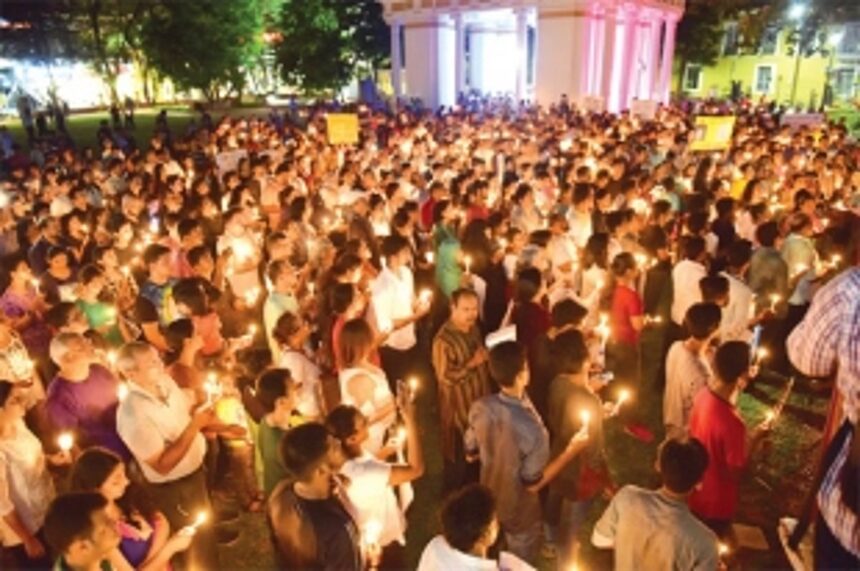
With the recent candlelight marches carried out in Goa, in support of victims of rape
in the country, it is clear that the Goan public is awake to the realities
faced by women in India today; however, the realities of Goa itself are often
seemingly shrouded. Goa recently made news in being named the “safest state for
women in India” as per the Gender Vulnerability Index guided study conducted by
Plan India. While such a status is something to be proud of, the ground reality
for the everyday woman living in, working in, or visiting Goa, is that of the
prevalence of sexual harassment and general lack of feelings of safety in
public spaces, which in turn hinders their participation in public life. This
is what the Safe Goa Project aims to bring to light, in the hopes that based on
its findings, the people of Goa would become alert to this reality and thereby
work to make the state a safer place for all its inhabitants.
The Safe Goa Project is one of the latest
initiatives of The Bachchao Project. It is a pilot study looking at women’s
safety in public spaces in Goa that began in February 2016. The aim of the
study is to focus on schools, colleges and other public spaces in Goa, to
collect data about sexual harassment and analyse them, with the end goal of
helping the concerned authorities take necessary measures to ensure safety for
women in Goa.

Founded by Chinmayi S K, The Bachchao
Project is a techno-feminist collective that has been working with communities
across the country, to help develop technological interventions with the goals
of mitigating gender-based violence and working towards equitable rights for
women, LGBTQIA and gender non-conforming groups. In Goa, too, the Project has
been proactive in carrying out workshops to train citizens in the use of
digital technology.
The Safe Goa Project grew primarily out of Chinmayi’s personal
experiences in Goa during her visit in 2015, where she had experienced street
harassment and unwanted attention, which was contrary to the image projected of
Goa as being particularly safe. “This experience led her to dig deeper,” says
Tania Devaiah, Chinmayi’s colleague and co-author of the report. “And she found
that according to official records, there were surprisingly few cases of harassment
reported to the police in Goa.” Through her involvement with Safe City, a
platform that crowd-sources personal stories of sexual harassment and abuse in
public spaces, Chinmayi found that while there have been attempts to carry out
this process in Goa, it has not seen much success. She was therefore motivated
to develop a methodology through which the occurrence of harassment in Goa
could be more accurately and inclusively recorded, on the basis of which,
policy-makers and the civil society in Goa could work to make public life and
public spaces more accessible to women. Thus was born the Safe Goa Project.
The Project has been involved in other Goa-based initiatives,
including the #IWillGoOut movement held in 2017 that sought to reclaim public
spaces for women in Goa and draw attention to the realities faced by them in
terms of harassment and abuse. “From the discussions that came out of this
movement, there seemed to be a universal feeling that Goa is at a unique
juncture – while being safer than other states, there is still much more
required to be done to improve on the situation,” adds Tania, who was one of
the organisers of the Goa chapter of the movement, and later joined forces with
The Bachchao Project team on the Safe Goa Project.
The data collected from the beginning of the Safe Goa Project in
February 2016, with primary focus on Panjim City, indicates the widespread
prevalence of harassment as well as women’s perceptions of lack of safety in
public spaces in the city. To make matters worse, it was also found that there
is a fear of filing police reports among women, either out of first-hand
experience of police dismissing or blaming the complainer, or out of
internalised assumptions of the same. The data collection and analysis
culminated in the publication of the report of the findings, entitled ‘Women
and the Streets of Goa’, that was brought out on April 10, 2018. Based on these
findings, the Project claims that much proactive work is required to ensure
that Goa remains at the top of ‘women’s safety in India’ indices.
In light of the need for enquiry into the issue of women’s
access to and participation in public life in Goa, the Safe Goa Project seeks
to collaborate with the government and civil society to expand this pilot
study, and help in the creation of policy-decisions to benefit women, based on
feedback from women themselves.
(With inputs from Karsten Miranda)
What the Safe Goa
Survey says
The pilot study of the Safe Goa Project began in February 2016. The aim of the study was
to focus on schools, colleges and other public spaces, to collect harassment
data and analyse them and on that basis, to help the concerned authorities take
necessary measures.
The methodology involved the placement of maps showing street
view of Panjim in 7 locations for a period of 13 weeks starting from February
20, 2016, wherein respondents would place red and yellow stickers in areas to
indicate that harassment was witnessed by them or happened to them there. The
reports indicated that harassment had been reported in all areas of the city,
with the density particularly high around the market, bus stand, and Miramar
beach.
20 personal interviews with women were conducted, with the
finding that 1 in 3 had faced harassment in the recent past, and all agreeing
that the crime rate against women was increasing. 5 focus group consultations
were conducted in which women talked about their interaction with the city and
the factors that contributed to them feeling unsafe, including dark streets,
more men than women in public spaces, lack of familiarity, and uncontrolled
crowds. Mention of harassment in public buses was recurrent, with almost 100%
of the respondents having experienced it.
The ways in which women respond to such situations involve
avoiding vulnerable places, interacting with the perpetrator, or moving away.
The report indicates that there is a fear of filing police reports, either out
of first-hand experience of police dismissing or blaming the complainant, or
out of internalized assumptions of the same.
The
recommendations of the study include the provision of more access points for
women to report experiences, so that appropriate safety steps can be taken in
problem areas; the need for an audit of the Outline Development Plan for Panjim
through a gendered lens, to promote women’s inclusion in public spaces; better
street lighting; increased police patrolling, programmes to build better
relationships between the police and women citizens, and sensitisation of the
police force.