Elsa Angel Rose
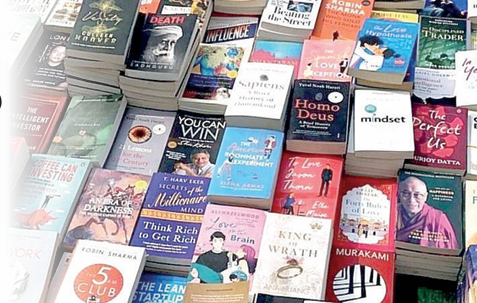
Atomic Habits’, ‘Ikigai’, ‘Rich Dad Poor Dad’, and ‘How to Win Friends and Influence People’ are some of the popular ones, to mention a few. Are people miserable without these? Not really. So does that mean a possible chance of therapy can be avoided by studying and by hearting one of these? Not really, for this too. Then why is it suddenly more hyped up? The new generation of youngsters, or the popularly labelled Generation Z, is obsessed with self actualisation. They are perpetually on a quest to find oneself, teach and outperform oneself to unlock the full potential of oneself. And what better and affordable option than the self-help genre to serve the purpose? Ideally, one can think of it as a mental or personality glow-up kit, just like how skincare, hair care, and more are available for the physicality of an individual. WHY NOT LEARN THROUGH FICTION? Reading fiction wherein the main character is going through a similar predicament as the immersed reader can help him or her understand the different nuances of the problem, the variety of ways to look at it, approach it, and finally resolve it, of course. When numerous options are available in fiction that deal with romance, crime, horror, sci–fi, economic, political, familial, and more, why and how can the self-help genre stand its ground? The answer is simple. Readers are looking for an affordable and personalised coach for themselves. Although the self-help genre might not be personalised for each individual, the idea that billions of people are going through the same problem as yours, there is even a book that addresses the same, which is again accepted by billions of people, gives one the hope that “if I read it, then my problems will also be dealt with.” But rather than considering it a mere book, putting its content into practice is significant for good results. Ann Esperanca Fernandes, a student from Benaulim, who is an avid reader of self-help books, shared, “I do believe that self-help books can help people tackle real-life problems, provided they are treated as practical guides rather than just books to collect. The key lies in putting theory into practice.” THE BEST ATTRACTIONS OF SELF-HELP GENRE The practicality and straightforwardness of instructions in self-help are major attractive factors. “Self-help books are practical and reassuring. They make problems feel manageable by breaking them down into simple actions and ideas,” said Nelann Rodrigues, a student from Calangute. Nelann reads mostly self-help books that discuss developing and maintaining peace, positive thinking, and more. She said, “Self-help books are intentional and straightforward; they tell you exactly what to focus on and how to apply it in real life. Reading them feels like having a personal life coach that pushes me to improve.” Breaking negative cycles in life is crucial for creating an optimistic mindset. Ann said, “What initially drew me to self-help books was my desire to break certain negative cycles in my life and consciously build positive habits. I was looking for small, practical changes that could gradually help me create a healthier and more balanced lifestyle rather than quick fixes.” For anyone looking to indulge in some self help, there are huge expectations. Tofiq Razak Shaikh, a self-help genre enthusiast from Kalem, shared, “Mostly I read self-help books based on relationships and life, and from these I expect help for me to grow in a better way emotionally. To give me more understanding of struggles and how to overcome the same.” Not really a find-all, solve-all option, and certainly not better than therapy (Unless used in therapy, like how bibliotherapy happens. It is when reading materials, including fiction, non-fiction, and poetry, are used to support mental health, aid in personal adjustment, and foster emotional healing.) But the self-help genre will definitely guide and offer some perspectives to fix one’s problems. Direct, easily comprehensible, and conversational sort of instructions could work like a charm for most.