World Password Day being observed on May 2, was an idea first put forth by renowned author and security researcher Mark Burnett in his book ‘Perfect Passwords’ in 2005. Unfortunately, the idea remained dormant until 2013 when World Password Day was formally established by Intel, in order to raise awareness about the perils of weak passwords. This day has been deemed so, in order to raise awareness about the methods that can be taken to protect oneself from identity theft and preventing sensitive data from falling into the wrong hands.
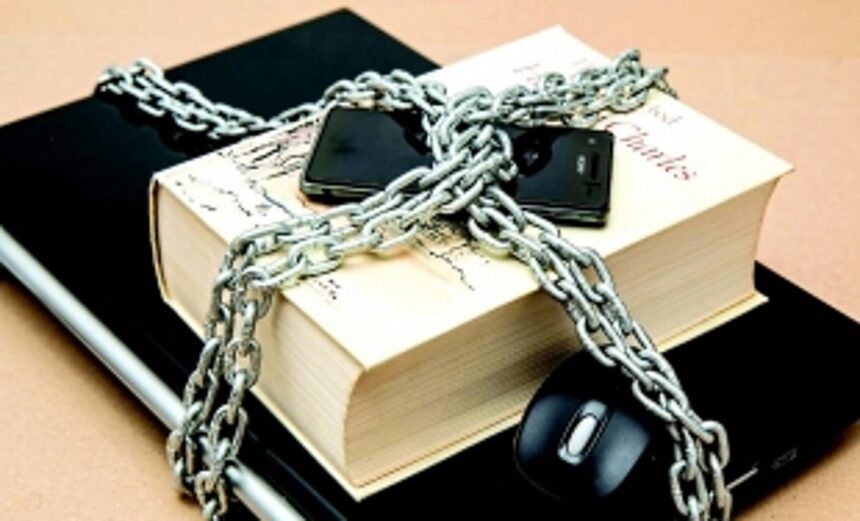
In a world where everything has been digitalised and data has become the currency of the modern world, one’s important personal information lies within one’s online sphere. This pertinent information, be it on social media, shopping sites or streaming platforms, when left protected by weak passwords can easily be hacked into and stolen by schemers and hackers who can gain access to your account details, impersonate the victim and steal all their data. This can all be done by them while they efficiently cover up their tracks making it impossible to track them after the crime has been committed. Therefore, one’s digital identities are always vulnerable to unauthorised access unless protected by robust passwords.

As Goa and India slowly pushes itself to become digitally capable, equipped and literate it also fails in matters of digital security. In 2023, India ranked fifth in the list of most breached countries with 5.3 million leaked accounts. So what exactly constitutes a strong password? These are passwords that use a minimum of 12 varying types of characters and are not personally relevant or generic. They should also be significantly different from the ones set previously.
Although it has commonly been seen that Gen Z is confident about their password management, they have also proved to be the worst offenders of poor password inputs by using same or variations of the same passwords making themselves more liable to be hacked than millenials.
Nathania Baptista, a computer engineering student at Don Bosco College of Engineering, Fatorda, when asked about her password protecting habits said that she uses variations of the same password with numbers and letters which she does not change very often and stores these in her notes. She has also enabled two-factor authentication on most of her accounts and does not permit auto-save for her passwords. She does so because two-factor or multi-factor authentication provides a double layer of security in which users feed in two or more separate authentication facts-usually one being a security token and the other a biometric factor. This increases the difficulty level for hackers to gain unauthorised access.
Another student Malcolm Antao, doing computer engineering at the same institute said that he keeps different passwords for all accounts except gaming ones, with longer passwords for important accounts and weaker ones for entertainment sites. He changes these passwords only if he forgets them and uses Google authenticator to get codes to help him log-in to certain apps. Such password managers are safe and prevent us the trouble of remembering passwords while also generating unique ones. Since the main reason that people fail to change their passwords regularly and keep separate ones for each account is that it is difficult to remember so many passwords. These password managers can provide a solution to this issue by taking away the burden of remembering each password. He also shared insights about passkeys as a better alternative since they use biometric patterns that are difficult to duplicate and hack.
Kevin Alex Daniel an electronics engineering student at Goa Engineering College stated that
he changes his passwords every 2-3 years as only a few accounts have the same password which he neither reveals to anyone nor stores on his
phone. His passwords usually consist of 14-16 varying characters.
While youngsters seem to slowly be understanding the importance of having strong passwords and using new methods of protecting their online identities, the onus still remains on everyone to spread awareness and cultivate a culture of cybersecurity to all areas and age groups.
As one celebrates World Password Day, it is time to prioritise the protection of one’s online identities not just today but all year round. By adopting proactive measures, strong passwords and a vigilant mindset, one can empower themselves to safely engage in online practices while safeguarding themselves from potential threats.