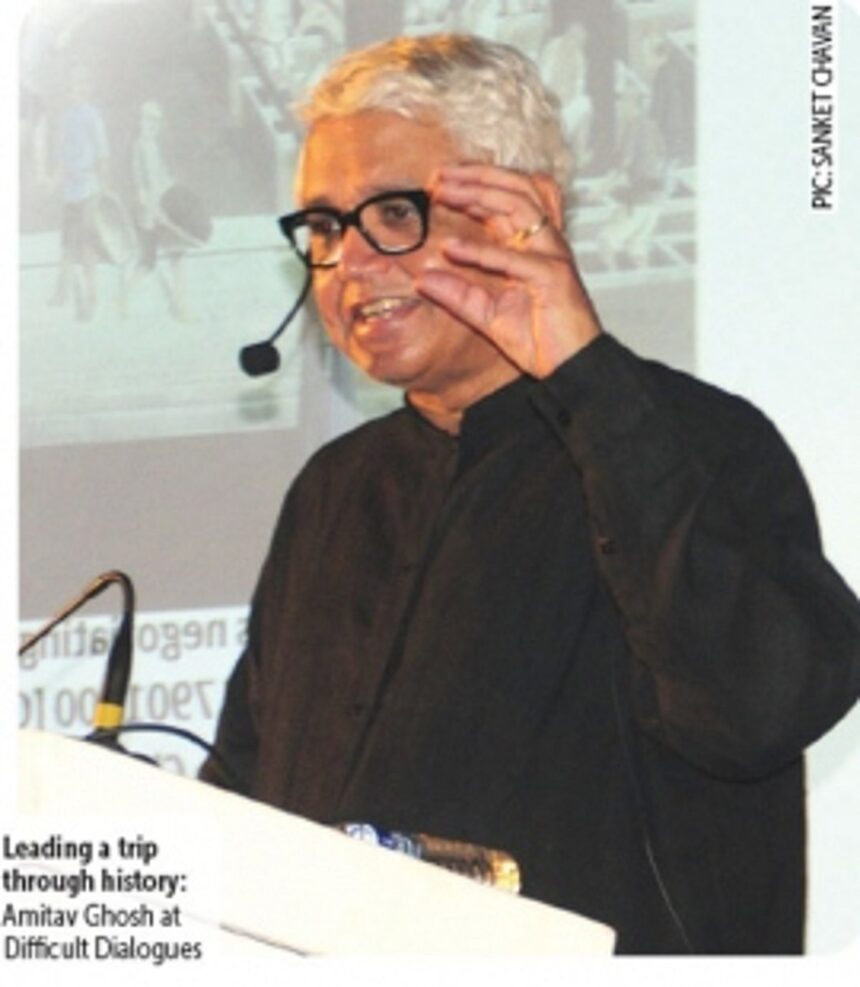
The microphone crackled with expectation. Dr Mukulika Banerjee,
Director, LSE South Asia introduced Amitav Ghosh with glowing colours. The
audience seemed to know him well. His books had walked into their hearts. The
spots lit the stage, his aura glimmered behind the podium as his enthusiastic
anthropology pupil polished it till it shone. And then Amitav Ghosh stepped
into his aura and waved his magic wand.
What could have been a mundane illustrated talk about the Opium
Route from Bombay to Canton in the 19th Century opened out into a wondrous
journey into a living past full of intrigues and manipulations, peopled with
diabolically clever smugglers and top brass from the East India Company setting
up and operating the unseen and silent mechanism of the opium trade that
enabled the British Empire to keep a stranglehold on India.

His words swept into the audience and took us by hand, travelling
with us every step of the ingenious pathways adopted to bypass the Chinese ban
on opium. The little loopholes in
Chinese control and how they were exploited showcased the ingenuity of the
major chess pieces and the willing pawns in the opium game plan. The British
had garnered great experience in dealing with addictive goods and now they
pumped opium into the sinews of Chinese society. The furtive efforts of the
Chinese government were futile against the tsunami of opium battering the
Chinese islands and coursing into the big cities and into the heart of the
Chinese stronghold, overrunning busy thriving cities to the enchanting floating
city of Canton.
We were stepping into another time and experiencing the living
reality of places, journeys, islands, travel routes, shimmering affluence,
sweaty hard working labourers, architecture, furniture, furnishings, even the
unusual diseases captured vividly on paintings.
It was a virtual 3D journey but the screen was not reaching out to
us; we had stepped into the screen and were rubbing shoulders with real people
and getting to know and understand their reality, good and bad. It was a wide
canvas painted on us. There was no longer a stage or lights, or apodium or a
screen set against a natural background. The world around us fell away, and the
Arabian Sea lapped on the shores of his narrative.
The journey begins with the British obtaining one-tenth of their
revenue from marketing Chinese teas paid for with gold and silver. To brush up
the balance of trade, they commence aggressive marketing of cotton and opium
and hit upon opium as the best alternative. The initial productive growing of
opium in Bengal and Malwa with small farms led to the opening of an opium
factory in Patna and later a flourishing one at Ghazipur. This still holds its
head up high in grandeur.
Amitav brings us eye to eye with the entire process with enlivening
words and pictures. The opium was rolled into a ball and then encased in clay.
The East India Company sold these at a low rate so that the farmers received
little or nothing, and cleverly did not allow an addiction for opium to grow
amongst the Indians. Their lucrative target was affluent China.
The journey winds into the Opium Wars. Strangely, though India
benefitted, the Chinese have memorialised them while India is completely banked
out.
Many jars of ink have been used in analysing this fascinating,
intriguing world of the Opium Trade and the Wars. Tonight we stepped into that
world and lived it.