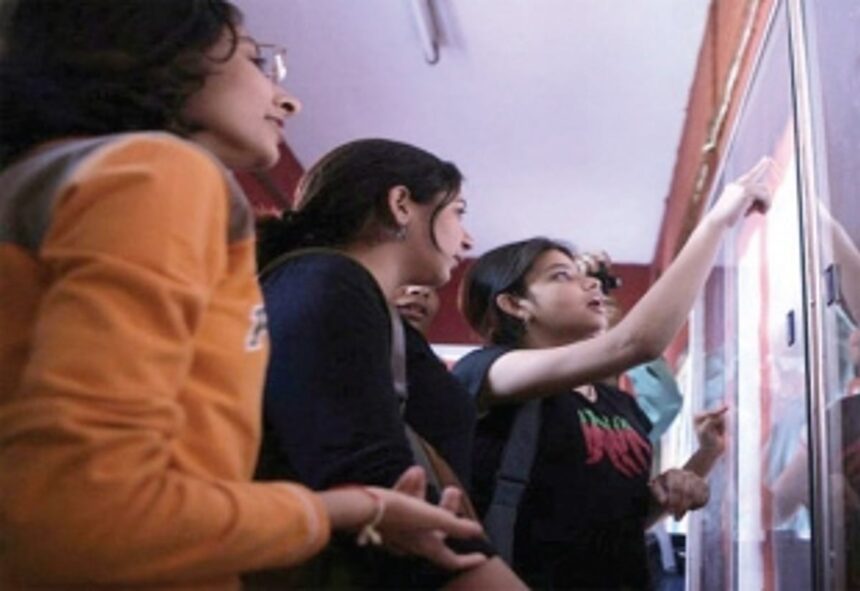
As the stressful period of study draws to a close, students will soon be facing major choices
–choosing a stream in Higher Secondary School for the fresh-out-of-school bunch
(the arts/commerce/science conundrum), and a degree, college, and career, for
those done with Std 12. As they work on life-shaping decisions, there are many
factors in play; such as parents’, peers’ and teachers’ inputs (sometimes
clashing with their own interests), a wide range of choices, and even scarier
exams that would determine their getting seats in college – negotiating these
factors is a challenge every student inevitably faces.
Parents seem to play a pretty big role in the 10th to 12th jump
– helping kids decide on a stream, and often pushing them into the one they
deem suitable (usually science!). Teachers, both old and new, are full of
advice regarding their students’ next step. But while several students end up
pretty comfortable, there is always that unfortunate lot, who find themselves
at a loss in the stream they may (or may not) have been pushed into – making a
mid-year switch from one to another is quite common, while some choose to
pursue degrees outside of the streams they studied in.

Once Std 12 is done and dusted, the choices get wider, the
stakes are higher, the competition gets tougher, and the pressure is immense!
Students have to decide between professional and non-professional courses,
between various degrees (BA, BCom, BSc etc), between core subjects (majors, if
you will), and increasingly for many, between staying in Goa,and leaving.
Parental pressure continues to feature (especially when it comes
to pushing kids into the usual “medicine-or-engineering-only” rut); but most
often, nowadays, the onus is on the student, with parents allowing kids to make
their own way. “They gave me full freedom to do what I thought was best for
me,” said Jacob, when asked about his parents’ view about his decision to do
his BA, despite studying science.
In this case however, the pressure on the student is somehow
even more.In doing research (if they’re the type), students are inundated with
tons of information about colleges and courses, leaving them dazed!
Advertisements, brochures, and hundreds of online sites abound. Those
attempting to get into professional courses have infamously hard-to-crack
entrance tests to contend with – NEET, GCET, JEE and all manner of
scary-sounding abbreviations. But there are also those who fall into college
pretty coolly, simply going to one closest to home or affiliated to their
schools. When it comes to these decisions there is no set path… every student
will carve their own.
Attending a college out-of-state is a big choice students are
faced with – not only does it involve toiling to get into hard-to-get-into
colleges, facing tests and interviews; it also involves leaving home for a
completely different environment – both living and academic. Many choose to
stay (sometimes postponing migration to later); but there are several,
especially nowadays, who are studying across the country, in Mumbai, Bangalore,
and elsewhere. Their decisions to leave often involve much forward-thinking;
when asked why she chose to pursue higher education in another city, Gabrielle
said that she “chose to leave Goa to broaden horizons, for independence, and to
challenge (herself)”.
Many kids are often confused about what to do – unsure where
their skills or interests lie, or what would help them get a job. Advice from
others aside, they sometimes rely on aptitude tests… with rather varying
results. While some find it useful, like Desmona who said “I already knew my
strengths, I just needed to know my options”; others feel quite the opposite,
like Shannen who did one because he didn’t know what to do, but ended up doing
something different from what the test results indicated. When it comes to
aptitude tests it appears there’s no sure outcome… the student will end up
doing whatever they please.
In
the end, despite all the ups and downs, students come through relatively
unscathed. (There are those who end up dissatisfied with their courses and are
faced with further decisions, but that’s another story!) For now what we, as
parents, peers and general support systems, have to give them is support and
space. The stressful “what next?” phase will come to an end… until, of course,
next year comes around and it starts all over again!