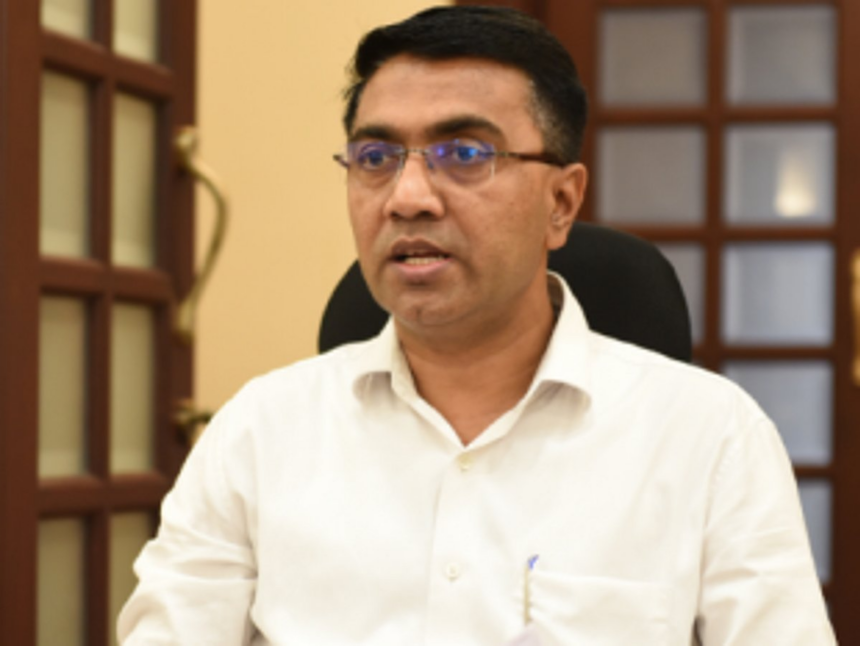
Chief Minister Dr Pramod Sawant has just announced that fully vaccinated persons will be allowed to enter into the State. While at some point of time this – a vaccination certificate – will become the norm for all forms of travel, at the moment all caution has to be exercised. Even as the Chief Minister said this, the checks at the borders have been made easier and travellers who do not have the RT-PCR negative test reports are being allowed entry by undergoing the rapid antigen test at the border done by private labs that have been allowed to set up there. The worry is that the rapid tests are not completely foolproof as there can be false negatives.
The lax attitude displayed by the State authorities in March and April this year led to an unprecedented increase in cases and deaths resulting from the second wave of COVID-19 that spread across the land. Hospitals were overloaded and the government health facilities were woefully inadequate for the rapidly increasing number of cases. The situation at the current time is much improved. The Chief Minister has said that the pandemic situation is coming under control and that the positivity rate is declining while the recovery rate of patients is also increasing. The State has even denotified all but two of its health care institutions as COVID-19 hospitals for the number of vacant beds has increased corresponding to the decrease in cases.

Again, these figures do not imply that the worst of the virus has ended and if the government is so inferring than Goa could face another devastating time should the third wave, which health experts have said is a possibility, comes crashing upon the State, in the manner that the second wave did. The High Court has correctly said that the opinion of medical experts is vital in these matters as they are better suited to make related recommendations and assess the medical position and the load on medical infrastructure in the State. Any decisions to be taken on all issues concerning the pandemic should have the concurrence of the medical fraternity of the State.
Measures to curtail the spread of the virus, however, still continue and the government has even extended the curfew and restrictions by another week. It has been doing so every weekend for the past one month and this extension has turned almost into a matter of routine. On the other hand the post 3 pm curfew that is in place is not being enforced strictly and movement of people on the streets continues. There are also certain business establishments that can be found to be open beyond the appointed hour. These are all clear violation of the restrictions but there is no action being taken in this regard. This is the scene not just in rural areas, but even in the urban.
Yet, business communities in Goa have already raised concerns over the survival of small traders in case a third wave hits and there is another lockdown or curfew that restricts business from being conducted. Practically, it is now two months that a large number of businesses have remained closed for the entire period, as it started with the four-day lockdown in late April and the closure imposed by various local bodies that extended into the curfew announced by the government. There is a tight balancing game that the government will have to play between the economic health of the State and the people and the spread of the Corona virus. The lessons learnt from the past few months should aid in reaching the best decision for the future.