I watched quite a few movies at the recently concluded International Film Festival of India (IFFI). A confession – I am a cinema buff but not a connoisseur and therefore my perspective on film appreciation is limited to acting, a good script, heartfelt dialogues and other common features known to a lay cine fan. Parallel storytelling, non-linear timelines, endings that don’t tie things neatly are also things that sink in. But what is unfathomable is when one is supposed to unravel and fathom what is going on in the director’s mind by watching the movie.
At the IFFI, I watched movies that touched upon patriarchy and addressing it, family, love, and friendship. The one movie that gave me a terrible time was Memoria. This was the Thai director’s first foray with English. The director is well-known and therefore the theatre was packed with those with a critical eye – many it seemed had some form of theatre or movie background either as students or teachers or were members of film clubs. The pedigree of the viewers was such that when a beam of light escaped from the projection room and interfered with the opening credits one viewer got up in disgust saying, ‘how could one watch a movie from such a respected director like this.’

Memoria was so slow that even the main actor walked slowly with a hunch. I may have greyed trying to get to the bottom of what the director was getting at. I am not the only one, the Guardian critic writes ‘Even now I’m not sure what I think about it. But what originality and daring, the biggest ideas invoked with compelling zen humility.’ He continues with paeans to the director which seems misplaced considering the first line in the sentence.
The film festival is not unlike the electoral process. The movies are the candidates, their directors are political parties, categories within the film festival are political philosophies and election promises, and the viewers are the electorate. While cine critics and connoisseurs translate into social activists and famous people supporting one party/candidate or another without really grasping political reality. Business houses are completely agnostic putting their money on anyone who will improve their profitability.
With this analogy it is easy to see that in Goa the choice of movies hasn’t changed. The same old movies shift between categories. While directors promise something new but churn out the same. In all this the poor viewer is left short changed – being forced to watch repeats and select a winner from it.
What is worse is that political parties assume that people are gullible and don’t notice how they are being short-changed. A new entrant into the Goa political scene is promising to change Goa for the better. Their advertisements ask Goans to join them in teaching the current lot of politicians a lesson in the coming elections. What they choose not to mention as a disclaimer is that their Goan politicians have shifted allegiance from other political parties to them.
Do politicians change their behaviour and direction of their moral compass just by switching their political fealty? If that were the case, many politicians would be achieving sainthood with the number of political parties they have shuffled between.
The debate about reality copying films or vice-versa must be updated – films copying Indian politics or the other way round. There used to be a time in India when there was a clear segmentation between art cinema – which took up social causes, and commercial cinema – which used the time tested good versus bad, interspersed with hero and heroine dancing in various settings. It was easy to identify and club those associated with art from those working on commercial cinema. Today, the distinction between commercial and art is fluid. Similarly, political parties and politicians are no longer distinguishable by their ideologies.
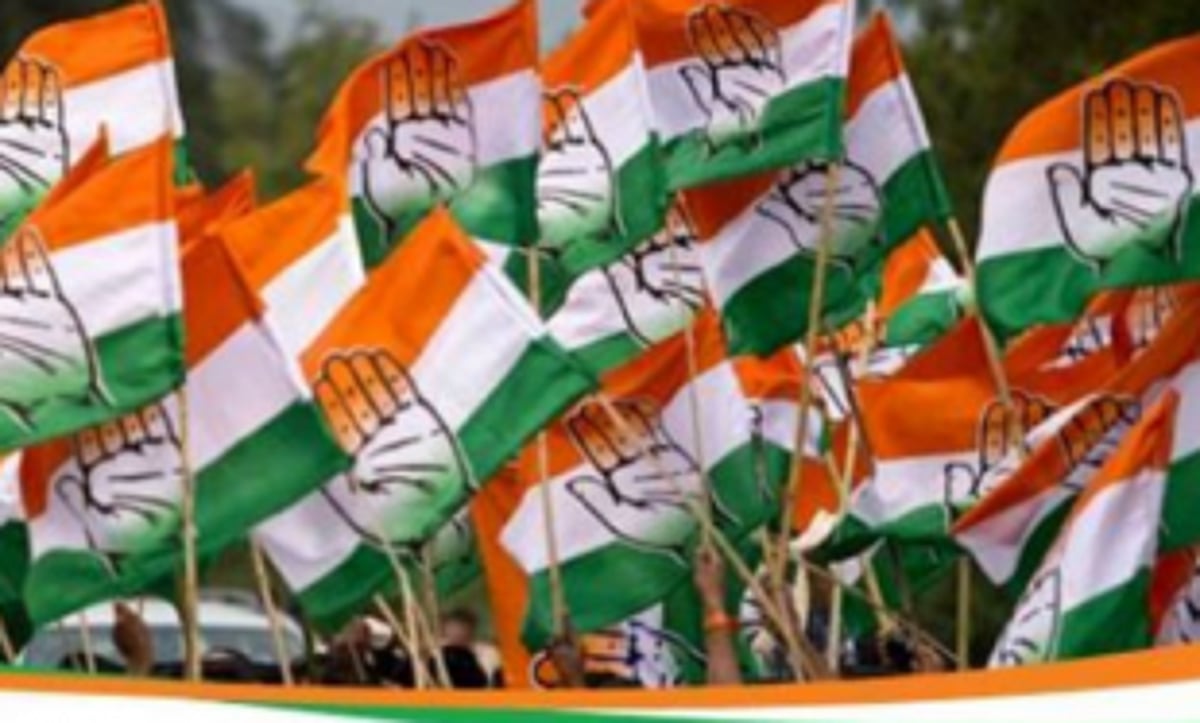
Innovation and experimentation are limited in Bollywood because of Bollywood dynasties where generation upon generation enter the field leaving little opportunity for outsiders who could be more talented, and the strangle hold established male actors have on the industry. Thus standards, be it of the film or of professionalism are mostly sub-par. Same is the case in politics. Though everyone complains about Congress-I’s Gandhi political dynasty there is much of the same in every political party. Mamta Bannerjee’s nephew has a major role in the Trinamool Congress (TMC), while the top leaders in the Bharatiya Janata Party (BJP) distribute their family and children across politics, and lucrative official and semi-official positions. Amit Shah’s son is the Secretary of Board of Cricket Control in India (BCCI). In Goa, the BJP has become a family affair. The son of the late Manohar Parrikar – Utpal Parrikar- wants the Panaji ticket in the upcoming state elections, the son of late Francis D’souza holds the Mapusa seat, the Monserrate family are creating a political fiefdom with the mother, father in the state assembly and son holding the post of Mayor of Panaji. The Alemao’s are trying the same as they join the Trinamool fold. In some cases, members of a political family join different parties – like the Ranes.
This familial consolidation power undoubtedly benefits the family and will benefit the party in the short term. However, the absence of opportunities for newcomers in political sphere can cause stagnation of ideas which is to the detriment of the party and consequently to the state.
Just like Bollywood, political parties – even in Goa – have a tried and tested formula. That’s the reason the new entrants in Goa are poaching politicians from other parties. Of course, all have added the BJP’s exploitation of religion to various degrees.
The only escape from this morass is if political parties are prevented from poaching politicians from other parties and, politicians are penalised if they use their election victory as a personal business venture.
Until then, Goa, be prepared for another 5-year déjà vu no matter what the political parties promise in the run up to the 2022 elections.
(Samir Nazareth is an
author and writes on
socio-economic and
environmental issues)