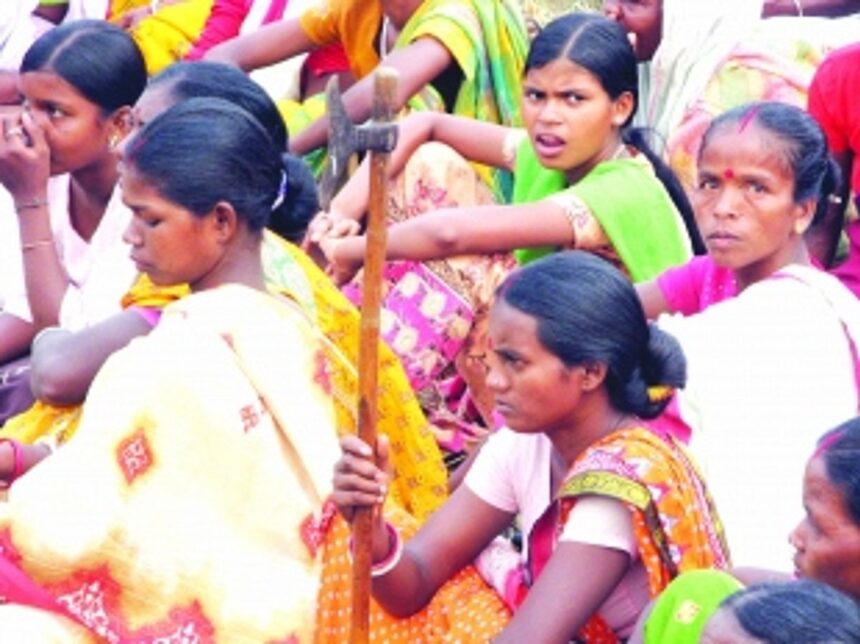
Some 56,000 Kondh Adivasis and Pano Dalit Christians of the Kandhamal plateau district of Odisha, there is little solace that a court has sentenced 30 persons to prison terms for their role in the targeted communal violence in August-September 2008. The guilty were fined Rs 1,000 each.
The court of First Class Judicial magistrate of Kotagarh ruled that Atulya Parichha, a Christian young man of Bandapipili village of Kotagarh, was truthful when he said that in September 2008, his house was attacked by a group of people. Government prosecutor Sabita Samantray told the court that one of the accused has already died while six are still missing.
The Christian community in India, and in the diaspora, remembers the targeted violence in Kandhamal, which began on August 24-25, 2008, as second only to the three-century-year-old attack by Tipu Sultan on the West coast in which he marched his hapless Konkani speaking Catholic captives to Seringapatam. A major proportion of them died of their wounds, or exhaustion and disease.
Christians continue to be persecuted in various parts of the country, but not in such large numbers, in one place or in one incident. The continuing persecution also shares with Kandhamal elements of political planning, and the inevitable impunity if not complicity of the law machinery.
The National Solidarity Forum, which was formed by civil society activists and groups as an umbrella body to work with the victims, “the diabolic attacks on Christians in Kandhamal, in the consecutive years 2007 and 2008 was much beyond a matter of shock, shame, pain and grief”. Attacks on Christians spread to different parts of Odisha and to other States.
The forum called upon former Delhi High Court Chief Justice A P Shah to head a National Tribunal in Delhi where victims and survivors told a jury of legal experts and civil society leaders their brush with death, and their life as refugees seeking justice. The report of the Tribunal remains a lasting narrative of what went on for days, stretching into weeks, in the land of the deep Sal forests and hills.
The Christian community wasn’t not expecting this to happen in Orissa, though they had not forgotten the gruesome murder of Australian leprosy mission worker Graham Stuart Staines and his young sons Timothy and Philips in January of 1999. They were burnt alive as they slept in their jeep the night of January 22 after a festive village meeting in the Manouharpur region. The murder shocked the world, with Indian leaders calling it a blot on the nation. After a manhunt, the police arrested a man called Dara Singh, said to be scourge of Muslim cattle traders who took their herds through the State. The sessions court sentenced him to death. Graham’s wife, Gladys Staines, stunned the nation when she said she forgave her husband and sons’ murderers. The Supreme Court gave Dara Singh a life term in prison.
Before Staines, the largest incident was during Christmas of 1998 in yet another forest region, this time in the Dangs district of Gujarat, the infamous “laboratory” of targeted violence. Gangs in motor vehicles drove through the villages in the forest, attacking and destroying every hut they could find which bore a cross. By the time they were done, three dozen or so such church-huts had been destroyed. Prime Minister Atal Behari Vajpayee made it a point to take a helicopter down to the area, to see the evidence of the violence for himself. Characteristically, he condemned the violence, and then called for a national debate on conversions. That call still reverberates, now through much of India.
If the 2008 violence was said to have been triggered by the Maoists assassinating the VHP leader and religious figure Lakshmanand Sarasvati, the 2007 violence that began with the market of Brahminigaon in one corner of the district was directly traced to the man’s followers and cadres attacking Christian shops and homes which had been decked up for Christmas the next day.
Collectively in the two rounds of violence, as many as 395 churches, big and small, of Christians of the Adivasi and Dalit Christians were destroyed, around 6,500 houses burnt or razed to the ground in 400 villages. Survivors and families counted over 100 people murdered, over 40 women raped, molested and sexually humiliated.
More than 56,000 people have been displaced, half of them spending up to a year in refugee camps organised by the government and civil groups, some guarded by large contingents of armed police forces. Several cases of forced conversion to Hinduism were also reported. Government till now has not accepted the death count given by relatives and NGOs. It does not count persons injured in the violence who died during treatment months later, for instance.
It also totally ignores the trauma and displacement, which lasted more than a year, disrupted the education of 12,000 children. Many of the girls could not resume their education. With educational, social service and health institutions – some owned by the government – had been looted or destroyed and looted, again impacting the life of the survivors.
Survivors sent more than 3,300 complaints to the police in Kandhamal. Only 820 or so FIRs were actually registered. The rest of the complaints were perhaps thrown into the dustbin.
In the complaints registered, the police filed charge sheets in just 518 cases. The remaining crimes were summarily dismissed as false reports. Courts disposed 247 of the 518 cases. The rest are pending before the sessions and magistrate’s courts. The accused persons in a large number of cases were acquitted. In cases in which the criminals were convicted, most were soon out on bail.
A study by SC Advocate Vrinda Grover and Law Professor Dr Saumya Uma, the conviction rate was as low as 5.13% of the charge sheeted cases. Just 1% of the victims or aggrieved persons received a measure of justice.
(John Dayal is an author who lives in New Delhi.)