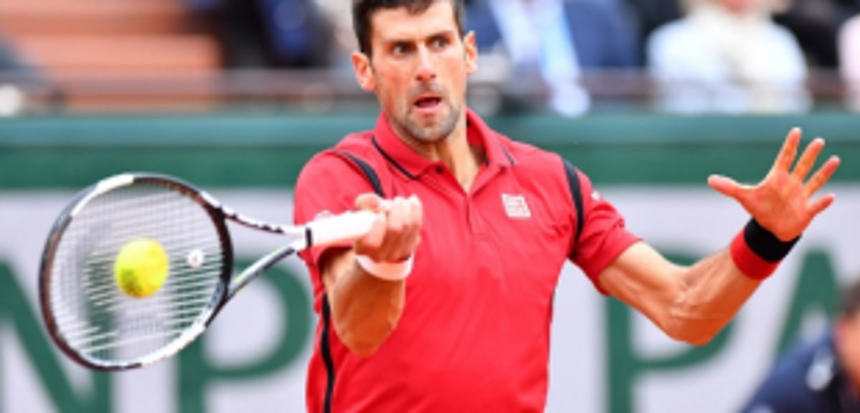
Ahead of the Tokyo Olympics, when world number one tennis star Novak Djokovic was asked how he handles pressure chasing the golden slam, his bright response was: “Pressure is a privilege, without pressure there is no professional sport.” He added: “If you are aiming to be at the top of the game, you better start learning how to deal with pressure. And how to cope with those moments on the court but also off the court, all the expectations.”
Barely a few days after uttering those words, Djokovic proved he finds it hard to practise what he preaches.

After losing the semi-finals to Germany’s Alexander Zverev in Tokyo, in a show of frustration, he slammed his racket against the net and threw it across the court and into the stands. Later, he dropped out of the mixed doubles bronze medal match, leaving his teammate Nina Stonjanovic without a chance to compete for the bronze medal.
This is not the first time Djokovic has behaved poorly on the court. He had displayed his temper tantrums earlier too. In 2018, during the French Open, he missed an opportunity to move on to set point and took it out on his racket, hitting it three times on the ground.
In 2016, at the Shanghai Masters, he smashed his racket to bits and ripped his shirt while losing his match.
As usual, Djoko apologised after his outburst in Tokyo. “It is part of, I guess, who I am. I don’t like doing these things. I’m sorry for sending this kind of message, but we’re all human beings, and sometimes it’s difficult to control your emotions.”
Easier said than done. Once or perhaps twice is understandable and pardonable but when such behaviour is repeated, it tells of the person’s character and lack of control of one’s temper.
Winning and losing is part of sports and it is up to the players to decide how to perceive the outcome. Sportsmanship is all about fairness, self-control, courage, persistence and treating others and being treated fairly and respecting authority and opponents. Sportsmanship spirit is the act of accepting one’s success with humility and accepting defeat graciously.
It is deplorable that a player like Djokovic is unable to accept defeat and maintain his composure and remain calm. He may be the best player winning grand slams consistently; he may run a Foundation to help underprivileged children. But all that pales into insignificance when he behaves badly on court, losing respect and admiration.
Djokovic’s meltdown in Tokyo may be the latest but he cannot be the only one to be denounced for such behaviour. There are many, not just in tennis but in other disciplines too who have displayed temper tantrums.
Bad behaviour during a match attracts warnings, hefty fines, sometimes penalty points too.
In the interest of sports and humanity, it is high time sportspersons realise the importance of decency, courtesy, humility and sportsmanship so that their example can serve as an inspiration to budding sportsmen and women as well as their fans. After all, what is the use of being a champion on the planet without being a good human being?