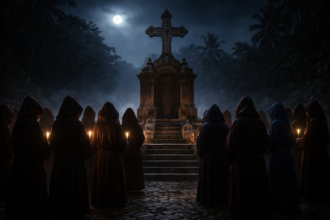
All Souls’ Day is a day set aside to honor the dead. It has been primarily celebrated within the Catholic Church, but it is also observed in the Eastern Orthodox Church and several other Christian denominations. The Anglican Church is the largest Protestant church to observe the holy day. Most Protestant denominations do not recognize this day and disagree with the theology behind it.
Catholic belief holds that the soul of the dead may go to one of three places. The first is heaven, where a person who dies in a state of perfect grace and communion with God goes. The second is hell, where those who die in a state of mortal sin are naturally condemned by their choice. The intermediate option is purgatory, thought to be where most people, free of mortal sin but still in a state of lesser (venial) sin, go. Purgatory is believed to be necessary so that souls may be cleansed before they enter heaven. Late Rev. Pe. Carmo Das Chagas Antonio Martins once stated, “The Catholic Church teaches that the purification of souls in purgatory can be assisted by the actions of the faithful on earth.”

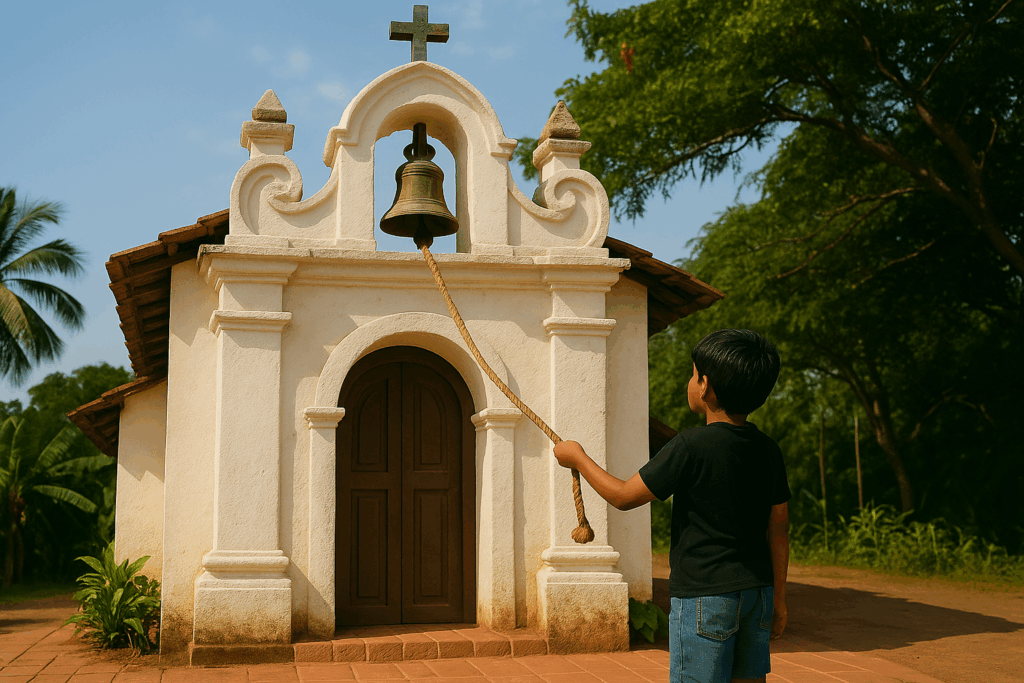
In the Roman Catholic Church, November 1st is regarded as ‘All Saints’ Day’ and November 2nd as ‘All Souls’ Day’ (family members decorate the graves of their loved ones at the cemetery on this day. Some families even keep food that their beloved one liked, on the grave). It is believed that at 3:00 p.m. on November 1st, the souls of ancestors descend to earth, visit their loved ones, and return to God by 12:00 p.m. on November 2nd. Therefore, from 3:00 p.m. on November 1st until 12:00 p.m. on November 2nd, Catholics are permitted to ring church or chapel bells (10 sets of 3 strokes each), since bell ringing was considered to grant indulgence, as mentioned by Mrs. Joyce Aguiar e Carvalho, a senior resident of Colvá, Goa.
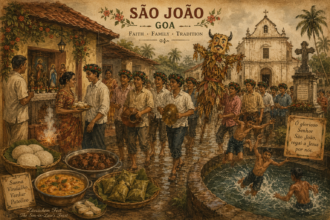
Mrs. Aguiar also recalls that male youths, for fun, would secretly hide people’s belongings, wander through their village discreetly, place scarecrows outside houses, or take items such as shoes, clothes, utensils, etc., and place them in random locations. Sometimes they would even steal vegetables from people’s backyards or fields. All of this was done with a mischievous, playful mood and not with any intent to cause harm. However, the church discouraged this practice. On this day, Catholics are required to recite several rosaries for the souls of their departed family members (without reciting the mysteries and Gloria). Also on All Souls’ Day, one is permitted to attend more than one Mass and to receive Holy Communion more than once on that day. These two days are days of obligation in the Catholic Church (one must attend at least one Mass). A grand meal is prepared on All Souls’ Day. The meal includes pork, boiled rice, fried fish, prawn curry, pumpkin, and sanna (steamed sweet idly). There is a tradition among several families across Goa where food is placed outside one’s house for the crow to come and eat it. The crow symbolized departed family members. On November 1st, a sweet called ‘godshem’ (porridge made with coconut jaggery, coconut milk, and gram or wheat) or ‘vonn’ is mandatorily prepared in every Catholic household. In some families, it was customary to leave the pot containing the godshem partially open with the ladle (dovlo) placed in it. It was believed that departed souls from one’s family would eat from the partially open pot.
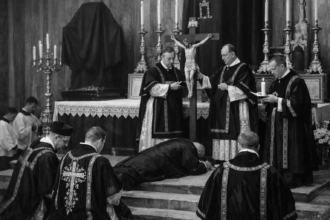
The Western celebration of All Soul’s Day falls on November 2nd and follows All Saints’ Day, which commemorates the departed who have attained the beatific vision. If this day falls on a Sunday, the Mass is All Souls, but the Office is that of the Sunday. However, Morning and Evening Prayer (Lauds and Vespers) for the Dead, in which people participate, may be said. In pre-1969 calendars, which some still follow, and in the Anglican Communion, All Souls’ Day is transferred to November 3rd if November 2nd falls on a Sunday. Pe. Avinash Rebello from Márgão notes, “On this day the clergy would traditionally wear black vestments which, post-1965, have been replaced with purple during liturgical celebrations”.
On All Soul’s Day, families often left cooked food on their roof or in the garden for the crows to eat. The crow’s arrival was believed to symbolize the coming of the departed.