PANJIM: The evolution of Goa is in many ways a constant arm wrestling between tradition and modernity. Yes it is not Purumentachem Fest yet, but you can tell summer is here and monsoons are fast approaching, when you see women sitting by the roadside and selling ‘provisions’.
While at the Purumentachem Fests across Goa, you find all provisions for the monsoons at one fair, on a day-to-day basis, before monsoons, you will see women vending items, dried by harnessing the energy of the gracious sun, such as salt fish, dried chillies and other spices, being sold beside any Goan roadside.

‘Purument’ comes from the Portuguese word ‘provisão’, which means provisions or supplies, which are stored up, ahead of the monsoons. Traditionally, in Goa, since time immemorial, people used to stock up supplies for the monsoons come April and May.
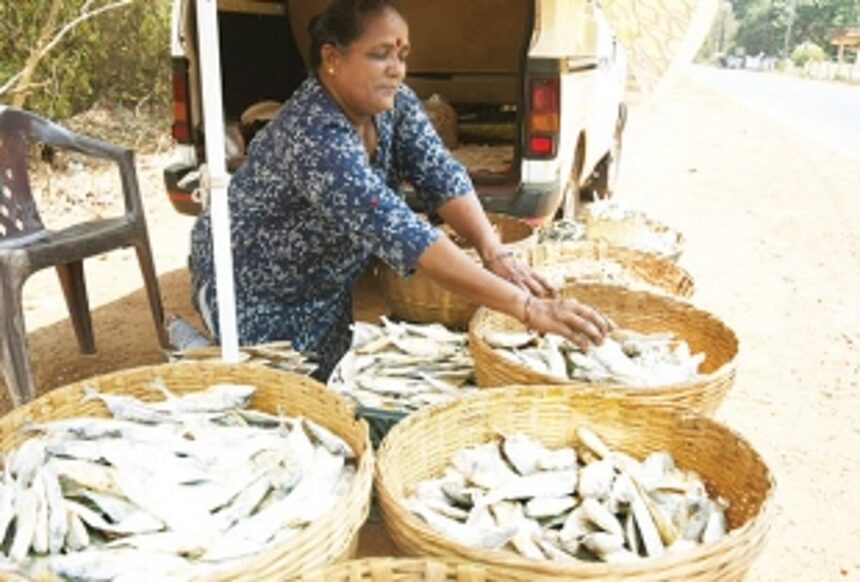
O Heraldo caught up with one such steely yet contented woman vendor Suchita Phadke. Although she is married in Vasco, she comes all the way to Gandaulim, near Cumbarjua to sell her wares. She sits by the roadside in soaring temperatures all day, and vends provisions for the monsoons.
She told O Heraldo that she vends only one item and that is dried fish. She sells the local variety of fish such as dhodiareh (croaker), banged (mackerels), pedhi (hilsalisha), motialim, sungtam (prawns) and Diana (leather jacket fish). She has sold out the more delicious variety of dried fish such as eels and Bombay ducks.
Although Suchita Phadke originally hails from Akhada, she was married in Vasco. But Suchita recounts how to make ends meet in these difficult times, she is living with her mother for the last five years and selling fish by the roadside, near to her maternal home.
As the monsoons approach, traditionally Goans would make provisions for the coming months. These provisions or ‘Purument’ would include storing up spices, dry fish, salted meat, kokum, papad, pickles, jambul and grape wines, jackfruit and mango saath and various masalas, etc. Other items include dried red chillies, chourizo (pork sausages) , kanyachomovlyo (bunched onions), kokum sollam, khare (salted fish), galmo (tiny dried prawns), para (pickled mackerels), ambeachisolla (dried mango slices), sukhisungtam (dried prawns), pickled vegetables and fruits, beans alsane, ragi nashne, rice for kanji pezachetandul, pulses, rock salt, jaggery, papad, pickles, jams, and wines.
Now with the coming of refrigerators for households and commercial freezers in supermarkets, many Goans especially those living in the cities do not store or buy up provisions for the monsoons, since fish and other condiments are available in stores throughout the year, giving a blow to the traditional roadside vendors. Like many other age-old Goan traditions, the tradition of ‘Purument’ may slowly be losing its prominence to modern lifestyles.
However, there are some die-hard Goans who patronise roadside vendors and ‘purument’ markets to keep the tradition of yore alive. In fact, at some places there has been a resurgence of ‘purument’ markets with the younger generation putting up stalls and inviting Goans to keep this wonderful tradition alive. Tradition! Tradition! As Tevye would say in the 1964 musical ‘Fiddler on the Roof.’