
The four days of Carnival have just
come to an end but the excitement that usually accompanies this weekend of fun
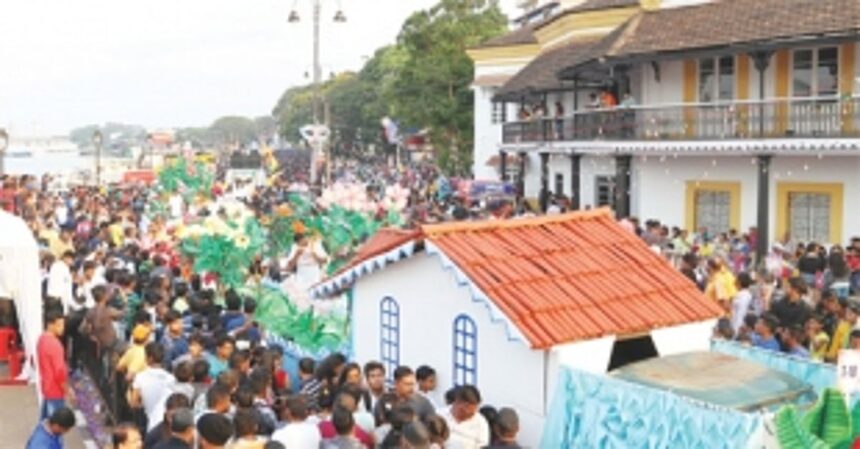
and frolic seems lacking this year. Carnival in the capital city, in
particular, seemed lacklustre with the drop in the number of floats and the
overcrowded streets. Of course, there were a few saving graces such as a float
demanding justice for Fr Bismarque Dias, as well as a few other creative ones.
Joaquim Teles is the President of
the Panjim Traditional Festival Committee. He was the President of the Panjim
Carnival Committee for 12 years till 2011. Joaquim formed the Panjim
Traditional Festival Committee in 2006 and they now organise three-day Carnival
programmes at Kala Academy, Panjim to preserve the traditional carnival of
yesteryears. Being a part of the carnival celebrations for more than 35 years, Joaquim
was completely disappointed with the way things were organised this year. “I
have to say that this was one of the worst carnivals I’ve witnessed and the
people who made the floats were more frightened encouraged. Many places that
used to create some very interesting tableaus did not participate this year.
The quality of the floats has dropped drastically and no efforts were made to
bring in good floats from places likes Curchorem and Quepem that usually
created lovely, traditional floats,” says Joaquim.
Another reason for the half-hearted
participation could be the expenses one has to bear to create intricate floats.
Along with the talent and hard work of the artists, floats also require
monetary investments for material, etc. “The prize money is very low as compared
to the expenditure incurred. People put in so much effort; but if they cannot bear
or recover that cost, they are discouraged from future participation,” adds
Joaquim.
Kabir Naik from Mapusa, who lives
abroad, was in Goa to witness the carnival after ten years. “I was excited to
finally go to Panjim and watch the carnival parade over the weekend. The last
time I was here was in 2005 and I was expecting better organisation and grander
floats. Unfortunately, it looked like the same old floats that have been part
of the carnival. There was no excitement and the people were tired waiting for
the floats to make their way in the hot sun,” says Kabir.
Martina D’Souza from Old Goa has
been bringing her children for the annual parade, right from the time they were
tiny tots to now, as teens. “This year, the streets were too crowded. Even
though we were early and made place for ourselves, there were people constantly
walking on the road and practically bumping into the floats to go towards the
bridge. Finally, there were rows of people standing right where we were seated.
The crowd has to be controlled and people should not be allowed to block the
floats,” advises Martina.
For those standing at the market
area, the carnival parade was a long wait. “I was scorched in the sun, waiting for
the float that followed King Momo. Most of the dancers were not dancing but
simply strolling around. It’s only when they were in front of the judges that
they perked up. There were floats with boys wearing similar t-shirts sitting on
the back of a trailer just staring back at the people. What exactly is the
point of such floats?” questions Kevin Fernandes from Taleigao.
While it’s a year long wait for the
Carnival parade to hit the streets of Panjim again, the people of Goa are
looking forward to better floats and more creativity while giving emphasis to
the traditional floats coming from the various villages of the state.