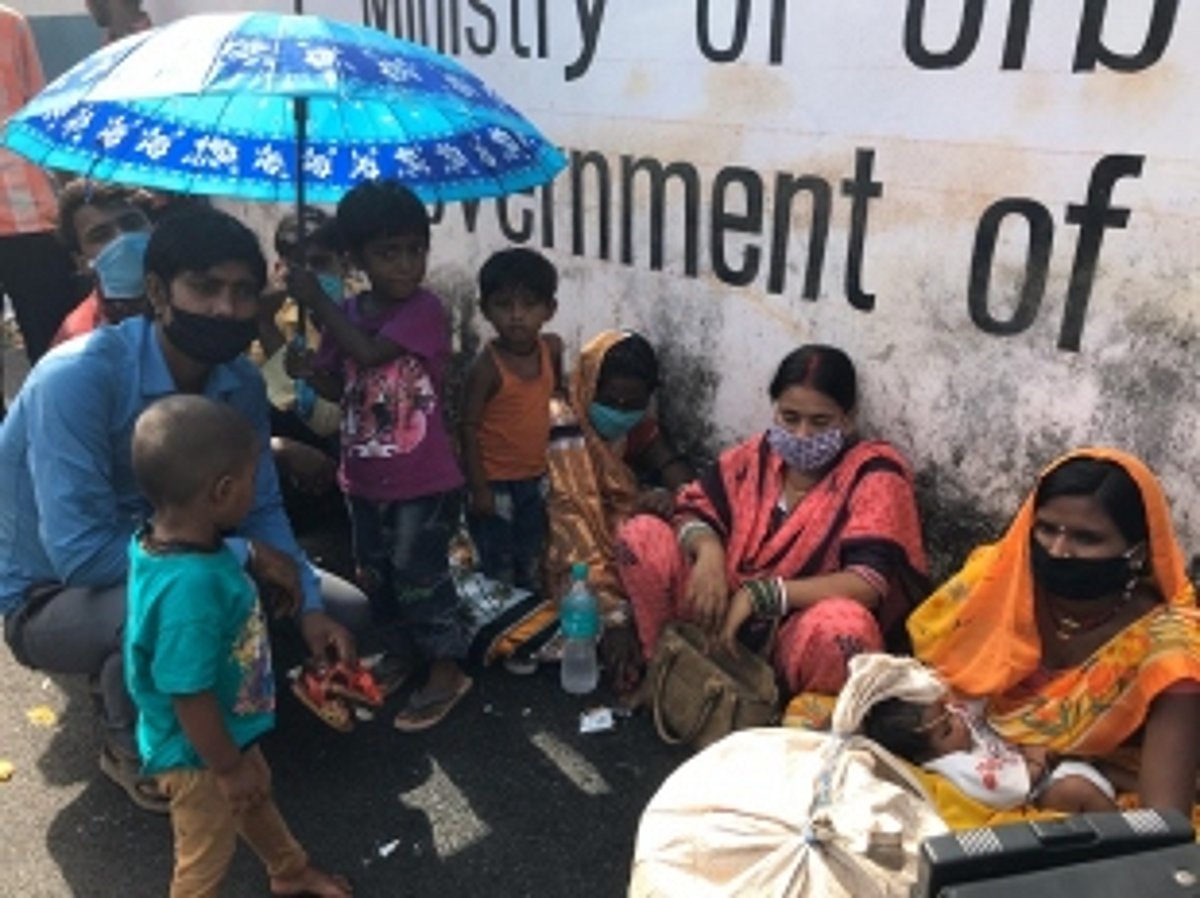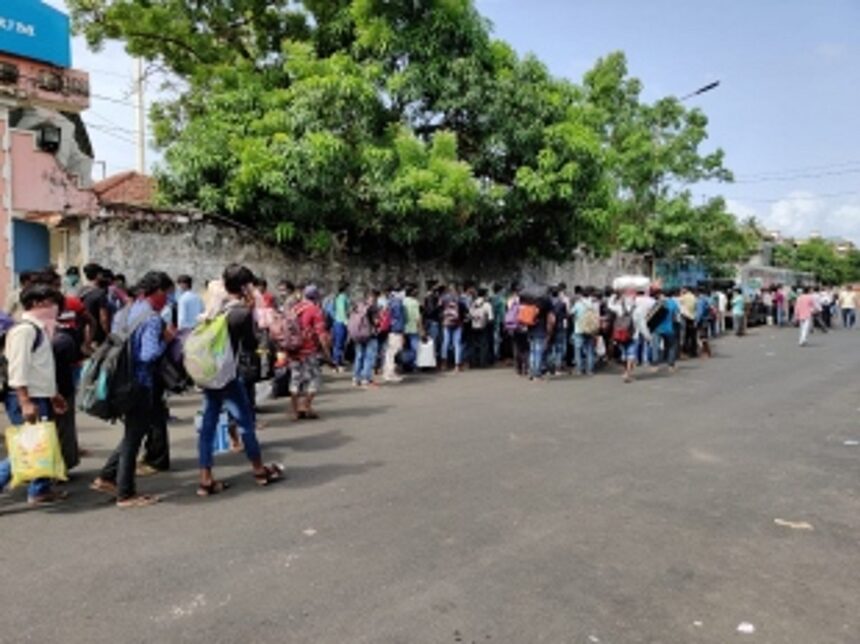
Unlock 1.0 dawned on Monday in Goa with hundreds of migrant workers stranded outside the Fatorda stadium in Margao. The ordeal for most of them had begun on the evening of the previous day when the district administration, as alleged by several volunteer groups took contrary decisions on the Fatorda stadium serving as a holding ground for them and later collectorate officials allegedly decided to go home a little early (see box) and threw out of sync a system that the government and civic volunteer groups had meticulously cultivated to ensure that thousands of migrants had reached their home states on the Shramik trains.
Sunday’s development, volunteers estimate, has once again left in the lurch thousands of migrants, a few hundred of who are from the fishing community as the 45-day ban on fishing comes into effect from June 15.

Asked about this, Ajit Roy, the South Goa collector, in his reply via WhatsApp, said, “Administration is making all the efforts to help all those who are in need. It must be understood that workers with trawler operators/owners are regular employees. The season has come to an end but they can’t be considered ‘stranded’. Public resources must be used for those who need help. MHA guidelines also say that employers should take care of their workers. However, those who are in real need will be helped. The administration has been doing it for the last two and a half months and we are fully committed to serve.” Volunteers working with migrants employed in the fishing industry say the latter’s plight is not a simple matter of earning a living and going home since the circumstances of them getting home has changed under Covid-19 conditions. Many migrant fish workers are still here For starters the fishing ban of two months was reduced to 45 days following a central government order allowing the extension. This meant that while some trawler operators wound up for the season by the end of May or the first week of June, many still have boats—and their crew of migrant workers—out at sea. So a sizable group of migrants is going to be leaving Goa after June 15. “Although there are fishing cooperatives in Goa and there are unions most of the migrant workforce is unorganised. Moreover, a large number who are still in Goa are from Bihar, Jharkhand, Chhattisgarh, Orissa, and Madhya Pradesh, which are faraway states. A lot of those from Karnataka and Maharashtra have made their way home. So the current reality being faced by those still here are multi-fold,” explains a North Goa-based volunteer

Those who have a good rapport with their employers—as many have been working with the same owner for years together—are going home in buses where the ticket to get them to their home state is Rs 6,000 per person. This is either being borne by the migrant worker or is being shared by the trawler owner and the worker. Those whose owners are not able to arrange such transport have been sent to the Fatorda stadium to board the Shramik trains. “But since the government is saying economic activities have started in the country and the Shramik trains are no longer required these people are stuck. One lot of trawler workers, who had come from Vasco, went back to their jetty after the police got their owner to take them back,” says the volunteer. Another says that a group of 10 migrants from the fishing community in Anjuna, who were not allowed to stay at the Fatorda stadium and made it to the Margao railway station only to be driven away, were finally traced in Sanguem as they had decided to just keep walking. Vinay Tari, a trawler owner from Betul, says trawler owners were called for a meeting with the government in the first week of June, where they were told to give the collectorate the list of their workers who wanted to go home and the same has been complied with. “We were also told to ensure that those who want to stay back are given a proper place to stay, and for my part, I have made arrangements for my workers in some quarters near my residential home,” says Tari.
Savio D’Silva representing Cutbona jetty says many workers have already been sent home via buses that began plying from early June itself. “We did not wait for government help,” says the Velim sarpanch. Vasco MLA Carlos Almeida says migrants from the fishing community there are keen to go back to their home states because they are scared since the port town has seen Covid-19 cases that are spreading fast. “They have been saying that we would rather die in our own homes then die in Goa,” says Almeida, adding that it is the responsibility of the trawler owners to ensure that their workers are housed in safe places till they can make their way home. Volunteers say that while some owners have been looking after their workers, they have witnessed many workers—fishing sector workers are estimated to be close to 15,000—continuing to stay on the trawlers they work on or in the sheds at jetties, braving the wind and rains under tarpaulins and with no proper toilet or even facilities to charge their phones to be able to talk to their families back home.
Fisheries director Shamila Monteiro says “no one will be allowed to stay at the jetties as the same will be sealed when the ban comes into effect on June 15. The onus of responsibility is on the owners to look after their workers.” Literally and figuratively, these stranded workers who do the hard work of getting our fish to us, are all at sea, with no effective waves of sympathy coming towards them.