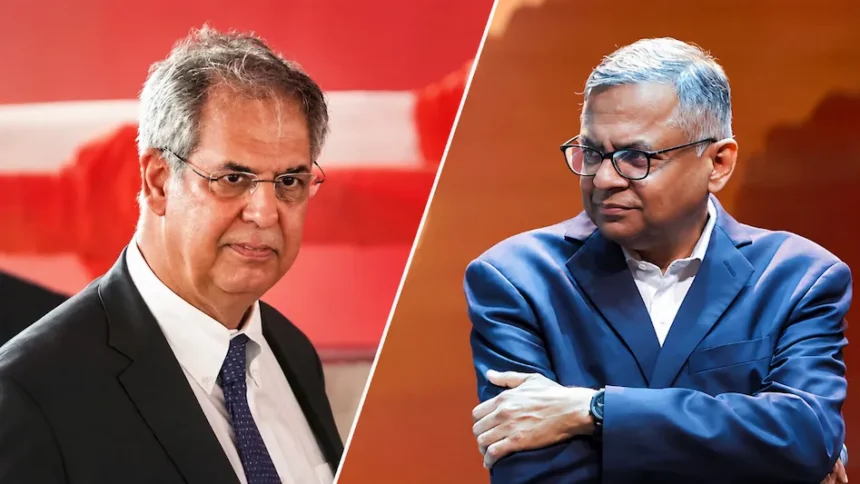
The Tata Group is facing a fresh leadership dispute after Noel Tata, chairman of Tata Trusts, became the only board member to vote against N Chandrasekaran’s reappointment as Tata Sons chairman for another five years.
Chandrasekaran, 63, had announced last month that he would step down when his existing tenure ends in February 2027. However, the Tata Sons board voted on September 17 to extend his term, bringing the disagreement between Tata Sons and Tata Trusts into the open.

Noel Tata subsequently described the resolution as a “legal nullity”, arguing that the reappointment did not comply with the group’s internal governance arrangements.
According to the position taken by Tata Trusts, decisions concerning the appointment of the Tata Sons chairman require the approval of both of its nominees on the company’s board — Noel Tata and Venu Srinivasan. While Noel Tata voted against Chandrasekaran’s continuation, Srinivasan did not vote alongside him.
Tata Sons maintains a different interpretation, arguing that the appointment was valid because it was approved by a majority of the board.
The dispute comes at an important stage for the conglomerate, which is dealing with challenges across businesses including aviation and automobiles while also expanding its presence in electronics and semiconductors.
The disagreement extends beyond Chandrasekaran’s position. Tata Trusts and Tata Sons have also differed over Air India’s performance and the possibility of listing Tata Sons on the stock market.
Tata Sons acquired Air India from the Indian government in January 2022. The airline has since remained a major area of focus for the group, with its financial performance becoming one of the issues discussed amid differences between the company’s leadership and the Trusts.
The proposed listing of Tata Sons has also emerged as a major point of disagreement. Tata Trusts has opposed the idea, arguing that a stock-market listing could alter the character of a group in which charitable institutions hold a majority stake.
Tata Trusts owns about 66% of Tata Sons, giving it substantial ownership of the holding company. However, its ability to exercise that control has been complicated by a regulatory dispute involving one of its major charitable entities.
Sir Ratan Tata Trust, one of the two largest institutions under the Tata Trusts umbrella, owns a 23.6% stake in Tata Sons. According to the report, a charity regulator has prevented the trust from convening its trustees because of a dispute over their appointments. This has restricted its ability to hold meetings and take decisions.
The current disagreement also has a longer history. Chandrasekaran joined Tata Consultancy Services in 1987 and became Tata Sons chairman in January 2017. Noel Tata had previously been discussed as a possible successor to Ratan Tata, but Chandrasekaran ultimately continued in the top executive position while Noel Tata took charge of the charitable institutions that control the majority stake in Tata Sons.
With Chandrasekaran’s proposed continuation now facing opposition from Noel Tata, the dispute has raised questions about governance, succession and the balance of authority between Tata Sons and Tata Trusts.