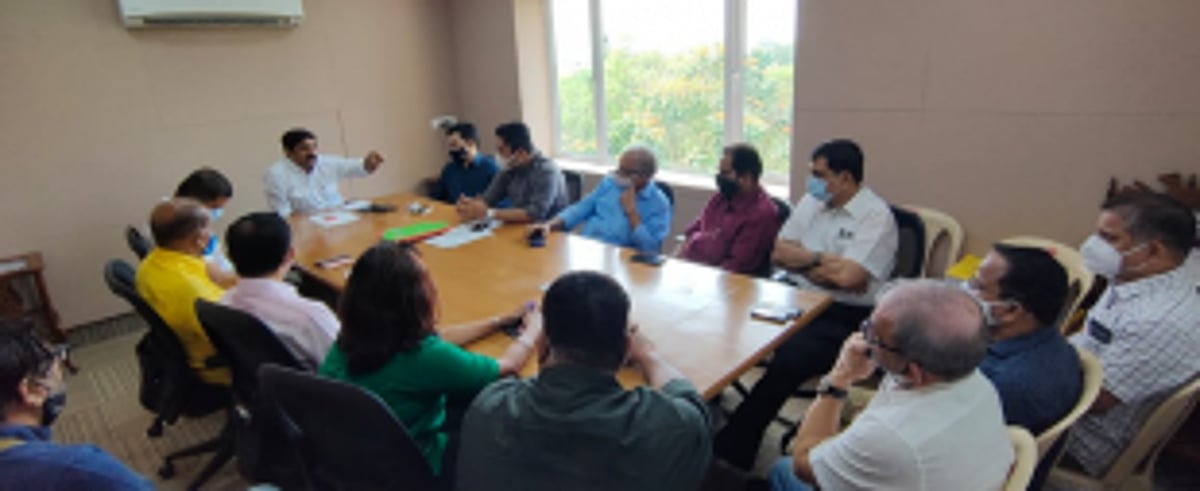
Today we did a reconnaissance of the Taleigao fields. Why? As citizens we have been regularly making time to conduct on ground surveys by meeting the farmers and visiting all the peripheral areas of the Taleigao fields. The silent protest every Thursday was an outcome of the clandestine filling up of the low lying stretch of cultivable fields next to the Taleigao Community centre and proposed site for a second Panchayat Ghar! The young 16-year-old farmer Nathan D’Souza made a clarion call to help him and his fellow farmers from the draconian usurping of traditional fields for ‘development’. How can development come at a cost of food security and climate change action to protect from flooding? As concerned citizens we joined him in creating awareness and raising a voice to protect these food bowls of Taleigao for the future.
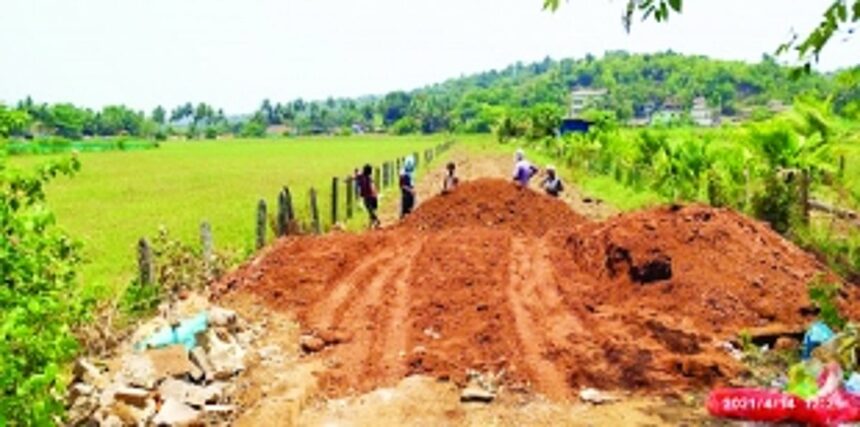
What did the on ground surveys done today, reveal? More than 10 locations in the Taleigao fields have been illegally filled up with debris and soil from other sites.

You must be knowing about the old Adarsh Colony near the Tonca circle. As per the current ODP 2028 this land which was earlier settlement use has now been designated with commercial land use. Therefore it means another multi storeyed structure, basement et al, with all due permissions sought and granted. Why then are the builders/contractors dumping the wetland and agricultural field/land adjacent to it with debris and mud? Groundwater is also being pumped and let out into this same wetland now dumped with debris! This particular wetland is a traditional field with a critical channel that carries all the runoff from the Bambolim and Nagalli hills into the St Inez Creek at Camrabhat. Camrabhat as we all know along with another point in Tambdi Mati, St Inez has been flooding every year.
All the people living along the edges of the St Inez Creek are facing many hardships besides health issues and risk to life. Rain water coupled with sewage and garbage enters the roads, pathways to and outside their homes. This same contaminated water also floods their homes. Since many of us live in gated colonies we do not experience these risks and hardships. It’s the same with our elected representatives. With their high walls and barbed wire fences and lavish villas, they remain unaffected and unconcerned. Many of the children, youth, students, staff, colleagues, friends and fellow citizens we work with live in these flood affected areas.
Have you seen the Jilelem Morod area? What is a morod? Traditionally these raised mounds around fields or Morods were spaces where the farmers would grow indeginous varieties of vegetables and fruits. Since the raised Morods were well drained, growing vegetables in the monsoons on these was very easy and beneficial to the farmers. In the ODP 2028 one area of Jilelem Morod has been designated with commercial land use. All this area was and is cultivable fields. Over the years some of this area has been filled up, dumped with all kinds of debris – false ceiling boards, quilts, foam sheets, plastic and rubble from demolition sites. There is a proposed road shown in the ODP cutting across these existing fields connecting to the new St Michael’s School/Tonca road. Isn’t it criminal to keep dumping debris in these fields without due permissions and killing the very ground that provides us food? Killing the livelihoods of our dear farmers?
The famous Kon’sachem fest of Taleigao is celebrated in August where the symbolic ritual of cutting the first sheaf of paddy is conducted in Bondiem Bhat, Taleigao. Here too all along the periphery mud is being dumped in many sections of the fields. There is also mud dumped at the culvert where originally there was a sluice gate, and has been impeding the flow of water. Many senior villagers reminisce how this portion filled up like a huge lake attracting migratory birds. Many of the tenements built informally over the years along the edge of these fields have sewage flowing into the shallow channels that flow towards the culvert that in turn connects to the wetlands of St Cruz village.
Another site we visited was the Keunem area. Again lots of small piles of soil from the road digging have been dumped in at least 3-4 locations along the fields that are currently growing seasonal vegetables. A large portion near a field that we volunteered to transplant rice last year was also dumped with piles of soil. Farmers have been complaining over the years that some critical channels draining rain water out of the fields have been blocked. The filling up of fields is only worsening the case for flooding of the low lying areas of Taleigao.
Peter Bhat is another location where the fields are being filled up and last but not the least the entire stretch of fields along the Community Centre is now slated to be filled up and developed despite our silent protests.
What is the fate of Taleigao fields? What is the fate of the Taleigao farmers? What is the fate of our food security? What will be the impact of climate change and the consequent flooding of Taleigao fields coupled with this criminal way in which they are being killed?
While we sit in our balconies looking at the lush green and red fields of Taleigao laden with amaranth (Tambdi Bhaji) and radish (mooloh), these field views will soon vanish as new development makes way and the day is not far when these very areas and ours too will be flooded with the sewage laden waters of the creek because what we throw out into nature, will find its way back. To remind us that nature cannot be played with. It cannot be abused. It cannot be destroyed.
Killing the fields will only mean paving the path of our own extinction.
(Tallulah D’Silva is an architect and features in the Top 20 Golden Door Awards 2020 shortlist of international writers and agents of truth and integrity)