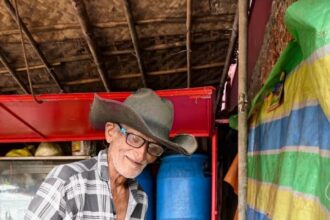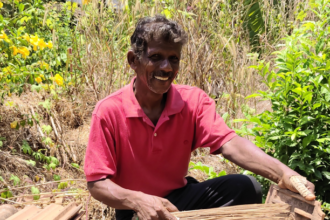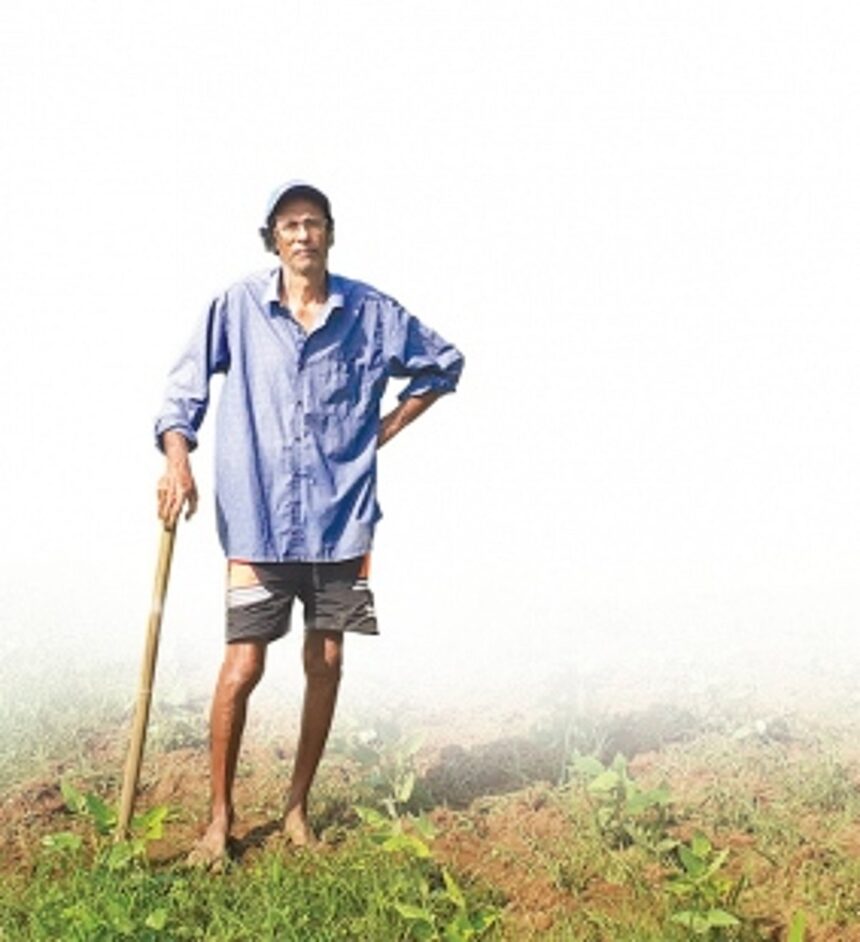
TALEIGAO: In the midst of Taleigao’s urbanisation, Francisco de Almeida stands as a lone ranger, cultivating the farmland between Copperlead restaurant and Sao Minguel School.
The rest of the fields are choked with weeds as many Taleigao farmers have chosen to opt out of farming due to the immense difficulties faced to keep what was once the once ricebowl of Tiswadi, thriving.

Almeida traces his family’s connection to the Comunidade field back to his grandfather in the early 1900’s. He remembers that his grandfather was farming his land at the turn of the century in 1900, while his father took up farming during his youth in the 1930’s (he died in 1971). Almeida himself started farming in 1972. He nurtures a huge field all on his own. He cultivates the kharif rice crop in the monsoon and gathers about five to six quintals of grain – if the crop does not rot.
The sowing begins in June with the first rains and the crop is harvested by September. He employs a tractor for ploughing but sowing and transplanting is done manually with the help of labour. Harvesting is also done with the help of a harvester, Almeida narrates. However, agriculture is tough, he confesses. “There is no profit in farming. In fact, I invest Rs 10,000 for ploughing and sowing. But often there is flooding, if there are heavy rains, since all the traditional rainwater channels in Taleigao are blocked with the construction of buildings in some fields and low-lying areas.” The channels were connected to the St Inez creek, which is now blocked, resulting in flooding of the fields and rotting of the crop.
Come November, and Almeida grows brinjals, the best sweet potatoes, corn, red bhaji, green bhaji, beans, tomatoes, gourd, groundnuts and pumpkins. He also grows bananas at the border of the field. That’s a whole lot of work for the lanky, amiable farmer. You wouldn’t believe that this slight man puts in all that physical labour to tend to his horticultural wealth, but up-close, one can see that Almeida is wiry and strong-willed. Weeding must be done every seven to eight days. Now since the weeding work is too much, he hires a labourer whom he pays Rs 800 per day. His investment in growing vegetables ranges between Rs 7,000 and Rs 8,000.
When asked about marketing, Almeida says he supplies his vegetables to the vendors who sit near Sao Minguel school at 50 per cent of the rate at which they sell to customers. Only his beans and famous sweet potatoes are procured by customers directly, especially for Mahashivratri.
Although farming is often loss-making, Almeida confesses that he keeps agriculture alive since he wants to keep up the heritage of his ancestors and the agrarian heritage of Goa alive. There is not much help from the government, except for the 50 per cent tractor subsidy. Asked about mechanical cultivation, Almeida says it is not suitable for the sandy soil of Taleigao. While many are shying away from their fields and looking to sell this ecological wealth to builders, Almeida, the lone ranger, toils it out from early morning till about 11am and then again in the evening, just to keep his ancestral heritage alive.p