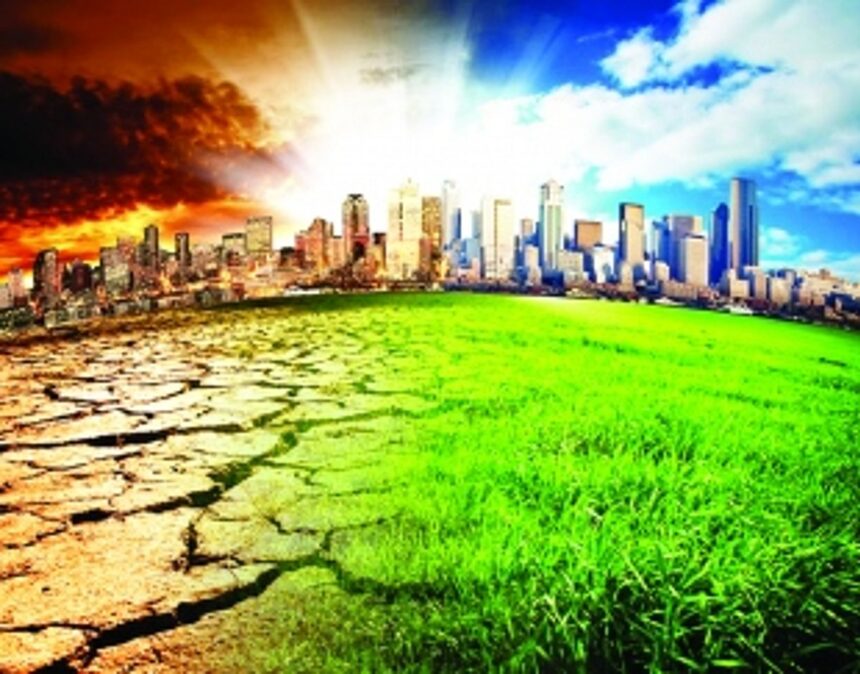
The similarities in human behaviour between the SARSCoV2 pandemic and Climate Change are many. There are the deniers, the outliers who saw the problem and warned society, the solution providers, the losers, and the gainers.
Both SARSCoV2 and Climate Change have people denying the existence of the problem – in the case of the virus people argued that the annual fatalities from TB and influenza are higher but the world does not come to a standstill. Climate Change deniers argue this phenomenon has been occurring for millions of years. Naturally, these deniers also fault the viability of the solution. Both these issues had people who raised the alarm about what the world was going to soon face.
In 1988 James Hansen testified at a US Congressional Hearing about Global Warming, he said, “Global warming has reached a level such that we can ascribe with a high degree of confidence a cause and effect relationship between the greenhouse effect and observed warming…It is already happening now”. Dr Li Wenliang an ophthalmologist, who later died of Covid, warned his colleagues on the 30th of December 2020 with a WeChat message ‘There are 7 confirmed cases of SARS at Huanan Seafood Market.’
Not surprisingly the losers in the case of SARSCoV2 and Climate Change belong to the less privileged and under-represented sections of society and poorer countries. SARSCoV2 pandemic made the billionaires richer even though there was a global economic downturn. According to Christina Chan, director of the World Resource Institute’s Climate Resilience Practice ‘The world’s poorest communities often live on the most fragile land, and they are often politically, socially, and economically marginalized, making them especially vulnerable to the impacts of climate change.’
A research article titled ‘Global warming has increased global economic inequality’ by researchers at Stanford University finds that Climate Change has increased the income inequality between rich and poor countries. The authors of the report say – ‘We find that global warming has very likely exacerbated global economic inequality, including 25% increase in population-weighted between-country inequality over the past half century.’
Does anyone wonder as to why a solution to the virus has been found while the battle to prevent Climate Change or even reduce its impacts rages on? Both need a change in lifestyle for one. To stem the tide of the pandemic the change in lifestyle was far more drastic than what has been suggested to prevent Climate Change. People were asked to wear masks, they were confined to their homes, social events were banned, white collared workers learnt to work from home, while there were fewer workers on the factory floor as a social distancing measure. The global economy plunged, and many lost their jobs.
The fact that governments were hesitant to act on the pandemic was less to do with the socio-economic fallout of making well thought of hard decisions. It had more to do with leaders pondering the political consequences of their ill-thought of decision making – Donald Trump, Narendra Modi, Boris Johnson, Jair Bolsonaro are case in point.
So, what changed? People began to die because of lack of directive leadership, lack of medical facilities and insufficient medical research on treatment. It was not the death of people, but the way people were dying that caused some leaders to finally make ill-prepared tough decisions.
According to the World Health Organisation (WHO) ‘Climatic changes already are estimated to cause over 150,000 deaths annually.’ The impacts of Climate Change are insidious, for example a study by published by the Journal of the American Medical Association found that patients with lung cancer undergoing radiation are less likely to survive after a hurricane disaster upsets their treatment.
Unlike the case of SARSCoV2 were a vaccine has been recently developed, the world has known the solutions to prevent Climate Change – stop destroying old growth forests, replace fossil fuels with renewables and so on. These alternatives will not only add new jobs but will also help in the battle against climate change.
That a court in the Hague had to order Shell Oil to reduce its carbon emissions gives a hint of the answer. As they are focused on short term economic growth, governments are allowing companies to dictate policy. A rising GDP and shareholder value makes the government and corporates look good. It improves the prospects of re-election and ensures higher salaries and perks for corporate heads. Climate Change is an inter-generational issue, and the current consequences of Climate Change can be palmed off as regular cyclones, disease outbreaks, insufficient rains or argued that the evidence between climate chainage and these events tenuous if at all. The frequency, intensity and cost of these weather events cannot be communicated by photos because they are no different from photos taken earlier. .
It is unfortunate but true, the world reacted to SARSCoV2 because the danger was immediate. The virus made society feel vulnerable because of an absence of a cure and because the dependable healthcare was overwhelmed by the scale of the infected and lack of treatment information.
We have made Climate Change into a Trojan Horse assuming the existential dangers it posed was for future generations. The newest IPCC report suggests otherwise. Climate Change is in our midst, affecting every region of the globe. What more proof do we need to act with urgency? If not us, then who? If not now, then when?
(Samir Nazareth is an author and writes on socio-economic and
environmental issues)